

Gratisversand in ganz Deutschland!
Bookbot

Andreas Holzinger

    18. April 1963
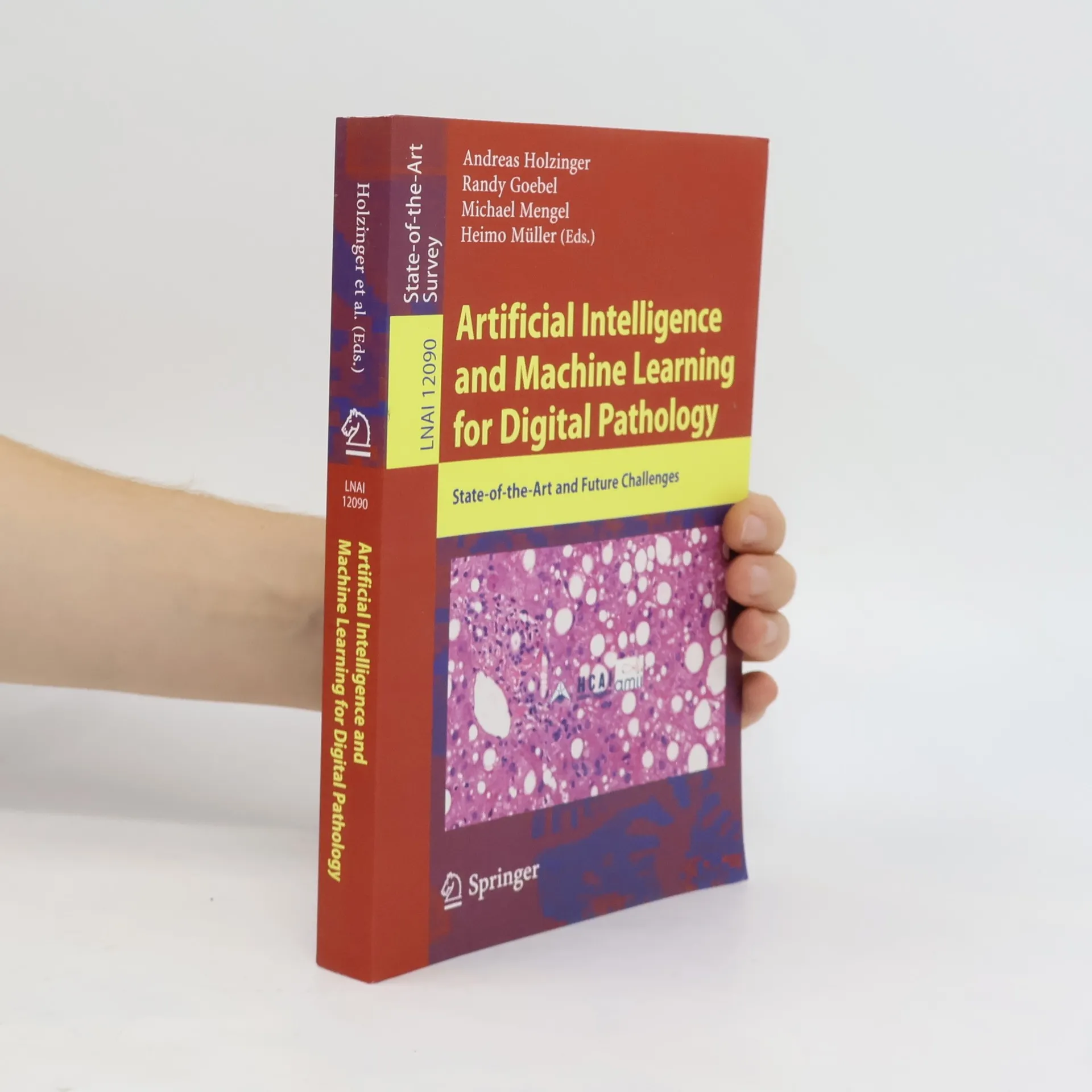
    Artificial Intelligence and Machine Learning for Digital Pathology
    Successful Management of Research & Development
    Biomedical Informatics
    Process Guide for Students for Interdisciplinary Work in Computer Science/Informatics
    Von der Wachskerze zur Glühlampe
    Basiswissen Multimedia
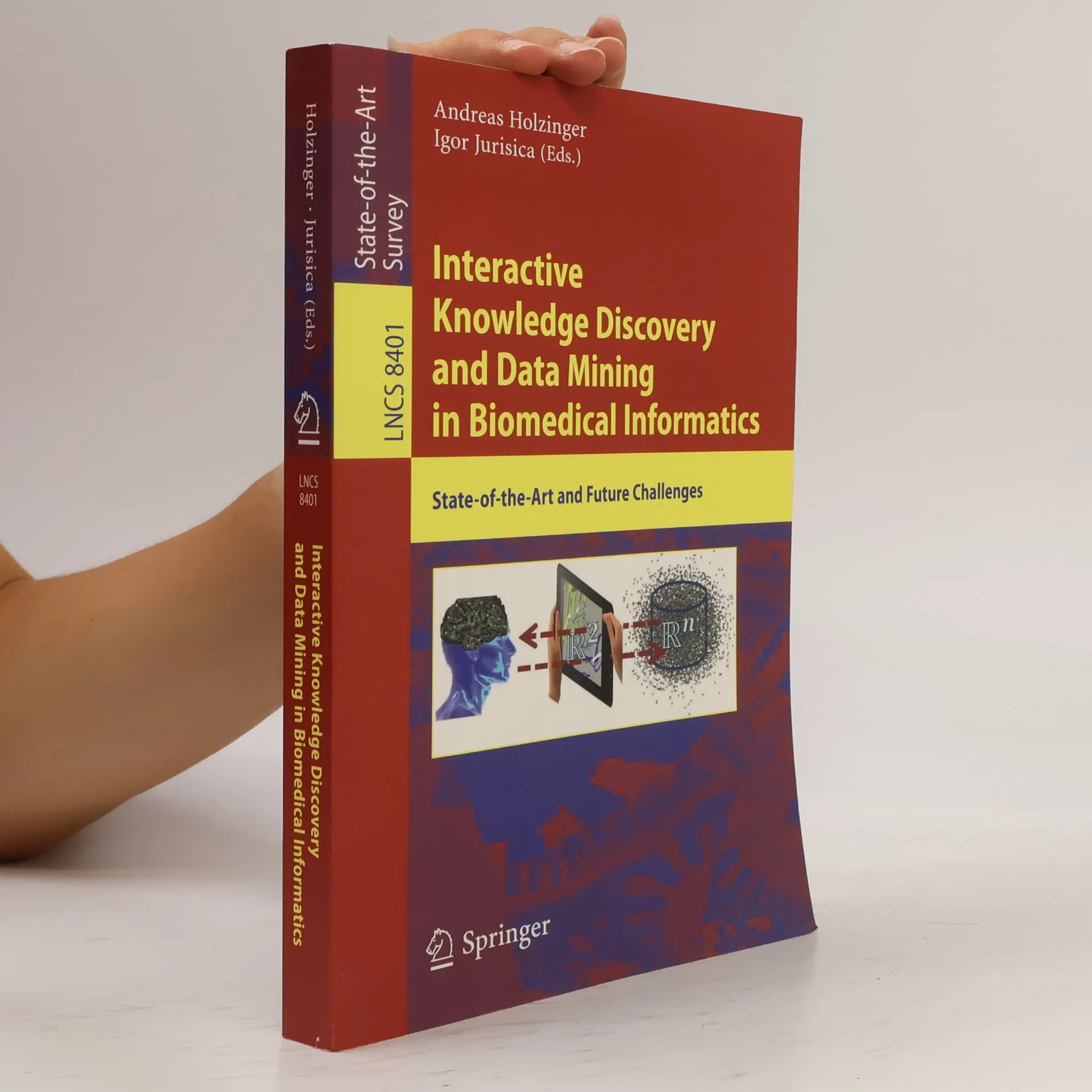
    • Biomedical Informatics

      Discovering Knowledge in Big Data

      • 570 Seiten
      • 20 Lesestunden
      4,0(2)Abgeben

      This book provides a broad overview of the topic Bioinformatics with focus on data, information and knowledge. From data acquisition and storage to visualization, ranging through privacy, regulatory and other practical and theoretical topics, the author touches several fundamental aspects of the innovative interface between Medical and Technology domains that is Biomedical Informatics. Each chapter starts by providing a useful inventory of definitions and commonly used acronyms for each topic and throughout the text, the reader finds several real-world examples, methodologies and ideas that complement the technical and theoretical background. This new edition includes new sections at the end of each chapter, called "future outlook and research avenues," providing pointers to future challenges. At the beginning of each chapter a new section called "key problems", has been added, where the author discusses possible traps and unsolvable or major problems.

      Biomedical Informatics
    • Successful research and development hinges on a clear vision, mission, and strategy, emphasizing the importance of team dynamics and effective leadership. The book highlights the challenges of building and managing a skilled team, stressing that even the best teams require adequate funding to thrive. As public budgets shrink, securing external funding becomes crucial for maintaining competitiveness and quality. Ultimately, a team's success is measured by their output, underscoring the need for actionable knowledge in the pursuit of excellence in research.

      Successful Management of Research & Development
    • Artificial Intelligence and Machine Learning for Digital Pathology

      State-of-the-Art and Future Challenges

      • 353 Seiten
      • 13 Lesestunden

      Data driven Artificial Intelligence (AI) and Machine Learning (ML) in digital pathology, radiology, and dermatology is very promising. In specific cases, for example, Deep Learning (DL), even exceeding human performance. However, in the context of medicine it is important for a human expert to verify the outcome. Consequently, there is a need for transparency and re-traceability of state-of-the-art solutions to make them usable for ethical responsible medical decision support. Moreover, big data is required for training, covering a wide spectrum of a variety of human diseases in different organ systems. These data sets must meet top-quality and regulatory criteria and must be well annotated for ML at patient-, sample-, and image-level. Here biobanks play a central and future role in providing large collections of high-quality, well-annotated samples and data. The main challenges are finding biobanks containing ‘‘fit-for-purpose’’ samples, providing quality related meta-data, gaining access to standardized medical data and annotations, and mass scanning of whole slides including efficient data management solutions.

      Artificial Intelligence and Machine Learning for Digital Pathology
    • Software Technologies

      9th International Joint Conference, ICSOFT 2014, Vienna, Austria, August 29-31, 2014, Revised Selected Papers

      • 385 Seiten
      • 14 Lesestunden

      This book constitutes the thoroughly refereed proceedings of the 9th International Joint Conference on Software Technologies, ICSOFT 2014, held in Vienna, Austria, in August 2014. The 15 revised full papers and 6 short papers presented were carefully reviewed and selected from 145 submissions. The papers focus on enterprise software technologies; software engineering and systems security; distributed systems; and software project management.

      Software Technologies
    • Machine Learning for Health Informatics

      State-of-the-Art and Future Challenges

      • 503 Seiten
      • 18 Lesestunden

      Machine learning (ML) is the fastest growing field in computer science, and Health Informatics (HI) is amongst the greatest application challenges, providing future benefits in improved medical diagnoses, disease analyses, and pharmaceutical development. However, successful ML for HI needs a concerted effort, fostering integrative research between experts ranging from diverse disciplines from data science to visualization. Tackling complex challenges needs both disciplinary excellence and cross-disciplinary networking without any boundaries. Following the HCI-KDD approach, in combining the best of two worlds, it is aimed to support human intelligence with machine intelligence. This state-of-the-art survey is an output of the international HCI-KDD expert network and features 22 carefully selected and peer-reviewed chapters on hot topics in machine learning for health informatics; they discuss open problems and future challenges in order to stimulate further research and international progress in this field.

      Machine Learning for Health Informatics
    • Information quality in e-health

      • 716 Seiten
      • 26 Lesestunden

      This book constitutes the refereed proceedings of the 7th Conference of the Workgroup Human-Computer Interaction and Usability Engineering of the Austrian Computer Society, USAB 2011, in Graz, Austria, in November 2011. The 18 revised full papers together with 29 revised short papers and 2 posters presented were carefully reviewed and selected from 103 submissions. The papers are organized in topical sections on cognitive approaches to clinical data management for decision support, human-computer interaction and knowledge discovery in databases (hci-kdd), information usability and clinical workflows, education and patient empowerment, patient empowerment and health services, information visualization, knowledge & analytics, information usability and accessibility, governmental health services & clinical routine, information retrieval and knowledge discovery, decision making support & technology acceptance, information retrieval, privacy & clinical routine, usability and accessibility methodologies, information usability and knowledge discovery, human-centred computing, and biomedical informatics in health professional education.

      Information quality in e-health