
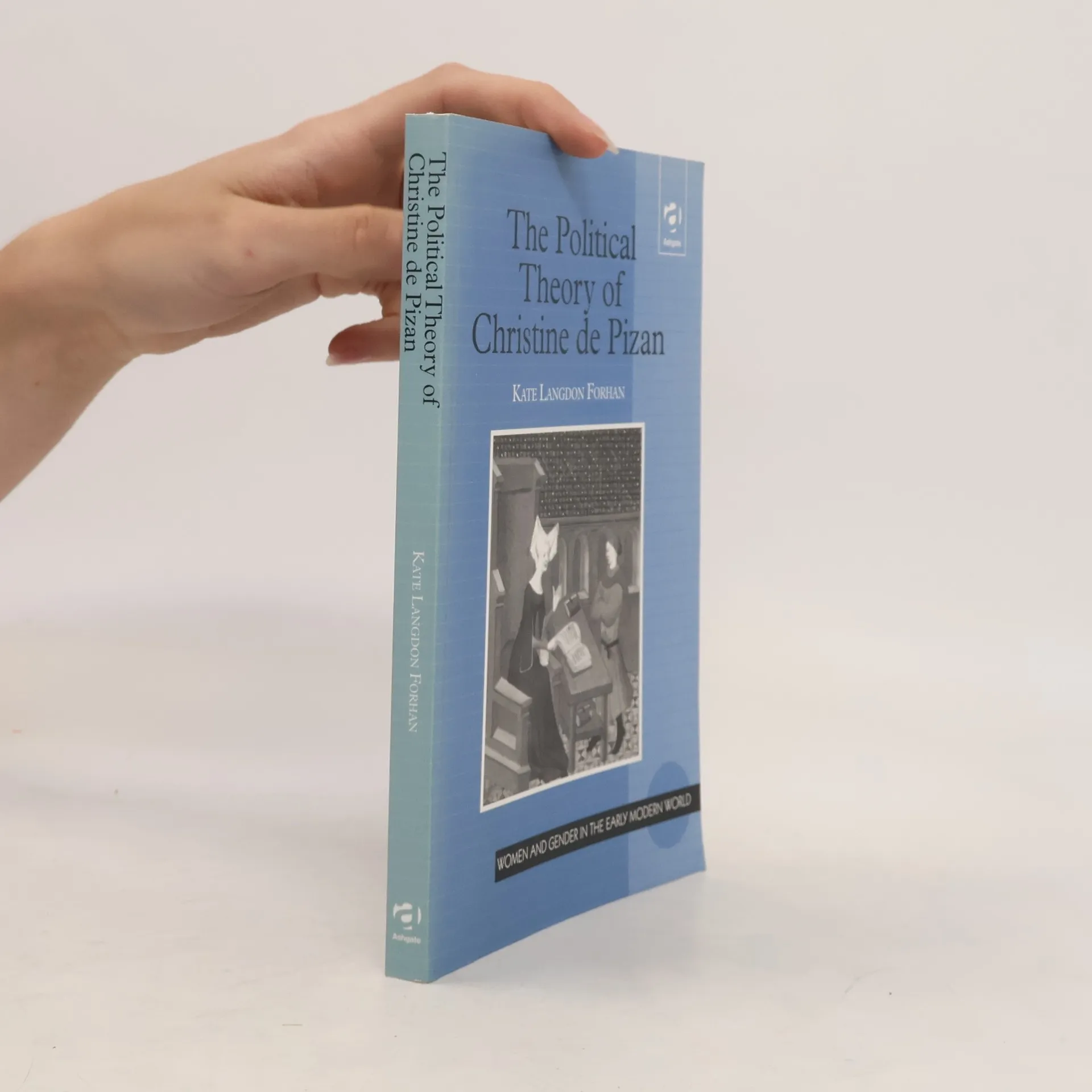

Diese Reihe befasst sich mit den vielfältigen Rollen von Frauen und der Konstruktion von Geschlecht in der Frühen Neuzeit und bietet innovative Forschungsergebnisse. Sie überschreitet geografische Grenzen und untersucht die unterschiedlichen Erfahrungen von Frauen in ganz Europa, Amerika, Asien und Afrika. Die Sammlung dient als interdisziplinäres Forum, das die Grenzen der Forschung erweitert und unser Verständnis der frühneuzeitlichen Gesellschaften ständig weiterentwickelt. Sie ist unerlässlich für Wissenschaftler und Enthusiasten, die neue Perspektiven auf Geschlechterdynamiken und Frauengeschichte suchen.
Focusing on women's utopian spatial imagination in the seventeenth and eighteenth centuries, this study examines the intricate relationship between identity and social space. It connects theoretical discussions of space, gender, and utopianism with historiographic debates on the gendered production of space. The book pays particular attention to significant spaces in contemporary utopian thought, including Arcadia, palaces, convents, harems, and country houses, highlighting their roles in shaping societal and gender identities.
Looking at the competition and collaboration among different groups of men
involved in childbirth, and between men and women, this work demonstrates that
arguments about history were as important as arguments about the merits of
different designs of forceps.
Analysing the occasional verse writings of the celebrated colonial Mexican nun, Thomas brings to light the particular socio-historical significance of these works, which until now literary scholars have largely considered inconsequential. Thomas demonstrates how these poems by the famous nun-composed for birthdays, funerals, religious feasts, coronations and the like-shed new light on Sor Juana's interactions with individuals in colonial society and throughout the Spanish Empire.
Focusing on gender and sexuality in Renaissance England, this study explores how these themes influenced the relationships depicted in sixteenth- and seventeenth-century poetry. By analyzing both female- and male-authored lyrics, Pamela Hammons connects the poetic works to broader cultural contexts, including legal theories and various literary forms such as plays and epics. The examination of manuscript and print collections offers insights into the material culture of the time, highlighting the interplay between human and non-human subjects.
This study explores the expression and representation of late medieval and early modern women in the Low Countries through diverse materials, including written sources, artworks, and urban sites. It combines various analytical approaches—historical, historiographical, museological, and touristic—to examine how these women articulated their identities and how they have been perceived both in their time and in contemporary scholarship. The work sheds light on the complexities of women's roles and interpretations across different eras.
Looking especially at widows of master craftsmen in early modern Paris, this study provides analysis of the social and cultural structures that shaped widows' lives as well as the experiences these women had in their day-to-day experience. It dramatically alters our understanding of gender; it also engages the historiographical issue of women's participation in the world of work, and explicitly examines the place of the law in the lived experience of the period. Inhaltsverzeichnis Introduction; Chapter 1 Law in Early Modern France; Chapter 2 Widows and Religious Institutions; Chapter 3 Women's Place in Guilds; Chapter 4 Widows in the Workshop; Chapter 5 The Calculus of Remarriage; Chapter 6 The Trap of Poverty; Chapter 101 Conclusion;
Marriage serves as a crucial social and legal institution today, with historical roots as a key economic institution. This collection presents original research on the economic, social, and legal history of marital partnerships in northern Europe over a span of 500 years. The introduction sets the stage by examining the marital economy from a comparative perspective.
The first section explores the formation of partnerships, discussing topics such as the enforcement of marriage contracts in Norway, the roles of family and friends in early modern England, and the social and economic dynamics among Swedish elites from 1650 to 1770. It also delves into the early modern Finnish countryside and the accumulation of wealth and skills through hired work in rural England.
The second section focuses on managing partnerships, covering decision-making regarding marital property in Norway, the authority of Danish marital law, gender roles in agrarian households in Sweden, and differing perceptions of marital relations in late 19th-century Finland.
The final section addresses the dissolution of partnerships, examining issues of separation and divorce in early modern Norway, provisions for marital dissolution in Scotland, property transfer in late medieval Iceland, and decision-making in retirement within the marital economy in Sweden. An afterword discusses the significance of the marital economy in the context of British economic histor
Focusing on the contributions of educated women in Spain and New Spain, this study explores the lives and works of early modern female advocates for women's education. It highlights prominent figures like Sor Juana and Santa Teresa de Jesús, while also shedding light on lesser-known women who played significant roles in this movement. Drawing from diverse sources, the book examines how these women influenced societal views on education and gender during their time.
Exploring the intersection of visual culture, faith, and gender, this study delves into the devotional art of the Burgundian Netherlands from 1350 to 1530. Through the works of notable artists like Jan van Eyck and Hans Memling, the author examines how masculinity and femininity are depicted in relation to the practices and expectations of devotion within courtly, monastic, and urban contexts. The analysis reveals the nuanced ways gender is constructed and represented in this rich artistic tradition.
Exploring the psychological impact of the Virgin Mary's marginalization in post-Reformation England, this work examines early modern cultural and literary responses to her diminished role. The author argues that Shakespeare utilizes both Roman Catholic and post-Reformation perspectives on Marian strength to critique contemporary notions of masculinity. Through this lens, the book invites readers to reconsider religious and gender identities, highlighting the complex interplay between cultural perceptions and individual subjectivity in Shakespeare's works.