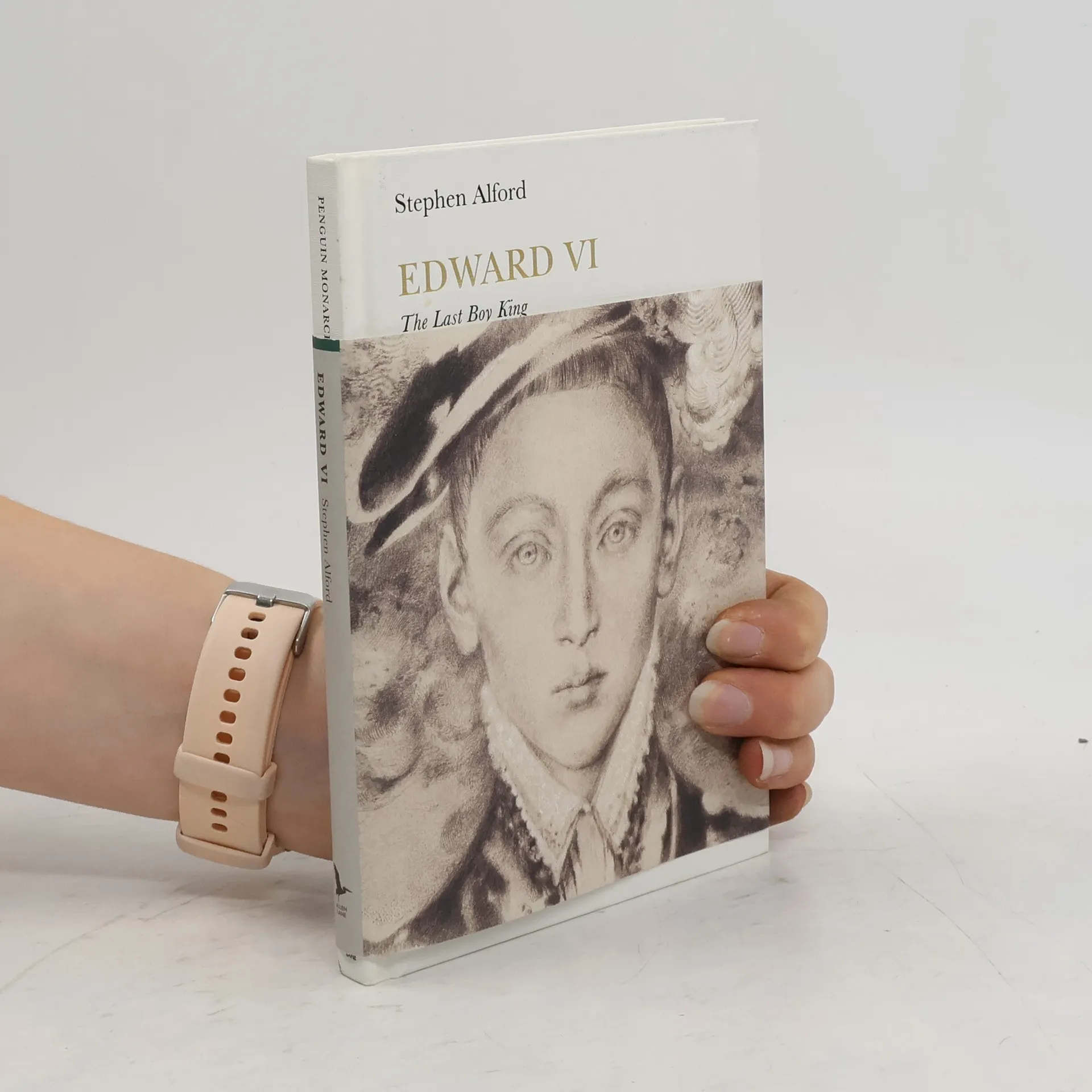
Henry II (1154-89) through a series of astonishing dynastic coups became the ruler of an enormous European empire. One of the most dynamic, restless and clever men ever to rule England, he was brought down both by his catastrophic relationship with his archbishop Thomas Becket and his debilitating arguments with his sons, most importantly the future Richard I and King John. His empire may have ultimately collapsed, but in Richard Barber's vivid and sympathetic account the reader can see why Henry II left such a compelling impression on his contemporaries.
Penguin Monarchs Reihe
Diese umfangreiche Serie befasst sich mit dem Leben und den Herrschaftszeiten englischer Monarchen. Jeder Band bietet einen prägnanten und aufschlussreichen Einblick in eine Schlüsselfigur der langen königlichen Geschichte Großbritanniens. Von mittelalterlichen Königen bis zu modernen Herrschern erforscht diese Sammlung ihre Auswirkungen, Herausforderungen und ihr Erbe. Es ist die ideale Lektüre für Geschichtsinteressierte und alle, die die Entwicklung einer der beständigsten Institutionen der Welt verstehen möchten.

William III & Mary II. Partners in revolution
- 107 Seiten
- 4 Lesestunden
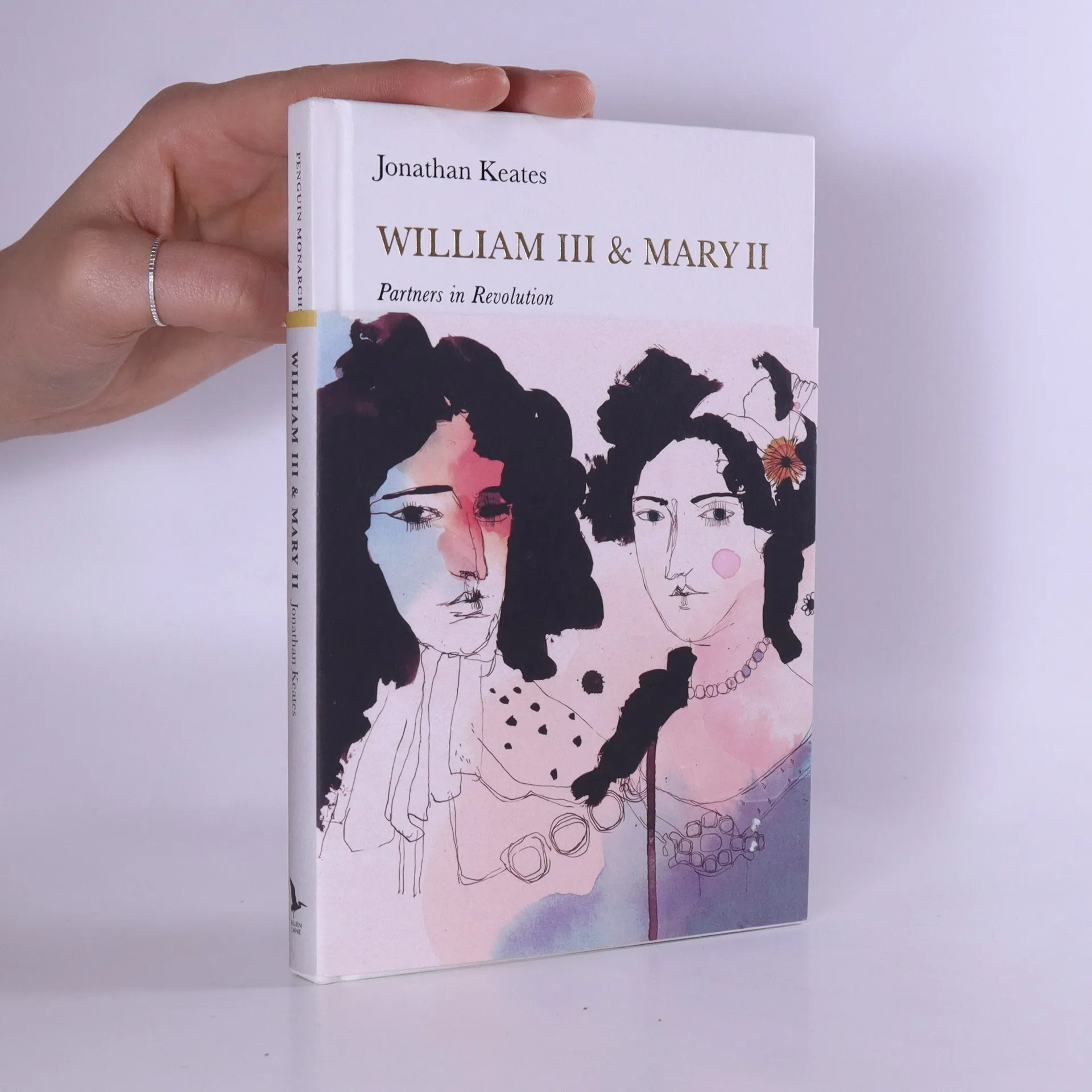
William III (1689-1702) & Mary II (1689-94) (Britain's only ever 'joint monarchs') changed the course of the entire country's history, coming to power through a coup (which involved Mary betraying her own father), reestablishing parliament on a new footing and, through commiting Britain to fighting France, initiating an immensely long period of warfare and colonial expansion. Jonathan Keates' wonderful book makes both monarchs vivid, the cold, shrewd 'Dutch' William and the shortlived Mary, whose life and death inspired Purcell to write some of his greatest music.
Richard III (Penguin Monarchs)
- 128 Seiten
- 5 Lesestunden
No English king has so divided opinion, both during his reign and in the centuries since, more than Richard III. He was loathed in his own time for the never-confirmed murder of his young nephews, the Princes in the Tower, and died fighting his own subjects on the battlefield. This is the vision of Richard we have inherited from Shakespeare. Equally, he inspired great loyalty in his followers. In this enlightening, even-handed study, Rosemary Horrox builds a complex picture of a king who by any standard failed as a monarch. He was killed after only two years on the throne, without an heir, and brought such a decisive end to the House of York that Henry Tudor was able to seize the throne, despite his extremely tenuous claim. Whether Richard was undone by his own fierce ambitions, or by the legacy of a Yorkist dynasty which was already profoundly dysfunctional, the end result was the same: Richard III destroyed the very dynasty that he had spent his life so passionately defending.
George I (Penguin Monarchs)
- 128 Seiten
- 5 Lesestunden
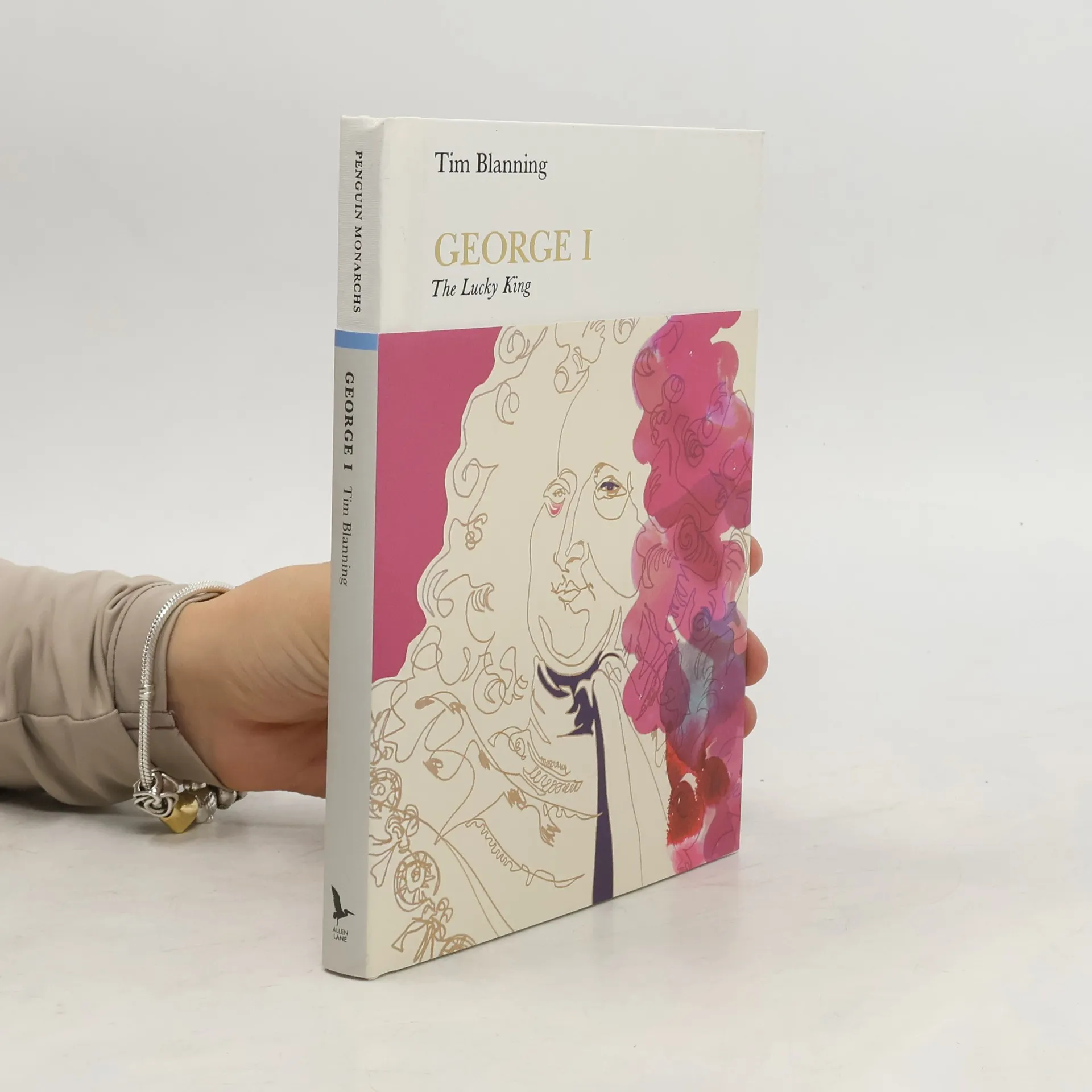
George I was not the most charismatic of the Hanoverian monarchs to have reigned in England but he was probably the most important. He was certainly the luckiest. Born the youngest son of a landless German duke, he was taken by repeated strokes of good fortune to become, first the ruler of a major state in the Holy Roman Empire of the German Nation and then the sovereign of three kingdoms (England, Ireland and Scotland). Tim Blanning's incisive short biography examines George's life and career as a German prince, and as King. Fifty-four years old when he arrived in London in 1714, he was a battle-hardened veteran, who put his long experience and deep knowledge of international affairs to good use in promoting the interests of both Hanover and Great Britain. When he died, his legacy was order and prosperity at home and power and prestige abroad. Disagreeable he may have been to many, but he was also tough, determined and effective, at a time when other European thrones had started to crumble.
Elizabeth I (Penguin Monarchs)
- 144 Seiten
- 6 Lesestunden
Part of the Penguin Monarchs series: short, fresh, expert accounts of England's rulers in a collectible format In the popular imagination, as in her portraits, Elizabeth I is the image of monarchical power. The Virgin Queen ruled over a Golden Age: the Spanish Armada was defeated; English explorers reached the ends of the earth; a new Church of England rose from the ashes of past conflict; the English Renaissance bloomed in the genius of Shakespeare, Spenser and Sidney. But the image is also armour. In this illuminating new account of Elizabeth's reign, Helen Castor shows how England's iconic queen was shaped by profound and enduring insecurity-an insecurity which was both a matter of practical political reality and personal psychology. From her precarious upbringing at the whim of a brutal, capricious father and her perilous accession after his death, to the religious division that marred her state and the failure to marry that threatened her line, Elizabeth lived under constant threat. But, facing down her enemies with a compellingly inscrutable public persona, the last and greatest of the Tudor monarchs would become a timeless, fearless queen.
James II (Penguin Monarchs)
- 144 Seiten
- 6 Lesestunden
'James was a king tragically trapped by principle. Yet was it wise to attempt to change the national religion?' The short reign of James II is generally seen as one of the most catastrophic in British history, ending in his exile after he unsuccessfully tried to convert England to Catholicism, a crisis that would haunt the monarchy for generations. Ultimately, David Womersley's biography shows, James was a man whose blindness to subtlety and political reality brought about his ruinous downfall.
Edward VI (Penguin Monarchs)
- 112 Seiten
- 4 Lesestunden
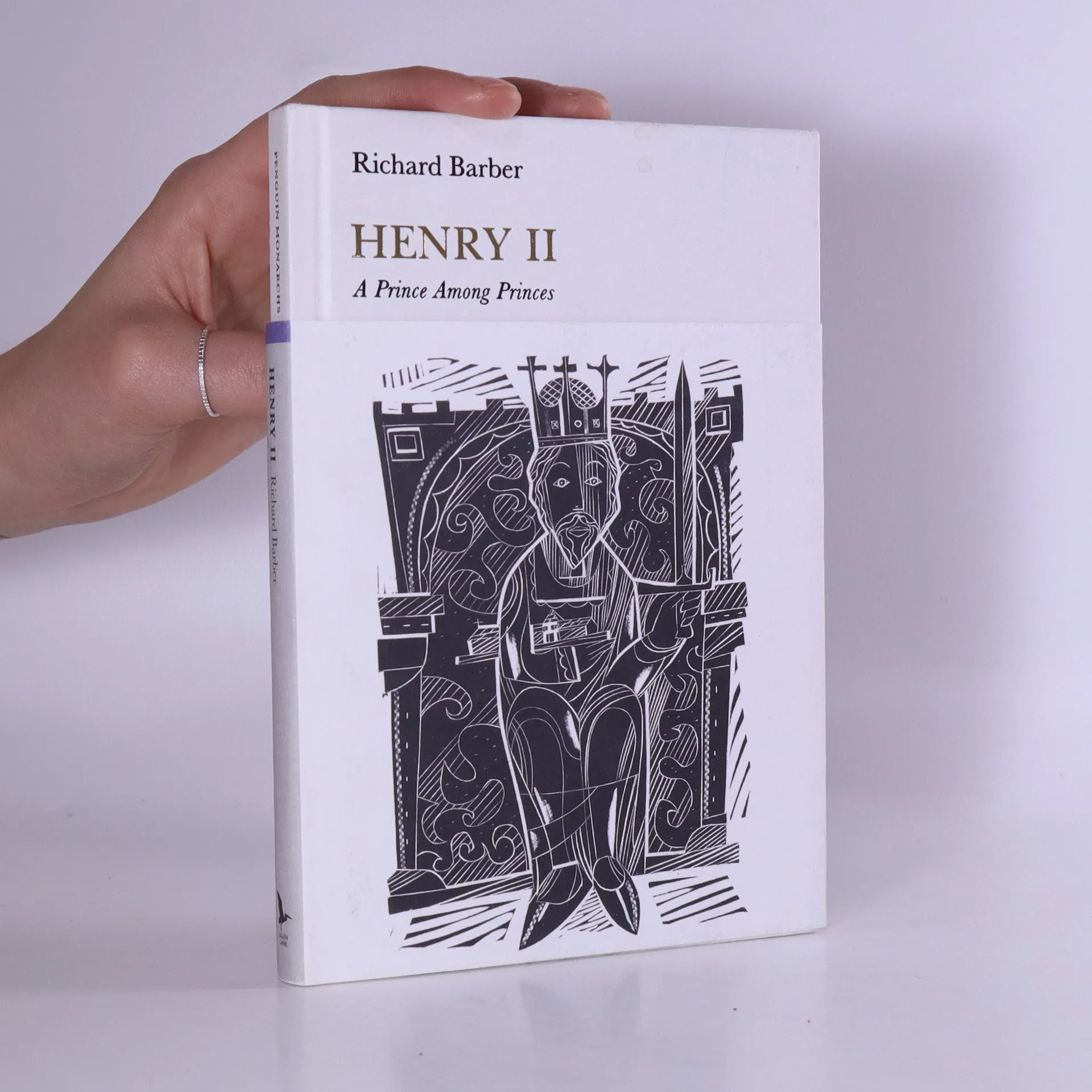
Edward VI, the only son of Henry VIII, became king at the age of nine and died wholly unexpectedly at the age of fifteen. This book gives full play to the murky, sinister nature of Edward's reign, and also an account of a boy learning to rule, learning to enjoy his growing power and to come out of the shadows of the great aristocrats around him.
Charles II (Penguin Monarchs)
- 144 Seiten
- 6 Lesestunden
The acclaimed Penguin Monarchs series: short, fresh, expert accounts of England's rulers - now in paperback Charles II has always been one of the most instantly recognisable British kings - both in his physical appearance, disseminated through endless portraits, prints and pub signs, and in his complicated mix of lasciviousness, cynicism and luxury. His father's execution and his own many years of exile made him a guarded, curious, unusually self-conscious ruler. He lived through some of the most striking events in the national history - from the Civil Wars to the Great Plague, from the Fire of London to the wars with the Dutch. Clare Jackson's marvellous book takes full advantage of its irrepressible subject.
George V (Penguin Monarchs)
- 144 Seiten
- 6 Lesestunden
The acclaimed Penguin Monarchs series: short, fresh, expert accounts of England's rulers - now in paperback For a man with such conventional tastes and views, George V had a revolutionary impact. Almost despite himself he marked a decisive break with his flamboyant predecessor Edward VII, inventing the modern monarchy, with its emphasis on frequent public appearances, family values and duty. George V was an effective war-leader and inventor of 'the House of Windsor'. In an era of ever greater media coverage - frequently filmed and initiating the British Empire Christmas broadcast - George became for 25 years a universally recognised figure. He was also the only British monarch to take his role as Emperor of India seriously. While his great rivals (Tsar Nicolas and Kaiser Wilhelm) ended their reigns in catastrophe, he plodded on. David Cannadine's sparkling account of his reign could not be more enjoyable, a masterclass in how to write about Monarchy, that central - if peculiar - pillar of British life.
The acclaimed Penguin Monarchs series: short, fresh, expert accounts of England's rulers - now in paperback Richard II (1377-99) came to the throne as a child, following the long, domineering, martial reign of his grandfather Edward III. He suffered from the disastrous combination of a most exalted sense of his own power and an inability to impress that power on those closest to the throne. Neither trusted nor feared, Richard battled with a whole series of failures and emergencies before finally succumbing to a coup, imprisonment and murder. Laura Ashe's brilliant account of his reign emphasizes the strange gap between Richard's personal incapacity and the amazing cultural legacy of his reign - from the Wilton Diptych to Sir Gawain and the Green Knight, Piers Plowman and The Canterbury Tales.
George VI (Penguin Monarchs)
- 112 Seiten
- 4 Lesestunden
Written by Philip Ziegler, one of Britain's most celebrated biographers, George VI is part of the Penguin Monarchs series: short, fresh, expert accounts of England's rulers in a collectible format If Ethelred was notoriously 'Unready' and Alfred 'Great', King George VI should bear the title of 'George the Dutiful'. Throughout his life, George dedicated himself to the pursuit of what he thought he ought to be doing rather than what he wanted to do. Inarticulate and loathing any sort of public appearances, he accepted that it was his destiny to figure conspicuously in the public eye, gritted his teeth, battled his crippling stammer and got on with it. He was not born to be king, but he made an admirable one, and was the figurehead of the nation at the time of its greatest trial, the Second World War. This is a brilliant, touching and sometimes funny book about this reluctant public figure, and the private man. Philip Ziegler is the author of the authorised biographies of Mountbatten, Harold Wilson and Edward Heath. His other books include The Duchess of Dino, William IV, The Black Death and most recently Olivier. Initially a diplomat, he worked for many years in book publishing before becoming a full-time writer.
SPECTATOR AND TELEGRAPH BOOKS OF THE YEAR 2015 The short, action-packed reign of James II (1685-88) is generally seen as one of the most catastrophic in British history. James managed, despite having access to tremendous reserves of good will and deference, to so alienate his supporters that he had to flee for his life. And yet, most of that life was spent not as king but first as heir to Charles II, as Duke of York (after whom New York is named) and then in the last part of his life as the first Jacobite 'Pretender', starting a problem that would haunt Britain's rulers for generations.
Edward VII (Penguin Monarchs)
- 160 Seiten
- 6 Lesestunden
Like his mother Queen Victoria, Edward VII defined an era. Both reflected the personalties of their central figures: hers grand, imperial and pretty stiff; his no less grand, but much more relaxed and enjoyable. This book conveys Edward's distinct personality and significant influences.
Aethelred the Unready (Penguin Monarchs)
- 112 Seiten
- 4 Lesestunden
A major new title in the Penguin Monarchs series In his fascinating new book in the Penguin Monarchs series, Richard Abels examines the long and troubled reign of Aethelred II the 'Unraed', the 'Ill-Advised'. It is characteristic of Aethelred's reign that its greatest surviving work of literature, the poem The Battle of Maldon, should be a record of heroic defeat. Perhaps no ruler could have stemmed the encroachment of wave upon wave of Viking raiders, but Aethelred will always be associated with that failure.
Stella Tillyard is a celebrated British historian known for her engaging narratives on historical figures and events. Her notable works include "Aristocrats," which explores the lives of the Lennox sisters and won prestigious awards, and "A Royal Affair," focusing on George III and his siblings. Tillyard's scholarly contributions also feature "Citizen Lord," about Edward Fitzgerald, and her novel "Tides of War." She divides her time between London and Florence, blending her historical insights with a rich sense of place.