

Gratis Versand ab 16,99 €. Mehr Infos.
Bookbot

Carles Boix

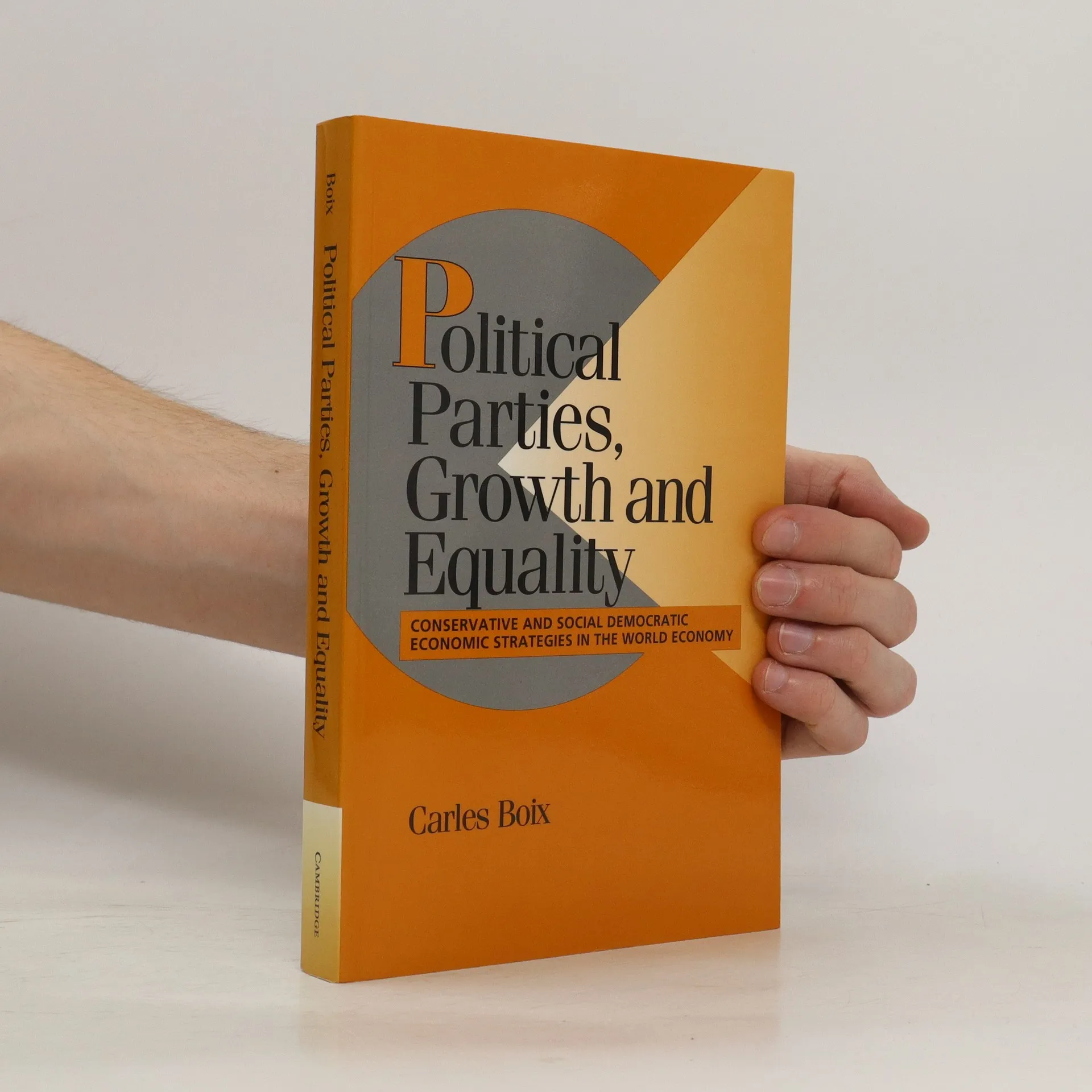
    Political Parties, Growth and Equality
    Political Order and Inequality
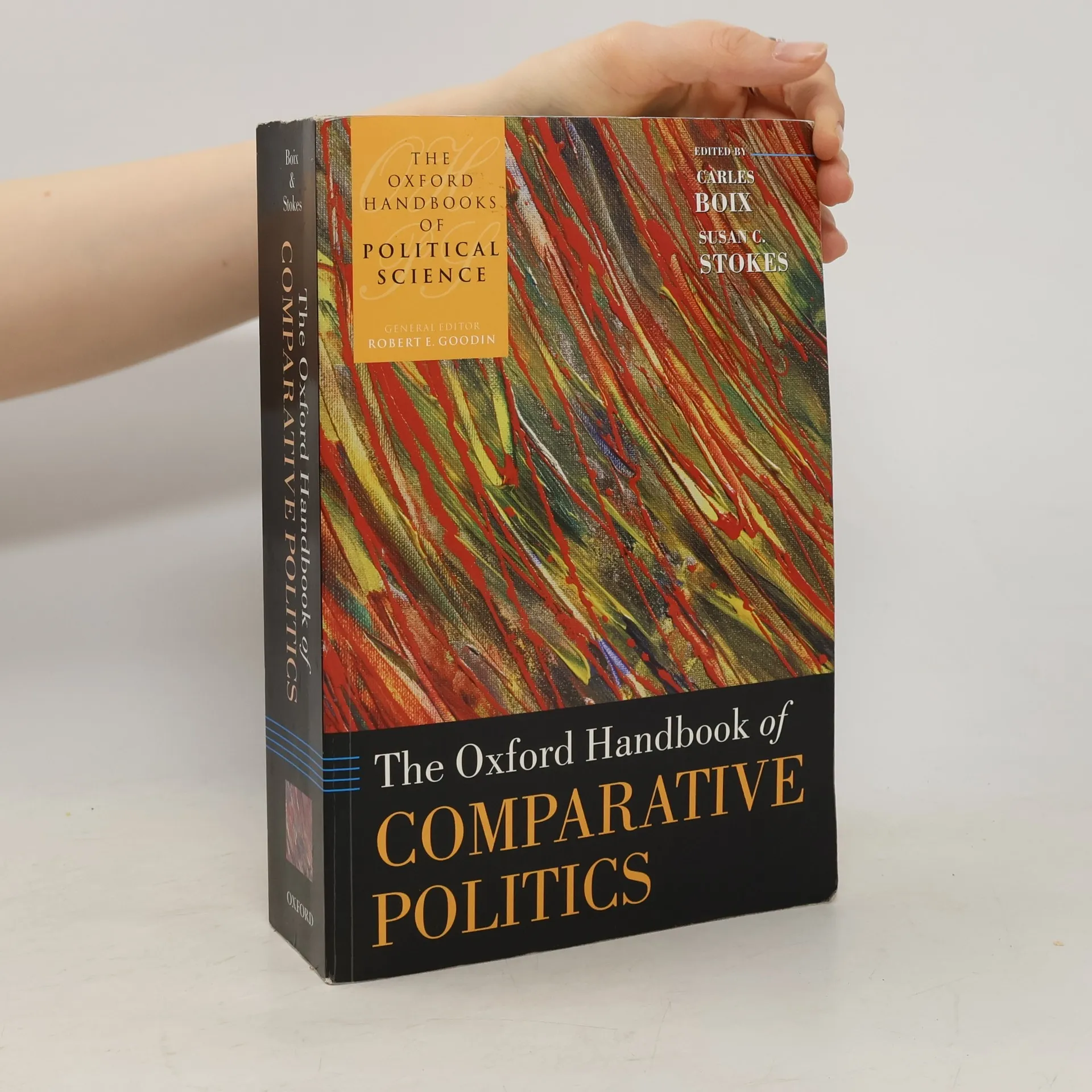
    The Oxford Handbooks of Political Science: The Oxford Handbook of Comparative Politics
    • This comprehensive volume offers a critical survey of empirical political science through contributions from 48 leading scholars in comparative politics. Part I explores key research methodologies, including the comparative method, historical analysis, case-study research, and field research, while assessing the potential for establishing a science of comparative politics. Parts II to IV delve into the foundations of political order, examining state origins, their connections to war and economic development, and the sources of citizen compliance and political obligation. Topics such as democratic transitions, civic culture, authoritarianism, revolutions, civil wars, and contentious politics are also addressed. Parts V and VI focus on the mobilization, representation, and coordination of political demands. Part V investigates the emergence of political parties, their various forms, and voter behavior, alongside discussions on collective action, social movements, and political participation. Part VI examines the mechanisms for aggregating and coordinating political demands, leading to a systematic exploration of specific institutions like electoral systems, federalism, legislative-executive relationships, the judiciary, and bureaucracy. Lastly, Part VII highlights the growing literature on macropolitical economy from the past two decades.

      The Oxford Handbooks of Political Science: The Oxford Handbook of Comparative Politics
      4,3
    • Political Order and Inequality

      • 334 Seiten
      • 12 Lesestunden

      This book describes the foundations of stateless societies, why and how states emerge, and the basis of political obligation.

      Political Order and Inequality
      4,1
    • Given the increased openness of countries to international trade and financial flows, the general public and the scholarly literature have grown skeptical about the capacity of policy-makers to affect economic performance. Challenging this view, Political Parties, Growth, and Equality shows that the increasingly interdependent world economy and recent technological shocks have actually exacerbated the dilemmas faced by governments in choosing among various policy objectives, such as generating jobs and reducing income inequality, thereby granting political parties and electoral politics a fundamental and growing role in the economy. To make growth and equality compatible, social democrats employ the public sector to raise the productivity of capital and labor. By contrast, conservatives rely on the private provision of investment. Based on analysis of the economic policies of all OECD countries since the 1960s and in-depth examination of Britain and Spain in the 1980s, this book offers a new understanding of how contemporary democracies work.

      Political Parties, Growth and Equality
      3,2