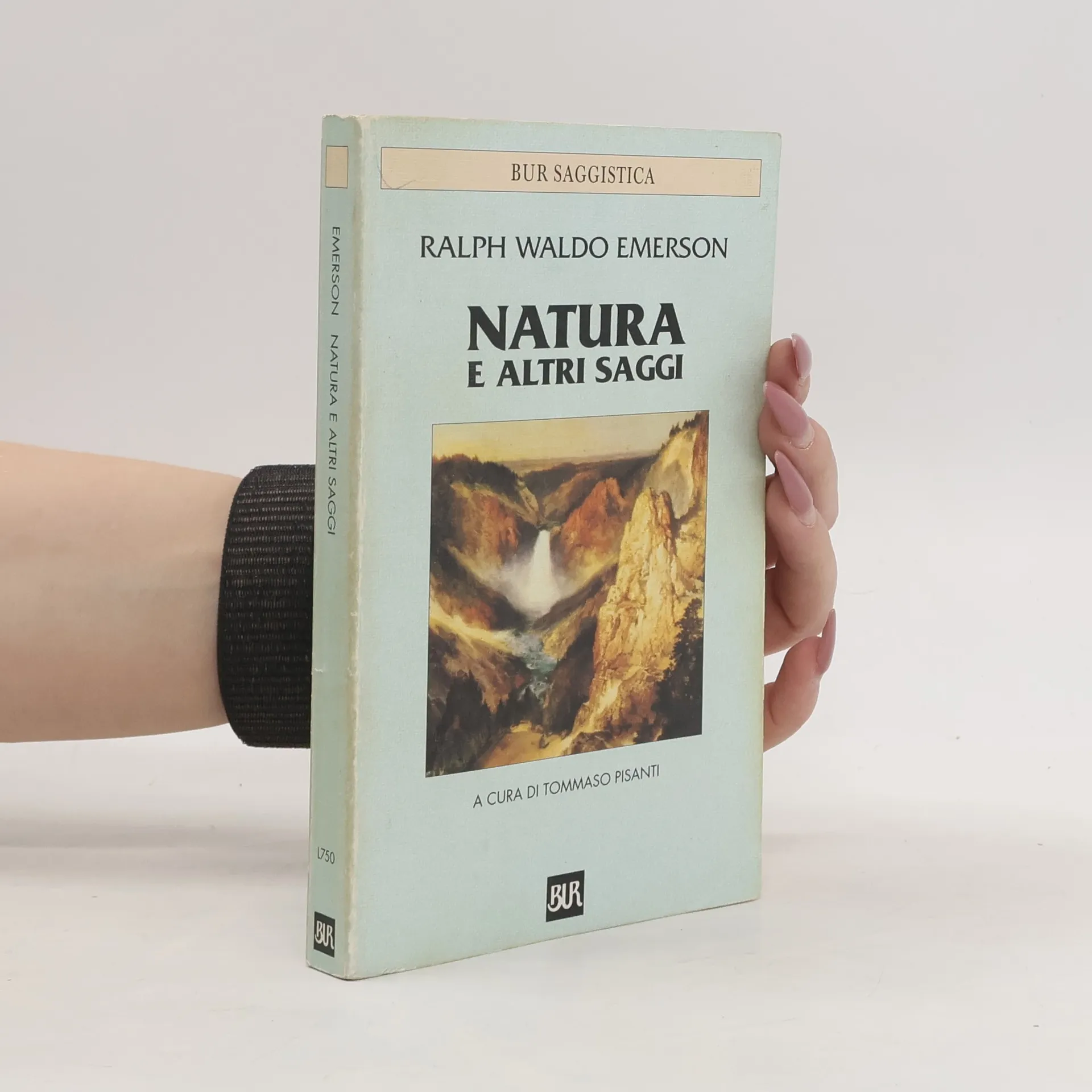
Ralph Waldo Emerson war ein amerikanischer Essayist, Dichter und eine führende Figur des Transzendentalismus. Seine Schriften erforschen den Glauben an die 'Überseele' und lehnen traditionelle religiöse Dogmen zugunsten eines inneren Geistes ab. Emersons Stil zeichnet sich durch scharfsinnige Aphorismen aus, die Heuchelei aufdecken und unabhängiges Denken fördern. Seine radikale Philosophie inspirierte Generationen von Denkern und Schriftstellern, darunter Henry David Thoreau und Friedrich Nietzsche, und sein Werk ist bis heute einflussreich.
In diesem Buch sind zehn Essays von Ralph Waldo Emerson enthalten, die erstmalig 1836 veröffentlicht wurden. Die Essays handeln von Betrachtungen der Natur und der Menschen und deren charakteristischen Eigenschaften. Emerson versteht es, durch seine klare und tiefsinnige Ausdrucksweise den Leser in den Bann zu ziehen. „Ahme den Gang der Natur nach. Ihr Geheimnis ist Geduld.“ (Ralph Waldo Emerson)
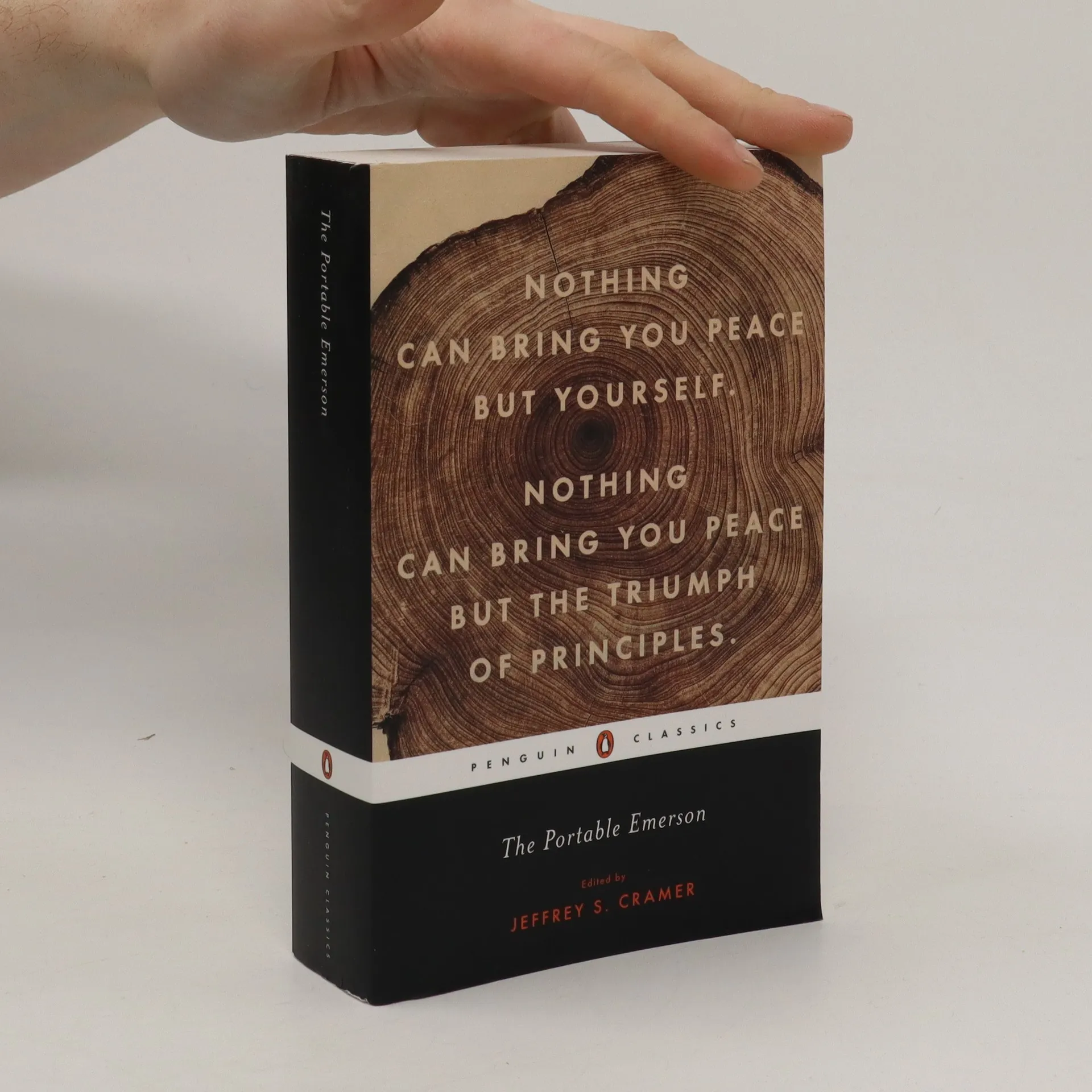
»Suche dich nicht außerhalb deiner selbst!« In seinem berühmten Essay »Selbstvertrauen« empfahl Ralph Waldo Emerson, sich selbst als Quelle wahrer Freiheit und Sinngebung zu begreifen. Der Mensch müsse nur die schöpferische Auseinandersetzung mit sich suchen und sein Leben in einfacher Art und Weise gestalten. Der amerikanische Philosoph dachte schon vor knapp zweihundert Jahren über das rechte Leben im Einklang mit sich und der Natur nach. Seine luziden Einsichten inspirieren heute vielleicht mehr denn je zu ganz persönlichen Antworten. »Niemand kann dir Frieden bringen als du selbst« Emersons Weltsicht in seinen Essays: »sozusagen die intellektuelle Unabhängigkeitserklärung Amerikas« (getabstract) Optimismus, Machermentalität und Respekt vor der Natur als göttliche Lehrmeisterin - das ist Emersons Welt Emerson empowers: Der Theologe und Philosoph gilt manchen als Vater der Selbsthilfeliteratur
Der Text thematisiert Ralph Waldo Emersons Aufruf zur Selbständigkeit und Selbstvertrauen des Individuums. Die Berliner Ausgabe von 2023 präsentiert eine bearbeitete Neuauflage des Erstdrucks von 1841, übersetzt von Dr. Karl Federn und Thora Weigand. Mit lesefreundlichem Großdruck und einem großzügigen Format bietet das Buch eine zugängliche Möglichkeit, sich mit Emersons philosophischen Ideen auseinanderzusetzen. Die sorgfältige Gestaltung und der Neusatz durch Theodor Borken unterstreichen die zeitlose Relevanz der Themen, die in Emersons Werk behandelt werden.
Kinder des Waldes« nannte der Dichterphilosoph Ralph Waldo Emerson (1803–1882) einst seine Gedanken, nämlich unmittelbar geboren aus tiefen Einsichten in den Geist und die Seele der Natur. Mit seinen Schriften beförderte Emerson wie kaum ein Zweiter die intellektuelle und künstlerische Eigenständigkeit Amerikas. Diese Ausgabe präsentiert die eindrücklichsten und prägnantesten Auszüge aus seinem breit gefächerten Werk, die der österreichische Schriftsteller und Kulturhistoriker Egon Friedell Anfang des 20. Jahrhunderts zusammengetragen und kongenial übersetzt hat.
Er galt als der erste Philosoph aus amerikanischem Geist, seine Essays wurden als die intellektuelle Unabhängigkeitserklärung Amerikas gefeiert: Ralph Waldo Emerson. Dieser Band vereinigt sämtliche Essays der ersten Folge von 1841 in vollständiger Neuübersetzung von Harald Kiczka, mit zahlreichen Anmerkungen und einem ausführlichen Register.
»Seine Gedanken sind heute für uns jung, denn sie kommen aus einem Weltteil, der sich rascher und unter anderen Bedingungen entwickelt hat, als der unsrige. Aber sie werden auch in späteren Zeiten niemals altern und den Zeitgeschmack überdauern, denn Emerson schöpft aus zwei Quellen, die immer frisch bleiben: aus der Natur und aus seinem Herzen. Daher hat er allen Menschen und allen Zeiten etwas zu sagen.« Egon Friedell »Ich sehe in ihm eines der wertvollsten Vermächtnisse des nachgoetheschen Jahrhunderts. « Ernst Robert Curtius His thoughts are young for us, because they come from a part of the world, which has developed rapidly, and in other conditions than ours. But they will never age even in later times and survive the current taste, because Emerson draws from two sources that are always fresh: from nature and from his heart. Therefore he has to say something to all people and all times. "Egon Friedell "I see in him one of the most valuable legacies of nachgoetheschen century. «Ernst Robert Curtius
Die 1836 erschienenen Überlegungen sind, neben den Schriften von Emersons Schüler Henry David Thoreau, bis heute der bedeutendste amerikanische Beitrag über das Verhältnis des Menschen zur Natur.
Neuausgabe der ersten deutschen Übersetzung von Adolph Holtermann von 1868
64 Seiten
3 Lesestunden
Der Essay „Die Natur“ von Ralph Waldo Emerson, erstmals 1836 veröffentlicht, wird hier in einer sorgfältig überarbeiteten Neuausgabe präsentiert, die auf der ersten deutschen Übersetzung von Adolph Holtermann aus dem Jahr 1868 basiert. Diese Ausgabe zeichnet sich durch lesefreundlichen Großdruck und ein ansprechendes Format aus. Der Text wurde an die aktuelle deutsche Rechtschreibung angepasst, um die Lesbarkeit zu verbessern. Die Berliner Ausgabe von 2022 bietet zudem eine ansprechende Umschlagabbildung und ist Teil der Henricus - Edition Deutsche Klassik GmbH.
Ralph Waldo Emerson, ein zentraler Denker des 19. Jahrhunderts und Begründer des Transzendentalismus, hinterließ bedeutende Tagebücher, die Gedichtfragmente, Aphorismen und philosophische Überlegungen enthalten. Sie bieten Einblicke in die politische und intellektuelle Entwicklung der USA und reflektieren wesentliche Merkmale der amerikanischen Mentalität.
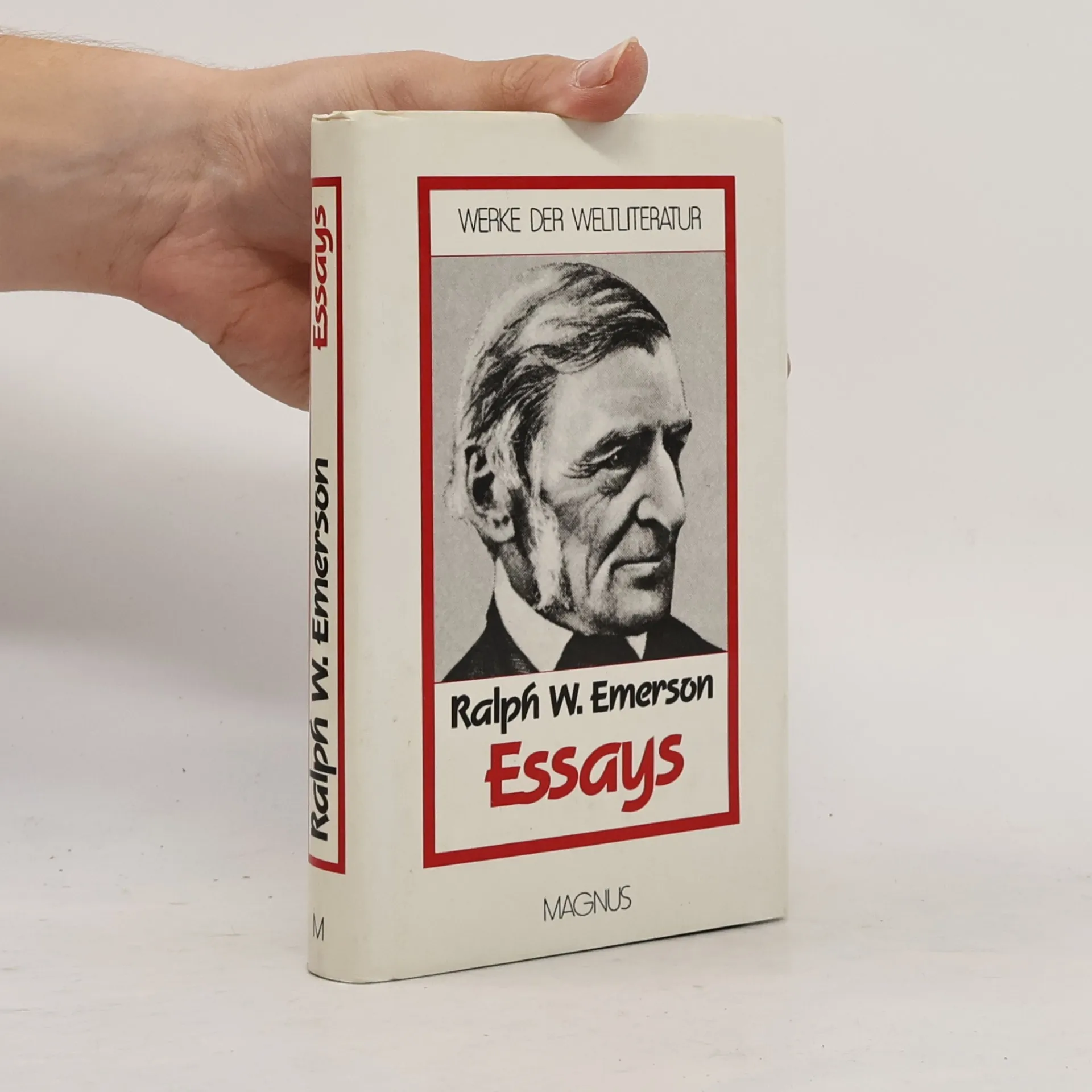
Der große amerikanische Literat, Philosoph und Menschenfreund Emerson erneuerte immer wieder seine Forderung nach einer radikalen Erneuerung und geistigen Selbstbestimmung der amerikanischen Kultur und Literatur. Damit beeinflusste er die amerikanische Geistesgeschichte nachhaltig - Gröls Verlag (Edition Werke der Weltliteratur)
Ralph Waldo Emerson (1803-1882), amerikanischer Dichter und Philosoph, ursprünglich Theologe, Hinwendung zur Natur; wird zum führenden Vertreter der 'amerikanischen Renaissance'
Emerson remains one of America’s least understood writers, having spawned neither school nor follower. Those wishing to discover or reacquaint themselves with Emerson’s writings but who have not known where or how to begin will not find a better starting place or more reliable guide than David Mikics in this richly illustrated Annotated Emerson.
The only collection of the complete First and Second Series of essays by
America's most popular sage, available in an affordable paperback edition. A
must for students of American culture and literature
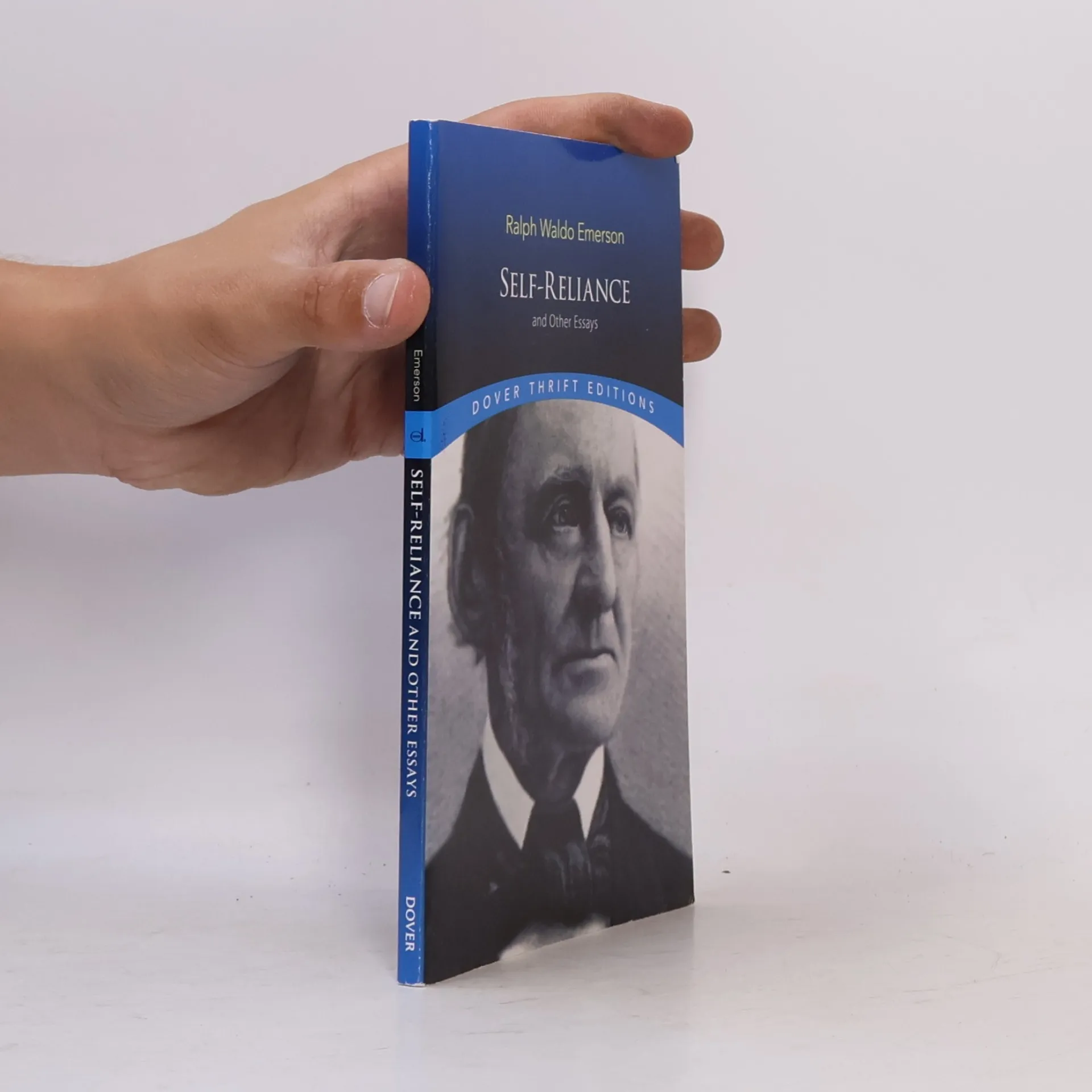
Emerson's 1841 essay explores the theme of individuality and the importance of self-trust in personal development. It emphasizes the significance of nonconformity and the inner voice guiding one’s beliefs and actions. Alongside this foundational work, the collection includes essays that delve into interconnected themes such as the divine presence in humanity, the cyclical nature of life, the essence of poetry, the richness of experience, and the value of friendship, showcasing Emerson's profound philosophical insights.
Exploring themes of individualism, spirituality, and humanity's connection to nature, this collection delves deeper into transcendentalist ideas. Notable essays include "The Poet," which defines the poet's role in revealing truth, and "The Over-Soul," discussing the divine unity among all beings. Emerson also examines life's cyclical nature in "Circles," advocating for acceptance of change. "Self-Reliance" and "The Conduct of Life" emphasize authenticity and self-trust. His poetic style continues to inspire thinkers and seekers, solidifying his legacy in American transcendentalism.
Daily inspiration from American philosopher and transcendentalist Ralph Waldo Emerson Featuring excerpts from Ralph Waldo Emerson’s essays, poems, and lectures, Everyday Emerson offers 365 snippets of wisdom and insight from one of America’s greatest writers and philosophers. An astute observer of both nature and society, Emerson’s writing touches on themes of individuality, freedom, and human potential, all of it shot through with a profound love and awe of the natural world. The excerpts in Everyday Emerson are inspiring and thought provoking—a daily invitation to engage the world with imagination and intention. In addition to daily quotes, the end of the book also includes selections from Emerson's beloved essay "Self-Reliance." Both longtime appreciators of Emerson’s work and readers who would be intimidated by a complete book of essays will find something delightful in its pages.
A comprehensive collection of writings by “the most influential writer of the nineteenth century” (Harold Bloom) Ralph Waldo Emerson’s diverse body of work has done more than perhaps any other thinker to shape and define the American mind. Literary giants including Henry David Thoreau, Nathaniel Hawthorne, and Walt Whitman were among Emerson’s admirers and protégés, while his central text, Nature, singlehandedly engendered an entire spiritual and intellectual movement in transcendentalism. This long-awaited update—the first in more than thirty years—presents the core of Emerson’s writings, including Nature and The American Scholar, along with revelatory journal entries, letters, poetry, and a sermon. For more than seventy years, Penguin has been the leading publisher of classic literature in the English-speaking world. With more than 1,700 titles, Penguin Classics represents a global bookshelf of the best works throughout history and across genres and disciplines. Readers trust the series to provide authoritative texts enhanced by introductions and notes by distinguished scholars and contemporary authors, as well as up-to-date translations by award-winning translators.
From one of the greatest figures of 19th-century America... This new edition offers a broad view of the author's finest work, featuring his critical essays, poems, and letters, plus a considerable amount of material from the Journals, including an entry discovered in 1964 in the Library of Congress.
Nietzsche said that he never travelled anywhere without a volume of Emerson's essays in his pocket, while Mathew Arnold described Emerson as 'the greatest prose writer of the century'. It is a remarkable writer who could at once appeal to a man considered a pillar of Victorian society, and to a man dedicated to bringing down such pillars. In his own time Emerson was considered a profoundly radical thinker, but after his death he was increasingly seen as a bland Boston Brahmin, contentedly ripening with the new England melons, benignly meditating on such viperous notions as the Over–soul.He is now appreciated as one of the truly seminal American writers, refusing all orthodoxies, complacencies and fixities—both a truly celebratory and deeply adversarial thinker. A unique paperback edition, with introduction and chronology of Emerson's life and times.
In this excerpt, the author reflects on the relationship between affection and intellectual output. When writing to a friend, thoughts flow freely, unlike when one sits down to write formally. The presence of a stranger can evoke a mix of excitement and anxiety within a household, prompting preparations and a desire to present oneself well. The anticipation of a commended stranger brings forth a desire to engage in meaningful conversation, leading to a heightened sense of creativity and eloquence. In their presence, individuals often feel inspired to express deeper thoughts and share rich experiences, surprising those around them with their newfound abilities. However, this dynamic shifts once the stranger reveals their own biases and shortcomings. The moment they intrude with their perspectives, the magic dissipates, and the conversation loses its spark. The stranger is no longer an idealized figure but becomes familiar, bringing along the mundane realities of ignorance and misunderstanding. This exploration underscores the delicate balance between admiration and the vulnerability of genuine connection.
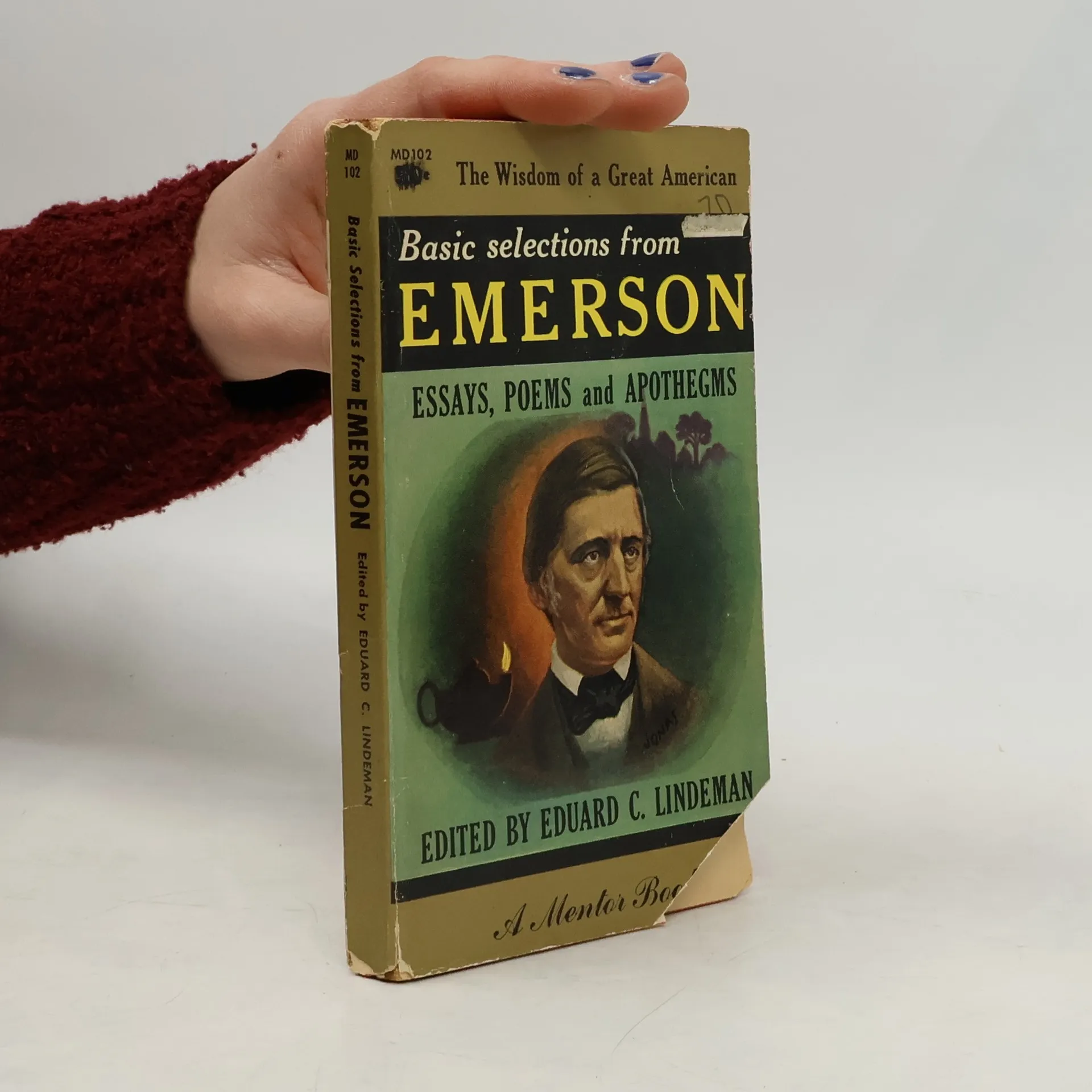
Essayist, poet, and philosopher, Ralph Waldo Emerson (1803–1882) propounded a transcendental idealism emphasizing self-reliance, self-culture, and individual expression. The six essays and one address included in this volume, selected from Essays, First Series (1841) and Essays, Second Series (1844), offer a representative sampling of his views outlining that moral idealism as well as a hint of the later skepticism that colored his thought. In addition to the celebrated title essay, the others included here are "History," "Friendship," "The Over-Soul," "The Poet," and "Experience," plus the well-known and frequently read Harvard Divinity School Address.
This comprehensive volume features a selection of Ralph Waldo Emerson's lectures and essays, including lesser-known works like "Quotation and Originality." It showcases his celebrated essays on self-reliance, nature, and individualism, complemented by annotations from critic Richard Poirier. The book is part of the Library of America Paperback Classics series.
Ralph Waldo Emerson believed that an appreciation of its vast natural resources would become the foundation of American culture. His assertion that human thought and actions proceed from nature, was a radical departure from the traditional European emphasis on domesticating nature to suit human needs. His philosophy is rich in common natural scenes of daily life, and expresses the inherent harmony between man and nature. This collection brings together 15 of Emerson's most significant essays, including "Nature", "The American Scholar", "Self-reliance" and "The Transcendentalist", as well as his assessments of Montaigne, Napoleon and Thoreau.
With their call for "Simplicity, simplicity, simplicity!," for self-honesty, and for harmony with nature, the writings of Henry David Thoreau are perhaps the most influential philosophical works in all American literature. The Selections in this volume represent Thoreau at his best. Included in their entirety are Walden, his indisputable masterpiece, and his two great arguments for nonconformity, "Civil Disobedience" and "Life Without Principle." A lifetime of brilliant observation of nature–and of himself–is recorded in selections from A Week on the Concord and Merrimack Rivers, Cape Cod, The Maine Woods, and the Journal.
Ralph Waldo Emerson explores the delicate balance between societal engagement and personal introspection in this collection of essays. The writings delve into themes such as friendship, independence, and the significance of solitude, emphasizing the importance of authenticity over conformity. Notable essays include "Old Age," which reflects on the wisdom gained through aging, and "Civilization," which critiques societal progress. Emerson's eloquent prose encourages readers to contemplate their role in society, the value of genuine relationships, and the necessity of solitude for personal growth and creativity.
He was an ordained minister, renowned orator, and beloved author and poet whose ideas on nature, philosophy, and religion influenced authors such as Henry David Thoreau and Walt Whitman. Through his writings, Emerson ardently professed the importance of being an individual, resisting the comfort of conformity, and creating an art of living in harmony with nature. This soul-satisfying anthology of twelve favorite essays is a treasure.In the title essay, Emerson writes about the extraordinary power of nature as a way of bringing the divine into our lives. In "Gifts," he reminds us that flowers and gold may be acceptable to those we love, but "the only gift is a portion of thyself." "Spiritual Laws" points out that because a higher law than our own rules the world, there is no need for struggle. Other essays include "Character," "Prudence," "Intellect," "Love," "Beauty," "The American Scholar" address and others. Readers of all ages will want to keep this volume on hand to inspire and refresh the spirit
Emerson was a pivotal figure in the transcendentalist movement during the mid-19th century, known for his roles as an essayist, lecturer, philosopher, abolitionist, and poet. His works explore themes of individuality, nature, and the human spirit, reflecting his belief in self-reliance and the inherent goodness of people. Through his influential writings and speeches, he inspired a generation to embrace personal and societal transformation.
Ralph Waldo Emerson was one of the leading figures in the thought and literature of our civilisation. He was an essayist, critic, poet, orator and popular philosopher. As a writer, he was always concerned about his audience and his peers. Emerson's essays are a series of loosely related impressions, maxims, proverbs and parables. The Art of Successful Living is a compilation of three of his well-known essays Love, Friendship and Self-Reliance. In these essays, he challenges and investigates the age-old traditions and insists on the interpenetration of the ideal and the real, of the spiritual and the material.
Exploring themes of individuality and the relationship with nature, this collection features eight significant essays by Ralph Waldo Emerson, a key figure in American transcendentalism. His works, including "Self-Reliance" and "Nature," emphasize the importance of personal philosophy and self-discovery. Emerson's influence extended to notable authors like Thoreau and Whitman, and his extensive public speaking career showcased his commitment to educating society on his ideals. This anthology reflects his profound insights into philosophy, religion, and the human experience.
Emerson's collection showcases the beauty of American nature through poetry that celebrates themes of freedom, love, and the natural world. It features a variety of pieces, including "May-day" and "The Adirondacs," reflecting on the splendor of nature and its connection to human emotion. The poems express joy and admiration for the environment, invoking imagery of birds and the vibrancy of spring. Emerson's lyrical style captures the essence of nature's influence on the heart and spirit, making it a cherished work for poetry lovers.
This publication focuses on enhancing accessibility for readers with impaired vision by offering historical works in large print. Megali, the publishing house behind this initiative, specializes in reproducing these important texts to ensure that they remain available to a wider audience.
Thoreau's Walden, Civil Disobedience & Walking, and Emerson's Nature, The American Scholar & Self-Reliance
326 Seiten
12 Lesestunden
This volume compiles key writings of Transcendentalism, showcasing the philosophical and literary contributions of influential figures like Ralph Waldo Emerson and Henry David Thoreau. It explores themes of individuality, nature, and self-reliance, highlighting the movement's emphasis on personal intuition and spiritual connection to the world. The collection serves as an essential resource for understanding the ideals that shaped American thought and culture in the 19th century.
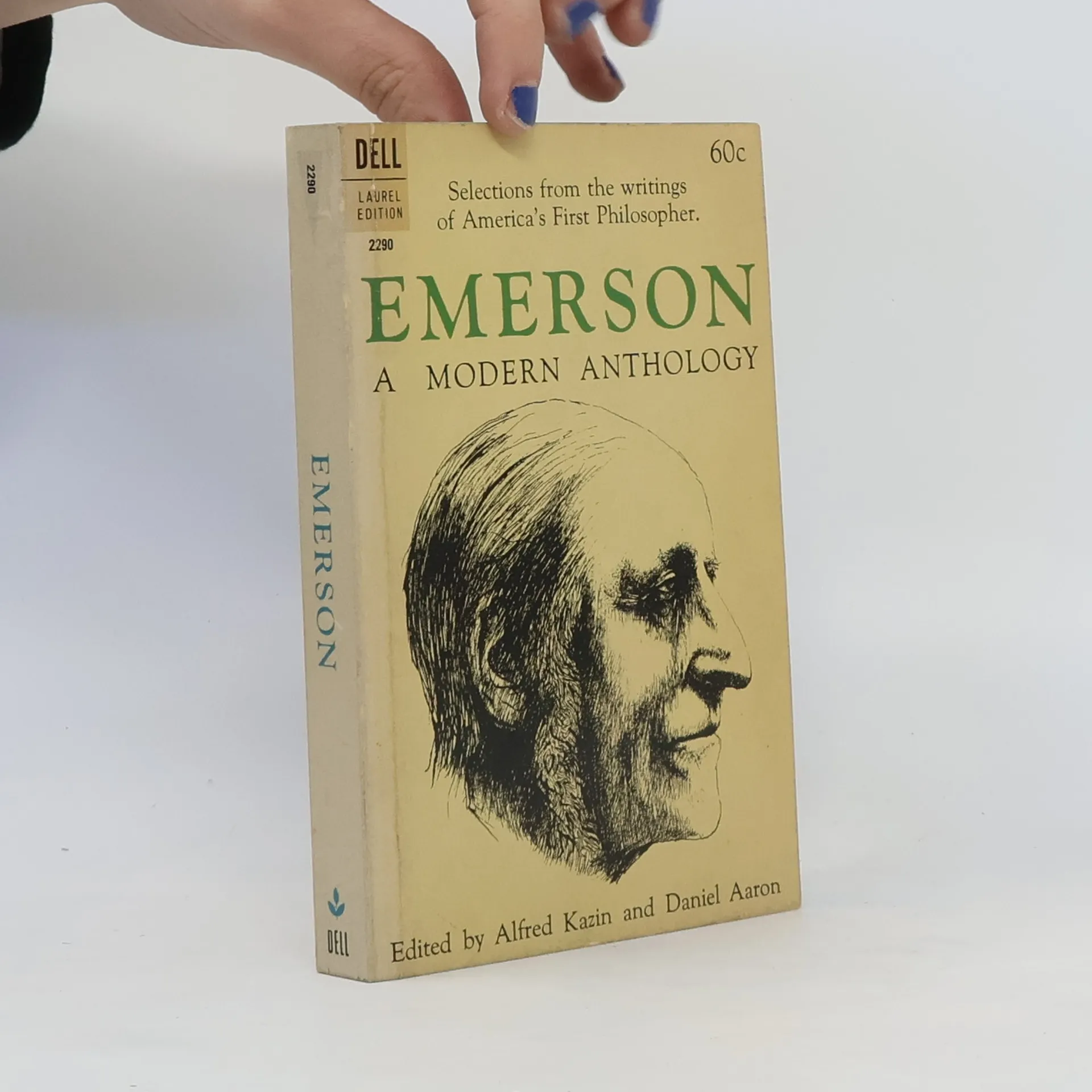
Through his writing and his own personal philosophy, Ralph Waldo Emerson unburdened his young country of Europe's traditional sense of history and showed Americans how to be creators of their own circumstances. This title introduces fifteen of Emerson's most significant writings. schovat popis
Thoreau Il semblait que les brises l'apportaient, Il semblait que les moineaux lui enseignaient, Comme si par un signe secret il savait Où dans les champs lointains l'orchis poussait. Henry David Thoreau était le dernier descendant masculin d'un ancêtre français venu de l'île de Guernesey. Son caractère présentait des traits occasionnels tirés de ce sang en combinaison singulière avec un génie saxon très fort.