

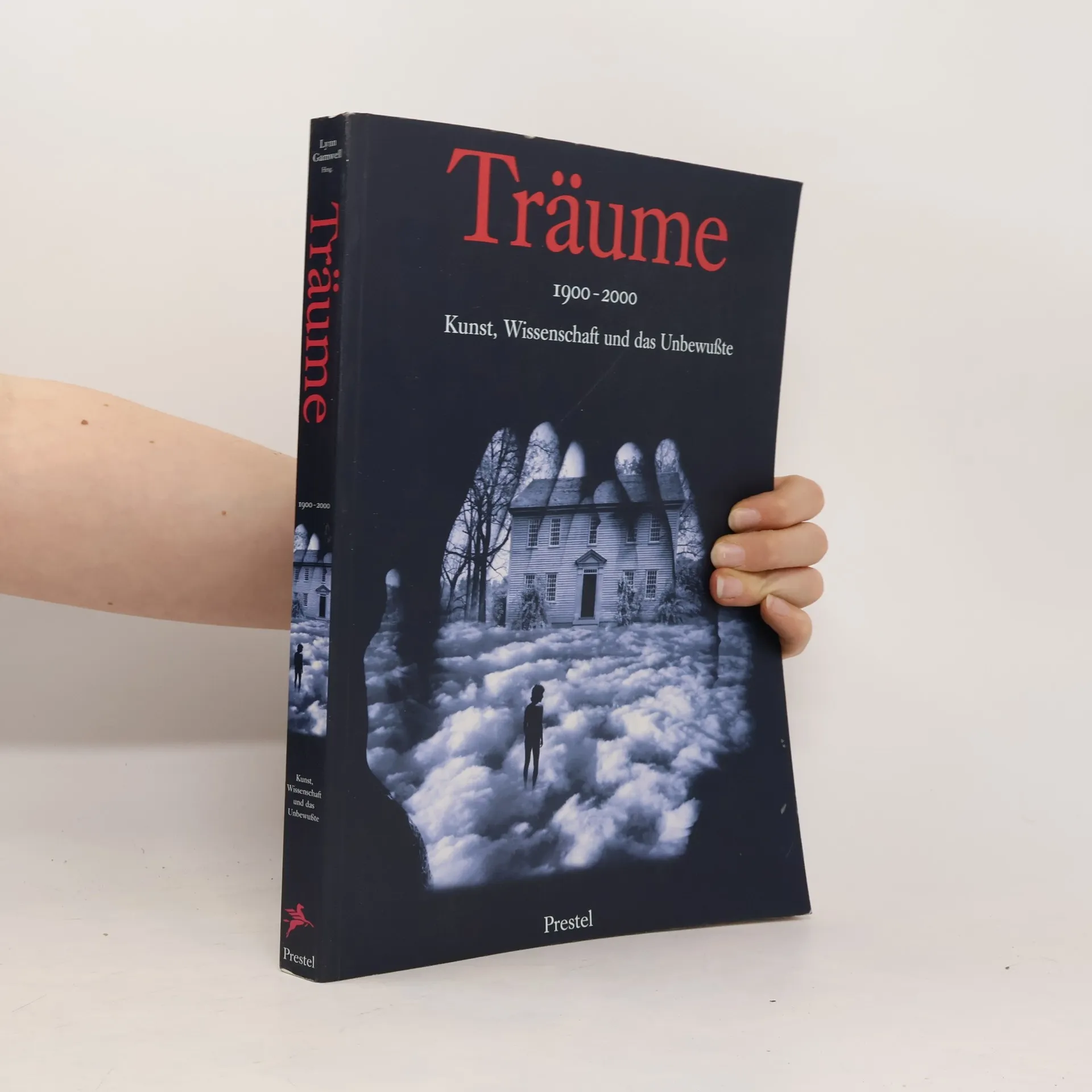
Träume 1900 - 2000
- 302 Seiten
- 11 Lesestunden


Art, Science, and the Spiritual - Revised and Expanded Edition
The book delves into the intersection of modern art and scientific discovery, illustrating how advancements like the microscope and telescope influenced artists from the Impressionist era to contemporary movements. Lynn Gamwell examines how these scientific tools unveiled previously unseen realms, inspiring artists to create abstract and non-objective works that reflect a new secular worldview. By tracing the evolution of visual arts, she highlights how artists interpret nature's complexity, portraying it as mysterious, dangerous, or beautiful within a dynamic, purposeless universe.
Exploring the intersection of mathematics and art, this cultural history spans from antiquity to the present, highlighting how philosophical ideas shape mathematical practices. Lynn Gamwell delves into the significant influence of mathematical concepts on artistic expression, showcasing a rich array of illustrations that include both artworks and mathematical diagrams. This comprehensive examination reveals the profound connections between these two disciplines, emphasizing their collaborative evolution throughout history.
Science, Art, and the Unconscious Mind
When Sigmund Freud published The Interpretation of Dreams in 1900, he initiated the modern exploration of dreams, revealing the unconscious mind to artists and filmmakers. This beautifully designed and illustrated volume commemorates the centenary of Freud's work by examining the evolving roles of dreams in twentieth-century art and science. Throughout the century, scientific research into the psychology and physiology of dreams inspired artists like Odilon Redon, Joan Miró, Jenny Holzer, Ingmar Bergman, and Laurie Anderson to create compelling works rooted in the unconscious. The book features a hundred color and fifty black-and-white illustrations showcasing a diverse range of artistic expressions, including painting, photography, sculpture, video, film, performance, and dance. Lynn Gamwell's opening essay reviews the psychoanalytic understanding of dreams and their artistic interpretations. Ernest Hartmann's essay explores the connections between the somatic and psychological aspects of dreaming and their parallels with creative thought. Donald Kuspit concludes with an assessment of the shift from the mystical views of the nineteenth century to the scientific paradigm of the twentieth century. The volume captures a century of dreamwork, culminating in a "dream archive" that catalogs approximately five hundred examples of twentieth-century art related to dreams.