

Gratis Versand in ganz Deutschland
Bookbot

Musa Khan Jalalzai

    Central Asia is Teetering on the Brink
    Is the UK Becoming a Failed State? Intelligence Diversity, Domestic Governance, Accountability and Devolution of Powers
    On the Brink
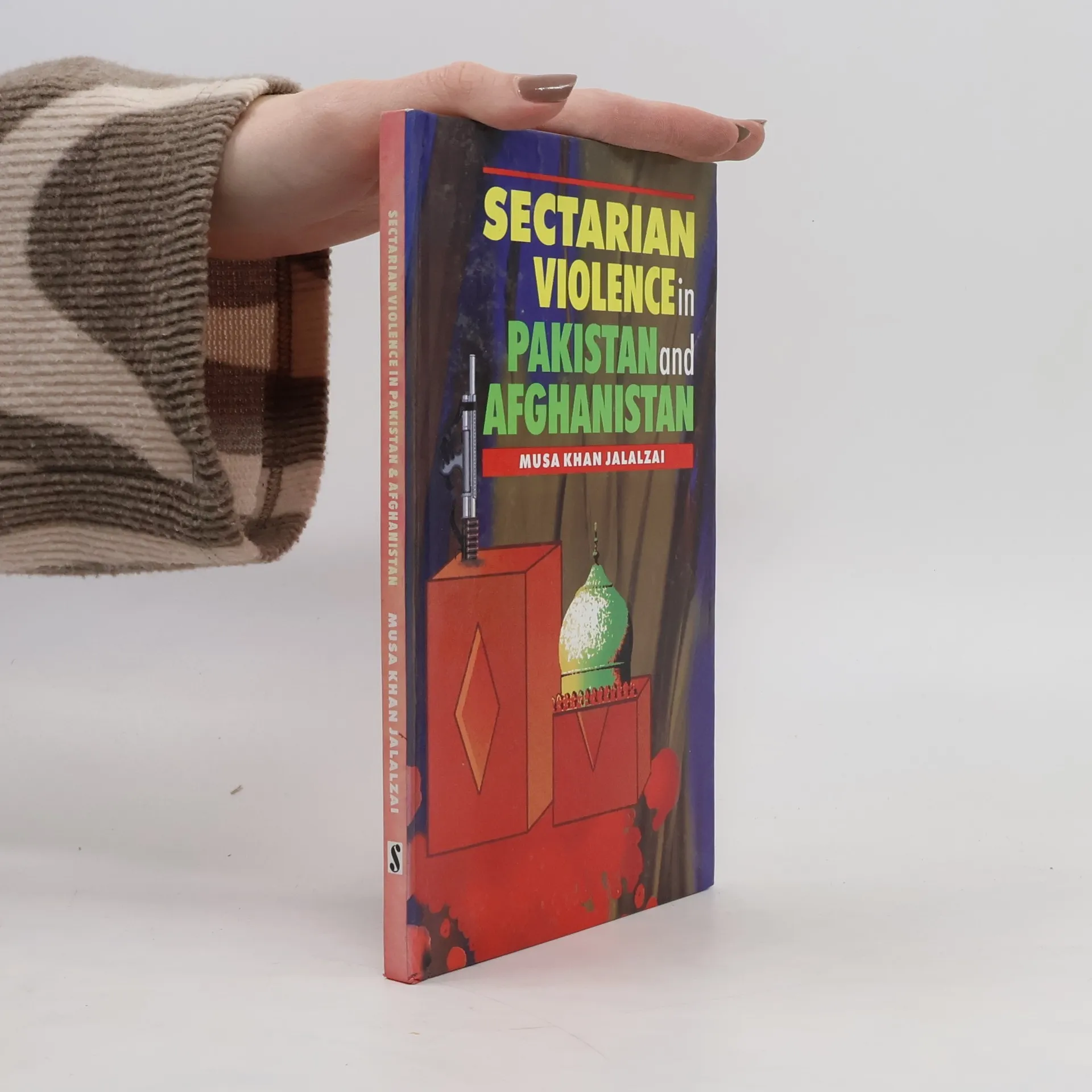
    Sectarian violence in Pakistan and Afghanistan
    Global Jihad
    Die lesbische, schwule, bisexuelle und islamische Theologie der Homosexualität
    • Die lesbische, schwule, bisexuelle und islamische Theologie der Homosexualität

      Die schwule und bisexuelle Identität und die Klärung der Fatwas von Scheich al Tantawi und Imam Khomeini aus der Sicht eines fortschrittlichen Muslims

      • 324 Seiten
      • 12 Lesestunden

      Die Buchbeschreibung thematisiert die dramatische Situation von Schwulen, Transgender und Bisexuellen in Afghanistan nach der US-Invasion in den 2000er Jahren. Sie beleuchtet die Zunahme von Unmoral, Menschenhandel und sexueller Ausbeutung, die in einem korrupten politischen Umfeld gedeihen. Besonders im zentralen und südlichen Punjab von Pakistan wird die bestehende Kultur der LGBT-Gemeinschaften angesprochen. Unter der Herrschaft der Taliban sind diese Gruppen jedoch extremen Bedrohungen ausgesetzt, was die Dringlichkeit ihrer Lage verdeutlicht.
      Die lesbische, schwule, bisexuelle und islamische Theologie der Homosexualität
    • Global Jihad

      Wahabism, Salafism, the ISIS-K, Taliban, PKK, Kurdish Hezbollah, TTP and Tablighi Jamaat

      • 344 Seiten
      • 13 Lesestunden
      2,0(1)Abgeben

      Armed governance as a mood of rule, violent competition, and control has characterized the modern history of Afghanistan. The majority of actors participating in determining such a process of governance are militias supported by neighbouring states. The dynamics of Taliban legitimacy, and their disputed leadership, however, is not out of the way from other powerful terrorist groups, suchlike the ISIS, Lashkar-e-Taiba and Central Asian groups. These external actors may also influence the relationship between Taliban and Afghan civilians. Taliban's way of governance has taken place under the conditions of civil war. They have adopted culture of violence, torture and jihad against education of Afghan girls. They haven't relinquished the culture of terrorising civilians. How the Taliban seized power in Kabul is a major question. Contexts of civil war and state weakness are often characterized by situations of governance by terror actors. The failure of Taliban intelligence to provide reliable information about the IS's military strength has raised serious questions about the credibility of their misgovernment. While one of the important functions of an intelligence agency is to provide timely warnings of hostile military action in the battlefield.

      Global Jihad
    • On the Brink

      The US, China and the Nuclear War Shadows

      • 230 Seiten
      • 9 Lesestunden

      Over the past two decades, China has emerged as a technological superpower, challenging the United States' global dominance. Since 2018, U.S. policymakers have implemented various restrictions and sanctions in response to China's economic rise. China has asserted control over several islands in the South China Sea, establishing naval bases and surveillance systems to monitor rival activities. President Trump initially sought a friendly approach to manage China's economic challenges but, after failing to curb its technological advancements, declared a trade war. Tensions escalated further when Taiwan's President Tsai Ing acknowledged the presence of U.S. forces in Taiwan on October 28, 2021, prompting the U.S. to bolster arms sales to Taiwan against Chinese aggression. This shift has altered the perceptions of European, Asian, and African nations towards U.S. leadership, with many questioning the reliability of the Biden administration amid its military and political struggles. China's rise poses significant challenges to U.S. interests across Asia, the Middle East, and Africa. Internal political strife and the politicization of state institutions have tarnished America's image, while China leads in advanced technologies like quantum science, 5G, and artificial intelligence. Chinese commentators argue that America's credibility has been so compromised that it can no longer form effective coalitions with Asian neighbors who prio

      On the Brink
    • The drawing powers and attractiveness of the welfare state are government-protected minimum standards of income, health, security, housing, and education. The British welfare state has been enmeshed in multifaceted crises including poverty, racism, lack of coherence, and a smattering of social and political infrastructure. The Westminster thank tank for public services reforms has judged degenerating and decaying health of the British state from the discontenting facts and certitudes of depressed disconsolate feelings of British citizens: "Many of those losing their jobs will be shocked to find just how bare bones the welfare state is. For those earning even the median salary, benefit rates appear woefully inadequate, providing no buffer to allow for an adjustment of outgoings or time to find a comparable job". These challenges have debilitated and infirmed communication of the state on international forums, and incapacitated its domestic enforcement capabilities. After the COVID-19 and African Omicron virus's well-built attacks, and its disaffiliation with the EU, the state is facing economic and political challenges. The Labour government had failed in yesteryears, to address mistrust between government and communities, while correspondingly, and for that reason, the conservative government continued to affix its footprints to goof up and blunders.

      Is the UK Becoming a Failed State? Intelligence Diversity, Domestic Governance, Accountability and Devolution of Powers
    • Central Asia is Teetering on the Brink

      : The Kazakhstan Bellyache, Hayyat Tahrir al-Sham, Liwa al-Muhajireen wal-Ansar, Malhama Tactical, Tavhid va Jihod Katibasi, the Islamic State (IS), Taliban, and Prospect of Nuclear Terrorism

      • 308 Seiten
      • 11 Lesestunden

      The establishment of the Taliban's Suicide Brigade has reignited concerns in Central Asia, Russia, and Europe, particularly due to the deployment of over 6,000 fighters near their borders. Both Central Asia and Europe have refused to recognize the Taliban government, fearing the implications of this military presence. Recent violence in Kazakhstan has validated predictions that terrorist and extremist organizations based in Afghanistan could target Central Asian states with nuclear or biological weapons. These groups may attack civilian, military, and nuclear facilities, as they have regained the expertise to deploy a Dirty Bomb. Nuclear terrorism poses a persistent threat to peace in the region. Additionally, Tablighi Jamaat from Pakistan has emerged as a new threat, creating extremist networks in Pakistan, India, and Bangladesh. This group demonstrated its capabilities by orchestrating protests against Kazakhstan's government in January 2022. The recent turmoil in Kazakhstan and Tajikistan has heightened fears of extremist and jihadist groups potentially using biological, radiological, and chemical weapons against military and critical infrastructure. The most significant threat to Russia's national security arises from nuclear smuggling and state-sponsored terror groups operating within Central Asia.

      Central Asia is Teetering on the Brink
    • The UK Big-3

      The French and German Intelligence Reforms, Intelligence Diversity and Foreign Espionage

      • 252 Seiten
      • 9 Lesestunden
      The UK Big-3
    • Militant Wahhabism

      The Chechen Jihad, Tablighi Jamaat and the Taliban Suicide Terrorism in Pakistan and Afghanistan

      • 188 Seiten
      • 7 Lesestunden

      The narrative explores the alarming rise of terrorist and extremist organizations in Central Asia, particularly following recent violent incidents in Kazakhstan. It highlights the potential threats these groups pose, including the use of nuclear or biological weapons against civilian, military, and nuclear sites in the region and Russia. The author emphasizes the retrieved capabilities of these organizations to execute sophisticated attacks, raising urgent concerns about security and stability in Central Asia.

      Militant Wahhabism
    • The book examines the UK's response to the Covid-19 pandemic, analyzing the government's strategies and decisions throughout the crisis. It delves into the effectiveness of policies implemented, public health measures, and the societal impact, providing a critical perspective on leadership and accountability during a time of national emergency.

      Manage Deaths Instead of Managing Life