

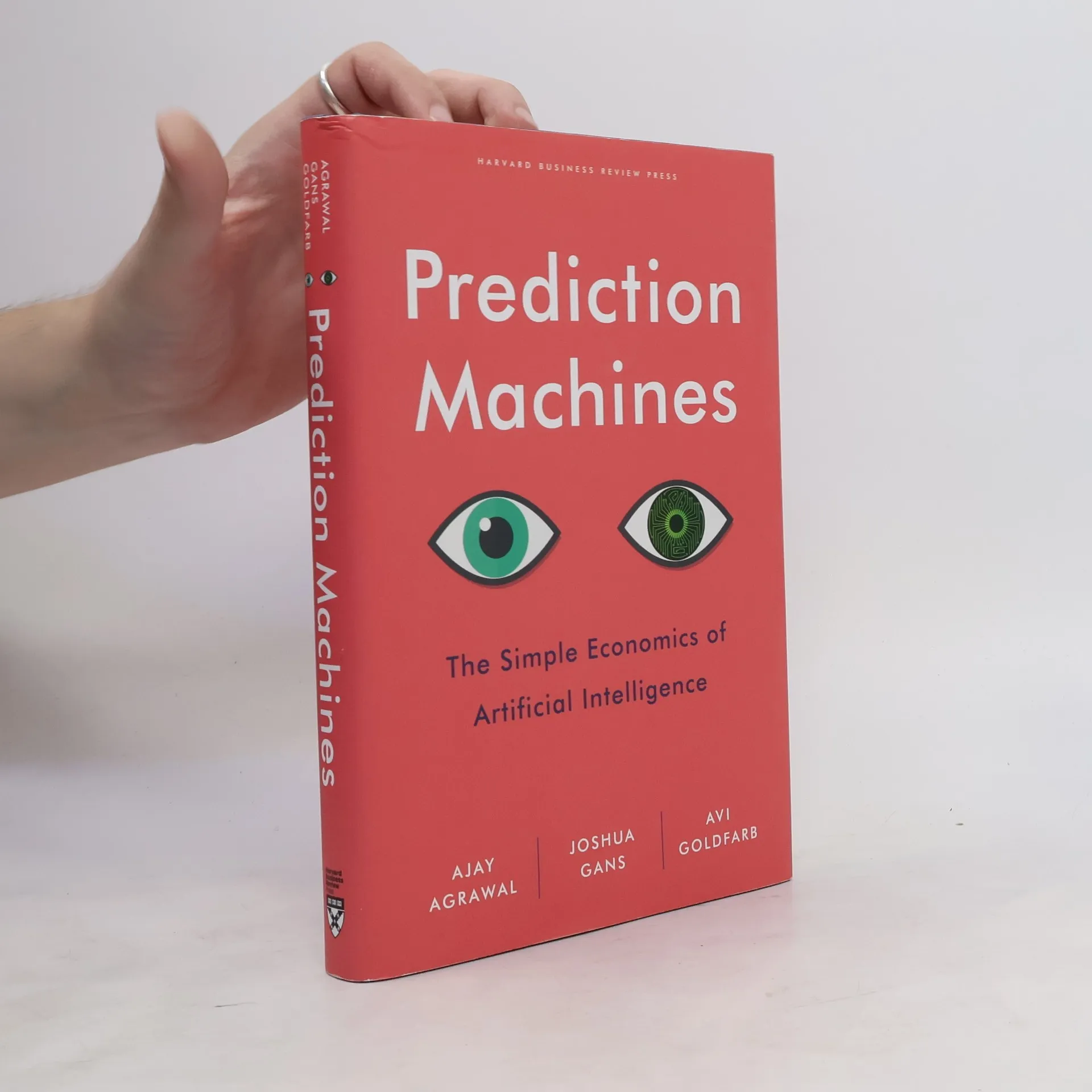
"Artificial intelligence seems to do the impossible, magically bringing machines to life-driving cars, trading stocks, and teaching children. But facing the sea change that AI brings can be paralyzing. How should companies set strategies, governments design policies, and people plan their lives for a world so different from what we know? In the face of such uncertainty, many either cower in fear or predict an impossibly sunny future. But in Prediction Machines, three eminent economists recast the rise of AI as a drop in the cost of prediction. With this single, masterful stroke, they lift the curtain on the AI-is-magic hype and show how basic tools from economics provide clarity about the AI revolution and a basis for action by executives, policy makers, investors, and entrepreneurs. In this newly revised and expanded edition, the authors illustrate how, when AI is framed as cheap prediction, its extraordinary potential becomes clear: Prediction is at the heart of making decisions amid uncertainty. Our businesses and personal lives are riddled with such decisions; prediction tools increase productivity-operating machines, handling documents, communicating with customers; and uncertainty constrains strategy. Better prediction creates opportunities for new business strategies to compete. Reflecting on the book's reception, the authors reset the context, describing the striking impact the book has had and how its argument and its implications are playing out in the real world. And in new material, they explain how prediction fits into decision-making processes and how foundational technologies such as quantum computing will impact business choices. Penetrating, insightful, and practical, Prediction Machines will help you navigate the changes on the horizon. The impact of AI will be profound, but the economic framework for understanding it is surprisingly simple"-- Provided by publisher
Joshua Gans Bücher


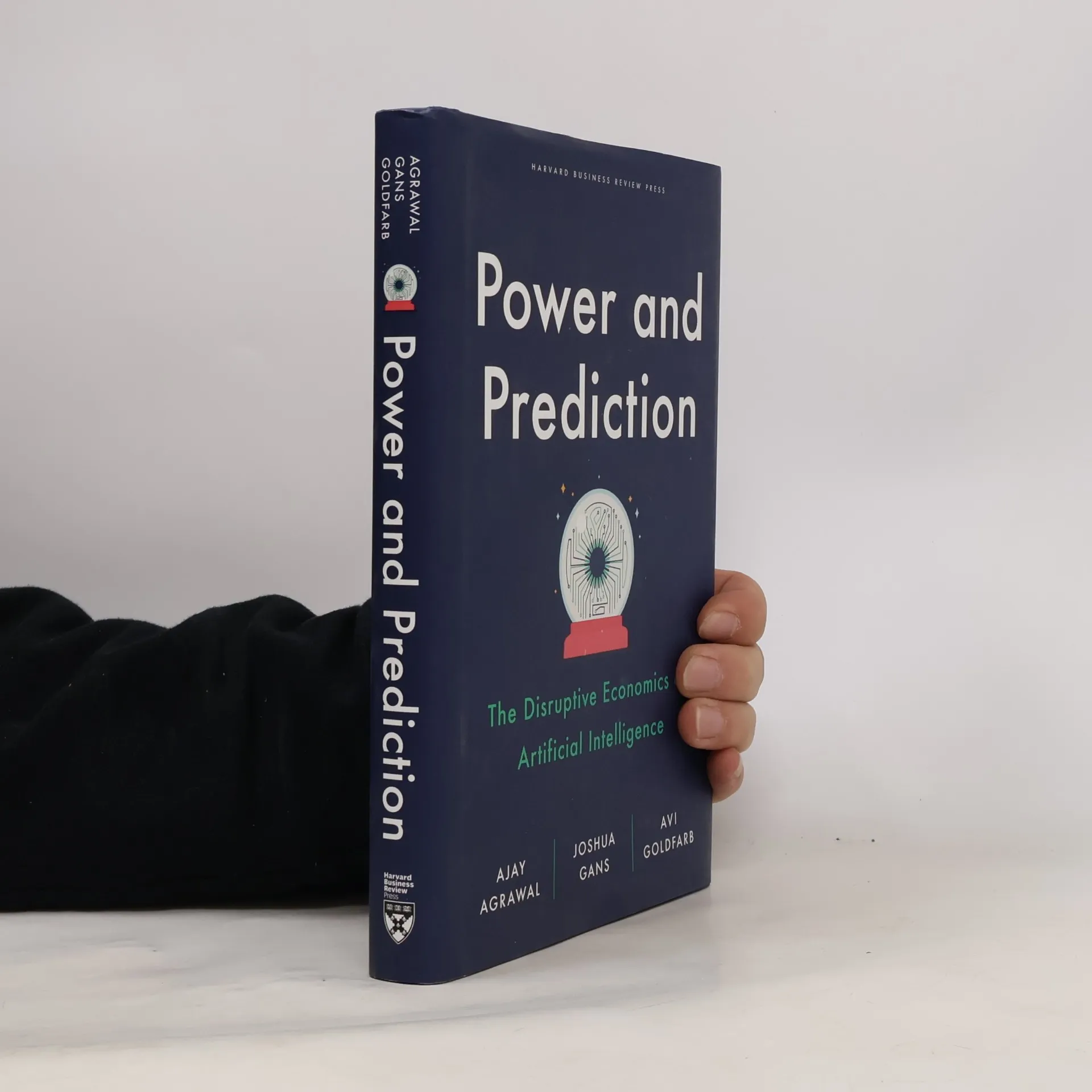
Artificial intelligence (AI) is increasingly integrated into various industries, marking the beginning of its journey toward enhancing predictions that drive strategic business decisions. This transformation promises to disrupt existing practices, but the full impact is yet to be realized. To navigate this shift, businesses must prepare effectively. In their previous work, the authors outlined the fundamental economics of AI; now, they delve deeper into AI as a prediction technology that influences decision-making. They guide businesses in recognizing both disruptive opportunities and threats posed by AI advancements. Their comprehensive analysis of AI's evolution and historical technological disruptions reveals a critical moment: we are in a transitional phase, having seen AI's potential but before its widespread implementation, termed "the Between Times." This period presents both significant opportunities and risks, as improved prediction technologies will challenge traditional methods. The uneven integration of AI across various systems will create distinct winners and losers. The authors provide valuable insights, examples, and practical strategies for business leaders and policymakers to harness AI disruptions effectively, ensuring they work in their favor rather than against them.
The Pandemic Information Gap
- 160 Seiten
- 6 Lesestunden
Why solving the information problem should be at the core of our pandemic response: essential reading about the long-term implications of our current crisis. COVID-19 is caused by a virus. The COVID-19 pandemic is caused by a lack of good information. A pandemic is essentially an information problem: this is the enlightening and provocative idea at the heart of this book. If we solve the information problem, argues economist Joshua Gans, we can defeat the virus. For example, when we don't know who is infected, we have to act as if everyone is infected. If we actively manage the information problem--if we know who is infected and with whom they had contact--we can suppress the virus or buy time for vaccine development. This is an expanded version of an eBook originally published as Economics in the Age of COVID-19.
Innovation + Equality
- 192 Seiten
- 7 Lesestunden
How to get more innovation and more equality. Is economic inequality the price we pay for innovation? The amazing technological advances of the last two decades—in such areas as artificial intelligence, genetics, and materials—have benefited society collectively and rewarded innovators handsomely: we get cool smartphones and technology moguls become billionaires. This contributes to a growing wealth gap; in the United States; the wealth controlled by the top 0.1 percent of households equals that of the bottom ninety percent. Is this the inevitable cost of an innovation-driven economy? Economist Joshua Gans and policy maker Andrew Leigh make the case that pursuing innovation does not mean giving up on equality—precisely the opposite. In this book, they outline ways that society can become both more entrepreneurial and more egalitarian. All innovation entails uncertainty; there's no way to predict which new technologies will catch on. Therefore, Gans and Leigh argue, rather than betting on the future of particular professions, we should consider policies that embrace uncertainty and protect people from unfavorable outcomes. To this end, they suggest policies that promote both innovation and equality. If we encourage innovation in the right way, our future can look more like the cheerful techno-utopia of Star Trek than the dark techno-dystopia of The Terminator .
Prediction Machines
- 250 Seiten
- 9 Lesestunden
Cheap changes everything -- The magic of prediction -- Why it's called intelligence -- Data is the new oil -- The new division of labor -- Unpacking decisions -- The value of judgment -- Taming complexity -- What machines can learn -- Fully automated decision-making -- Deconstructing workflows -- Decomposing decisions -- Job redesign -- AI in the C-suite -- When AI transforms your business -- Managing AI risk -- Beyond business
The book explores the critical role of information in managing pandemics, emphasizing that a lack of knowledge about who is infectious hinders efforts to control the spread of Covid-19. Joshua Gans argues that the significant health and economic impacts of the pandemic stem from this information gap. By framing pandemics as fundamentally information problems, he highlights the necessity of accurate data to effectively break transmission chains and mitigate the crisis.
The Economics of Blockchain Consensus
Exploring the Key Tradeoffs in Blockchain Design
It shows how blockchains can be redesigned to account for key economic trade- offs, and will be of interest to researchers and students of economics, financial technology and computer science, alongside policymakers.
Sztuczna inteligencja (AI) ma wpływ na wiele branż na całym świecie - bankowość i finanse, motoryzację, technologię medyczną, produkcję i handel detaliczny. Dla dwudziestego pierwszego wieku sztuczna inteligencja może być tym, czym elektryczność dla wcześniejszego stulecia. Autorzy w ekscytujący sposób opisują pojawiające się na horyzoncie szanse i zagrożenia, kładąc podwaliny pod nadchodzącą rewolucję. Wypełniony pouczającymi spostrzeżeniami, bogatymi przykładami i praktycznymi poradami - Moc i prognozowanie to przewodnik, który każdy lider biznesowy powinien przeczytać. Dowiedz się, co sprawić, aby skutki rewolucji sztucznej inteligencji działały na twoją korzyść, a nie przeciwko tobie.
Książka ta ma pomóc menedżerom zrozumieć istotę przełomowej innowacji i to, jak na nią reagować. Znajdziecie w niej opis narzędzi, które pozwalają pojąć, jakie są źródła tego zjawiska i jak sobie z nim radzić. Przesłanie książki jest następujące: istnieją dowody na to, że przełomową innowacją da się zarządzić, jednakże proste recepty - jak choćby zalecenie, by zacząć kreować innowację wewnątrz własnej organizacji zanim zmusi nas do tego konkurencja - rzadko okazują się skuteczne. Za to rozwijanie produktów metodą prób i błędów rodem z epoki przedchristensenowskiej wciąż zdaje się działać w świecie pełnym przełomów. Chaos i wątpliwości zostaną rozwiane, a menedżerowie zyskają szansę zmiany nastawienia i przyjęcia, przynajmniej do pewnego stopnia, kontroli nad przyszłością ich biznesów. Chciałbym zamienić niepohamowany lęk w ostrożną nadzieję. To nie jest książka, która ma pogrzebać ideę przełomowej innowacji. Ma on pomóc jej się odrodzić i utrzymać ikoniczny status. Z przedmowy