

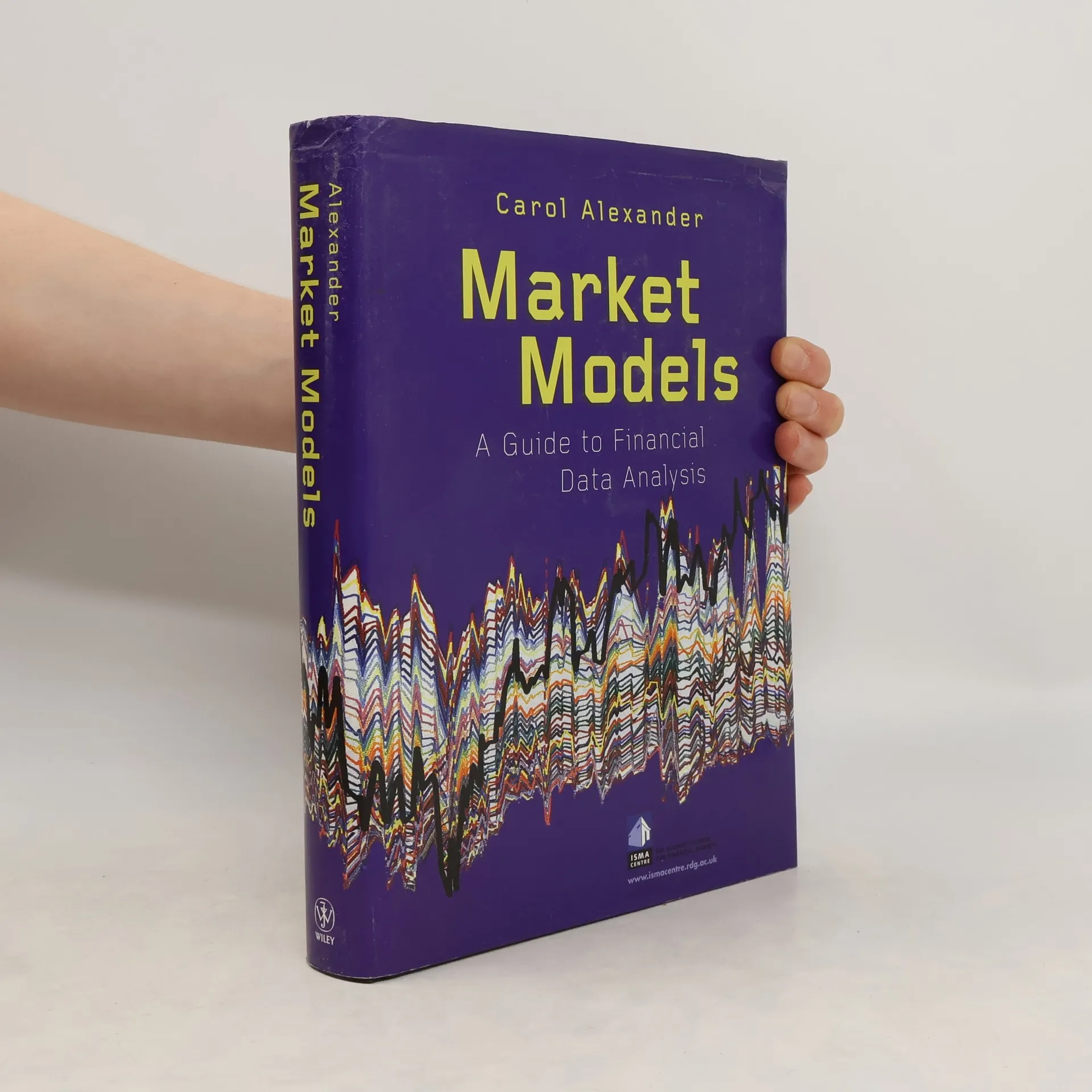
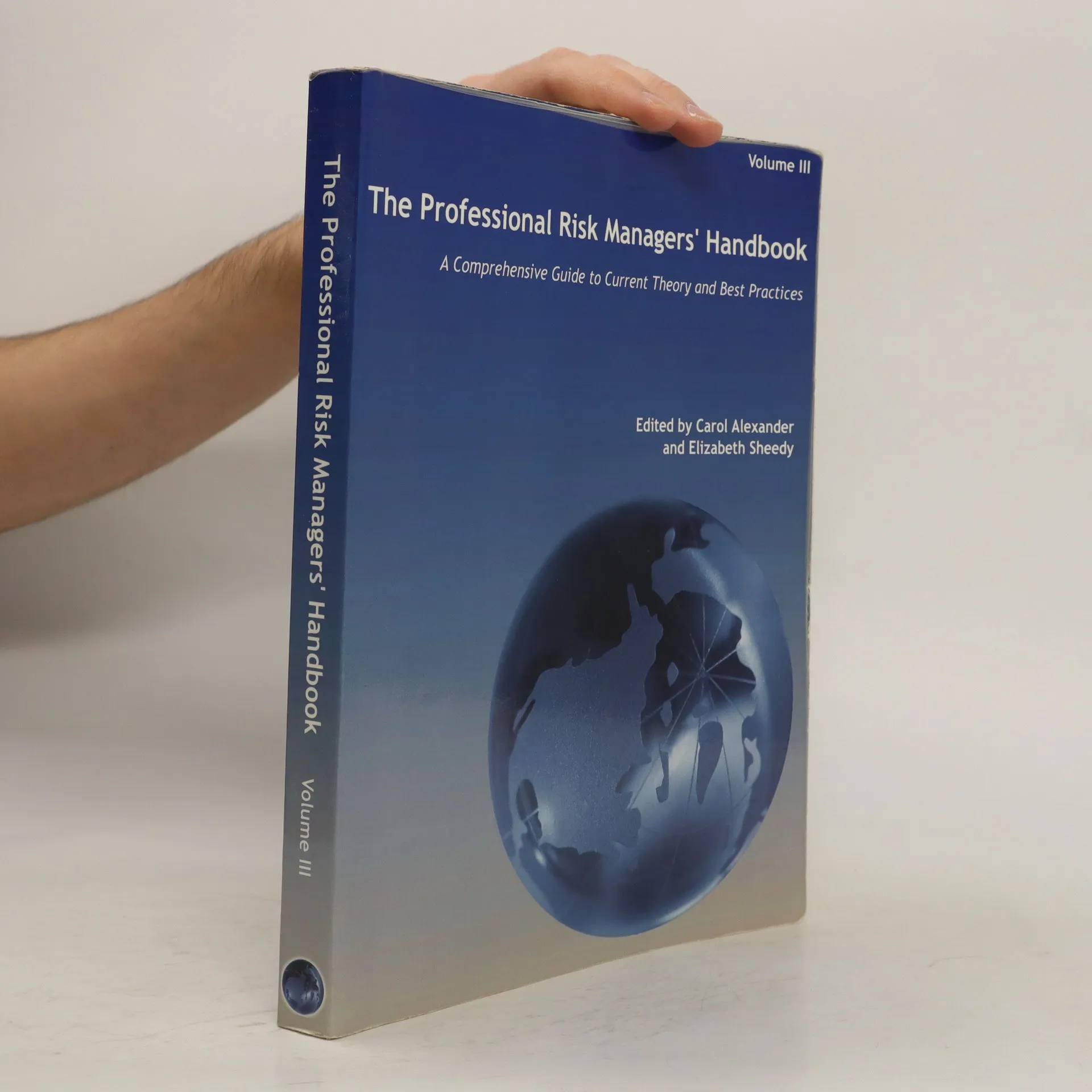
The Professional Risk Managers' Handbook Volume III
- 1301 Seiten
- 46 Lesestunden
Carol Alexander ist eine Schriftstellerin, deren Werk sich mit Literatur, Bildung und Umweltfragen beschäftigt. Ihre Poesie erforscht die komplexen Verbindungen zwischen Mensch und Natur, oft mit Perspektiven, die durch die Augen der Kindheit gesehen werden. Alexanders sensibler Stil offenbart die Zerbrechlichkeit der menschlichen Existenz und feiert gleichzeitig die Schönheit der umgebenden Welt. Ihre Schriften bieten tiefe Reflexionen über unseren Platz im Ökosystem.


In part 1, Carol Alexander brings many new insights to the pricing and hedging of options with her understanding of volatility and correlation, and the uncertainty which surrounds these key determinants of option portfolio risk. Modelling the market risk of portfolios is covered in part 2 where the main focus is on a linear algebraic approach; the covariance matrix and principal component analysis are developed as key tools for the analysis of financial systems. The traditional time series econometric approach is explained in part 3, with coverage ranging from the application cointegration to long-short equity hedge funds, to high-frequency data prediction using neural networks and nearest neighbour algorithms . Throughout this text the emphasis is on understanding concepts and implementing solutions. It has been designed to be accessible to a very wide audience: the coverage is comprehensive and complete and the technical appendix makes the book largely self-contained.
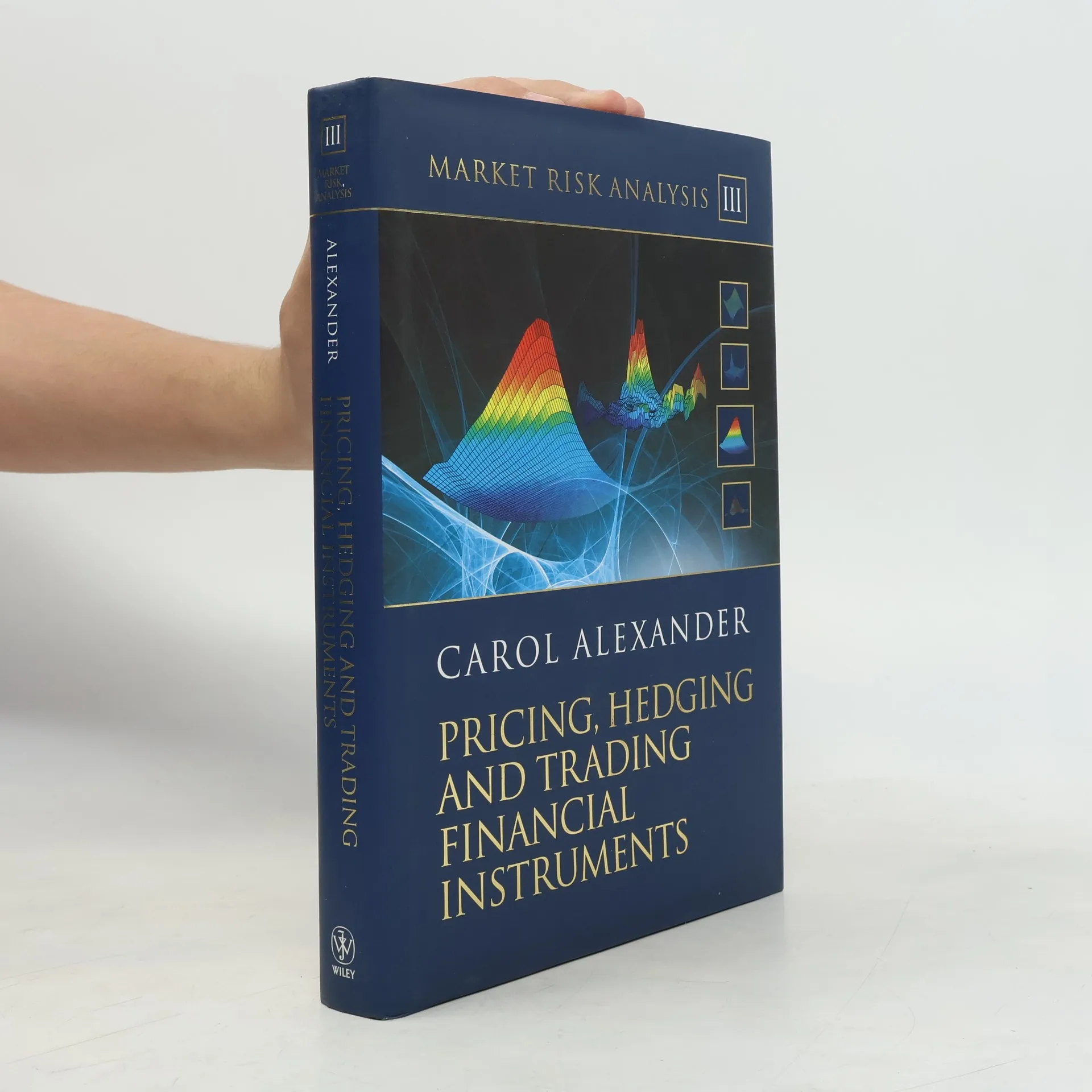
Written by leading market risk academic, Professor Carol Alexander, Pricing, Hedging and Trading Financial Instruments forms part three of the Market Risk Analysis four volume set. This book is an in-depth, practical and accessible guide to the models that are used for pricing and the strategies that are used for hedging financial instruments, and to the markets in which they trade. It provides a comprehensive, rigorous and accessible introduction to bonds, swaps, futures and forwards and options, including variance swaps, volatility indices and their futures and options, to stochastic volatility models and to modelling the implied and local volatility surfaces. All together, the Market Risk Analysis four volume set illustrates virtually every concept or formula with a practical, numerical example or a longer, empirical case study. Across all four volumes there are approximately 300 numerical and empirical examples, 400 graphs and figures and 30 case studies many of which are contained in interactive Excel spreadsheets available from the the accompanying CD-ROM . Empirical examples and case studies specific to this volume
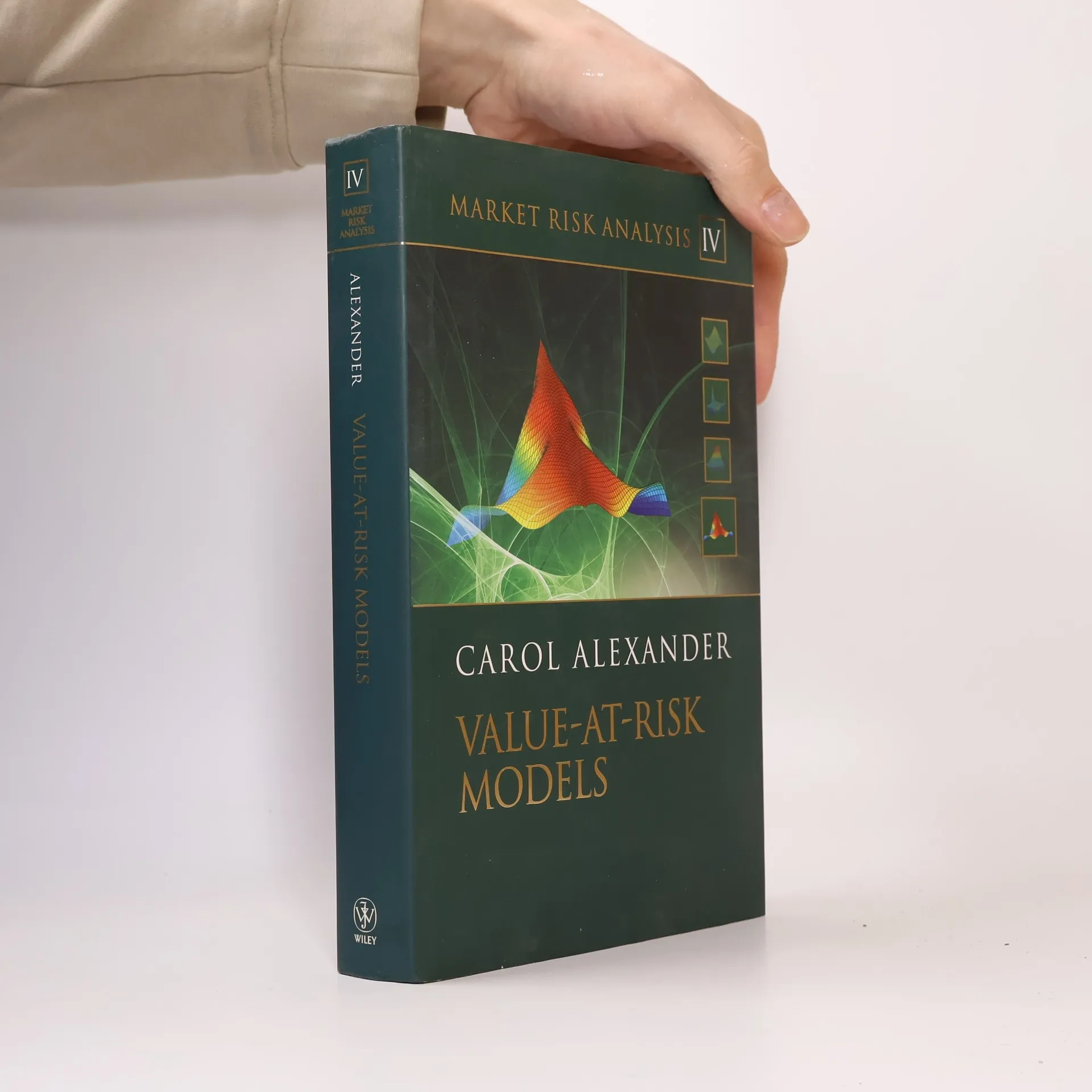
Written by leading market risk academic, Professor Carol Alexander, Value-at-Risk Models forms part four of the Market Risk Analysis four volume set. Building on the three previous volumes this book provides by far the most comprehensive, rigorous and detailed treatment of market VaR models. It rests on the basic knowledge of financial mathematics and statistics gained from Volume I, of factor models, principal component analysis, statistical models of volatility and correlation and copulas from Volume II and, from Volume III, knowledge of pricing and hedging financial instruments and of mapping portfolios of similar instruments to risk factors. A unifying characteristic of the series is the pedagogical approach to practical examples that are relevant to market risk analysis in practice. All together, the Market Risk Analysis four volume set illustrates virtually every concept or formula with a practical, numerical example or a longer, empirical case study. Across all four volumes there are approximately 300 numerical and empirical examples, 400 graphs and figures and 30 case studies many of which are contained in interactive Excel spreadsheets available from the the accompanying CD-ROM . Empirical examples and case studies specific to this volume