


This comprehensive guide offers insights from leading scientists on the Periodic Table, exploring its significance in chemistry and the natural sciences. Published in collaboration with the Royal Society of Chemistry, it delves into the elements, their properties, and their interactions, making complex concepts accessible to readers. The book serves as an essential resource for students and enthusiasts alike, enhancing understanding of the foundational aspects of chemistry and the role of the Periodic Table in scientific discovery.
This comprehensive guide offers insights from leading experts in chemistry, providing readers with a clear understanding of the subject. It is developed in collaboration with the Royal Society of Chemistry, ensuring authoritative content. The book covers fundamental concepts, key principles, and practical applications, making it an essential resource for students and enthusiasts alike.
Racing Green is the story of how advances in motorsport science are changing the world, helping it become smarter and more environmentally friendly. Motor racing is already one of the most scientifically demanding sports: it involves a combination of peak physical and mental skill, world-class mechanical nous and perennial technological innovation. These innovations, first developed for racing, have been incorporated into everyday car designs to improve their safety - from ABS brakes to crash helmets - and ecological impact, via electric engines and more efficient fuels and tyres. Author Kit Chapman is a lifelong motorsports fan who has previously worked with Virgin Racing's Formula E team on the chemistry and material science of their cars. With help from his wide range of contacts in the industry, Kit criss-crosses the globe from Ohio to Monaco, Spain to Bahrain. He steps behind the scenes of current engineering breakthroughs, picking up extraordinary tales along the way, such as that of maverick designer Warren Mosler who designed a car so fast it was banned from racing. Part travelogue, part historical retrospective, Racing Green combines visits to the experts with lively retellings of real-life incidents that became milestones in modern car development. Kit looks at the breadth of racing, both its glories and its tragedies, revealing the industry as a driving force for progress, and where it's on track to take us next.
Motor racing is the most scientifically demanding sport, blending peak physical and mental skill with advanced mechanical expertise and technological innovation. Key ideas developed during races, such as ABS brakes and crash helmets, have enhanced safety in car designs globally. Additionally, cleaner technologies tested in modern racing are influencing the creation of everyday vehicles, including electric cars and more efficient fuels and tyres. This narrative details how motorsport science has transformed the world, making it smarter and more environmentally friendly. It traces the history of motor racing, highlighting both its triumphs and tragedies, which have led to significant advancements in car design. The exploration includes the cutting-edge of engineering, human psychology, and physiology, all crucial for developing competitive cars and drivers. The author, Kit Chapman, a lifelong motorsports enthusiast, has collaborated with Virgin Racing's Formula E team to delve into the chemistry and material science behind racing cars. Through insights from industry contacts, he reveals current breakthroughs and speculates on the future of motorsport, sharing extraordinary stories like that of designer Warren Mosler, whose car was deemed too fast to race. This work combines travelogue and historical retrospective, featuring expert visits and real-life incidents that mark milestones in modern automotive development.
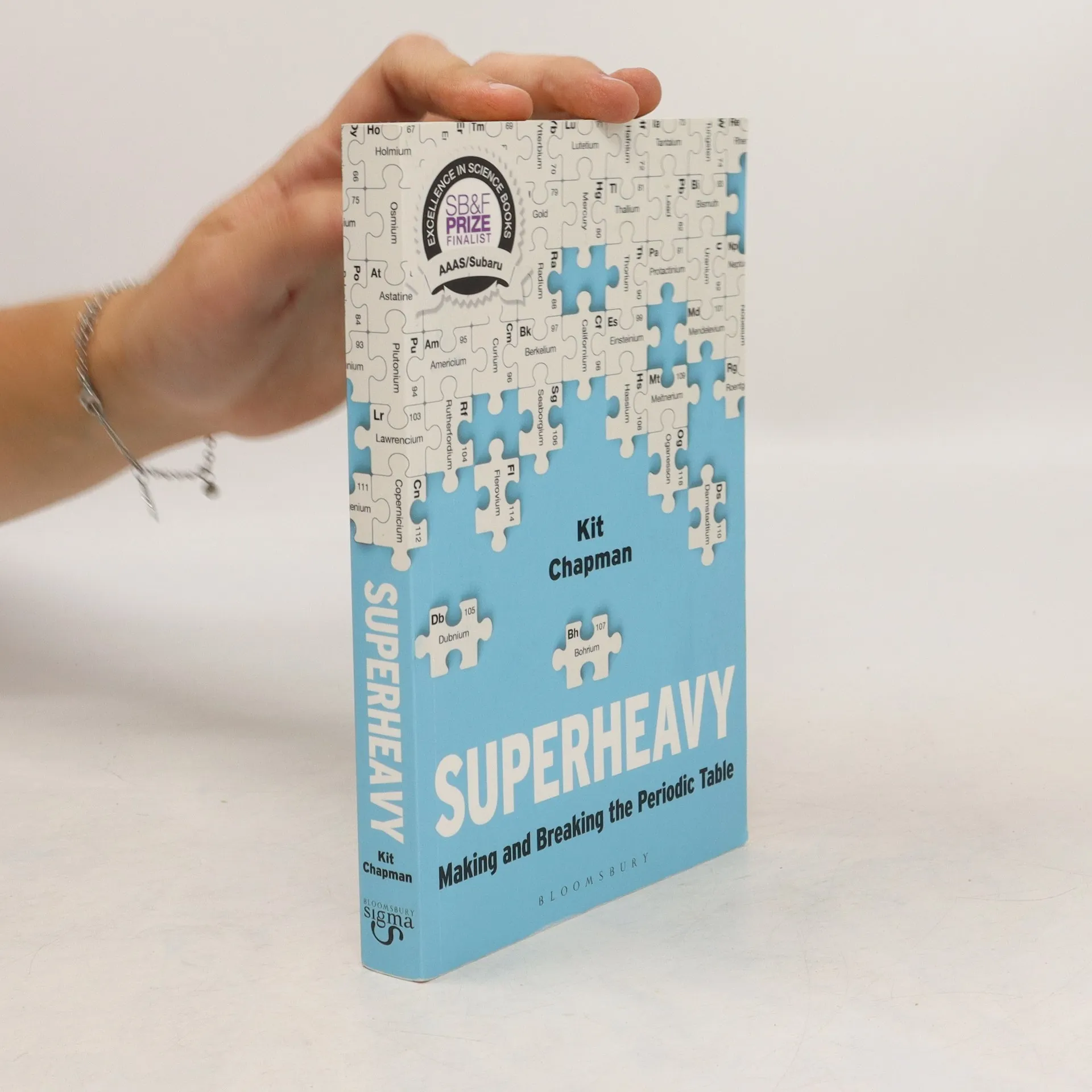
Shortlisted for the 2020 AAAS/Subaru SB&F Prize for Excellence in Science Books Creating an element is no easy feat. It's the equivalent of firing six trillion bullets a second at a needle in a haystack, hoping the bullet and needle somehow fuse together, then catching it in less than a thousandth of a second – after which it's gone forever. Welcome to the world of the superheavy elements: a realm where scientists use giant machines and spend years trying to make a single atom of mysterious artefacts that have never existed on Earth. From the first elements past uranium and their role in the atomic bomb to the latest discoveries stretching our chemical world, Superheavy will reveal the hidden stories lurking at the edges of the periodic table. Why did the US Air Force fly planes into mushroom clouds? Who won the transfermium wars? How did an earthquake help give Japan its first element? And what happened when Superman almost spilled nuclear secrets? In a globe-trotting adventure that stretches from the United States to Russia, Sweden to Australia, Superheavy is your guide to the amazing science filling in the missing pieces of the periodic table. By the end you'll not only marvel at how nuclear science has changed our lives – you'll wonder where it's going to take us in the future.