Pacific Profiles Volume 13 presents the most accurate wartime profiles and
histories to date of Imperial Japanese Navy bombers, transports, flying boats
and miscellaneous types which served in the South Pacific.
The Pacific Profiles series presents the most accurate WWII profiles of Allied
and Japanese aircraft which served throughout the Australia, New Guinea and
Solomons theatres. This Volume 15 covers the B-26 and US Navy JM Marauder
series which served in these theatres from their first delivery to Australia
in April 1942 until the war’s end.
The Pacific Profiles series presents the most accurate WWII profiles of Allied
and Japanese aircraft which served throughout Australia, New Guinea and the
South Pacific. This Volume 14 covers those B-25, PBJ & F-10 Mitchell models
which served in these theatres from March 1942 until the end of the war.
Pacific Profiles Volume 10 covers the P-47D Thunderbolt which flew combat
missions in the New Guinea theatre until mid-1945, serving with a total of
eleven Fifth Air Force USAAF combat squadrons, Fifth Fighter Command and the
Combat Replacement Training Center.
Pacific Profiles Volume 12 covers the P-51 and F-6 Mustang series which served
in New Guinea, the Philippines and then the Japanese islands, serving with a
total of ten USAAF Fifth Air Force fighter and reconnaissance squadrons, and
also with New Guinea’s Combat Replacement Training Centre.
Pacific Profiles Volume 11 covers the P-40 Warhawk series, which served with a
dozen USAAF Fifth and Thirteenth Air Force fighter and reconnaissance
squadrons, service units, combat replacement pools and other miscellaneous
units.
This book details the exploits of the highly skilled Naval Aviators charged with achieving air supremacy over New Guinea in their A6M2/3 Zero-sens. The combat record of the Zero-sen in New Guinea has mostly been overstated, with little due being given to the constraining conditions under which the fighter operated. The air combats fought over New Guinea in 1942 between Imperial Japanese Naval Air Force (IJNAF) pilots and their Allied counterparts in P-39 Airacobras and P-40 Warhawks were often 'trial and error' affairs, with both belligerents being caught out by weather. This study covers the key role played by governing factors including geography and climatic conditions, and examines the modified tactics employed by IJNAF Zero-sen pilots to help them cope in-theatre through the comprehensive analysis of RAAF, USAAF and Japanese operational after action reports. Using first-hand accounts from both famous aviators and previously unknown RAAF and Japanese pilots, and specially commissioned artwork, leading South Pacific historian and author Michael John Claringbould sheds new light on the air war fought over the wilds of New Guinea during the course of 1942.
Volume Eight of the Pacific Profiles series presents the most accurate
profiles and histories to date of Imperial Japanese Navy floatplanes which
served in the South Pacific theatre, throughout New Guinea and the Solomons.
The Pacific Profiles series presents the most accurate WWII profiles of
aircraft which served in the South Pacific theatre. Volume Six covers a dozen
USAAF Fifth and Thirteenth Air Force squadrons which operated the Bell P-39
and P-400 Airacobra from April 1942 until March 1944.
The Pacific Profiles series presents the most accurate WWII profiles of
aircraft which served in the South Pacific theatre. Volume Seven covers the
Douglas C-47, including numerous derivatives such as the C-53, R4D and DC-3.
Whilst the F4U Corsair eventually proved to be a superior fighter in Pacific operations, its introduction into combat in this theatre initially demonstrated its weaknesses. Indeed, the 'Saint Valentine's Day Massacre' debacle showcased exemplary Zero-sen fighter tactics, and American losses were of sufficient magnitude that further daylight missions toward Bougainville were discontinued until Allied fighter tactics could be improved. As a result, for the next two months the Corsair's combat results were much subdued. Indeed, the F4U only became a superb fighter when both its pilots and their commanders worked out how to deploy the gull-wing design effectively. Optimum circumstances for effective engagement did not always occur, and the Zero-sen remained effective against the Corsair until February 1944 in the South Pacific, after which all IJNAF fighter units vacated Rabaul. This book closely examines these two different fighters in the Solomons/Rabaul theatre, and the unique geographic conditions which shaped their deployment and effectiveness. It contains rare photographs and digital artwork that accurately showcases and aligns combats of both types in-theatre with unprecedented accuracy. Both sides vastly over-claimed. With full access to IJNAF and US Navy/US Marine Corps records, these numbers will be presented accurately
The Pacific Profiles series presents the most accurate WWII profiles of
aircraft which served throughout the South Pacific. Volume Nine covers the
P-38 and variants including the photo-reconnaissance F-4 and F-5, along with
field-modified P-38G night-fighters.
Pacific Profiles Volume Two illustrates, by unit, Japanese Army Air Force
(JAAF) bomber and other supporting aircraft types operating in New Guinea and
the Solomons from December 1942 to April 1944.
Conveys detailed stories of aerial warfare in the Solomons theatre, chosen
because both Japanese and Allied records can be matched for an accurate
accounting.
South Pacific Air War Volume Four chronicles aerial warfare in the South
Pacific in the critical period between 19 June and 8 September 1942. It can be
read alone or as a continuation of the first three volumes that spanned the
first six months of the Pacific War, culminating in the Battle of the Coral
Sea.
Pacific Profiles Volume Three illustrates, by squadron, USAAF Fifth Air Force
and RAAF Douglas A-20 series medium bombers operating in New Guinea from July
1942 to the end of 1944.
The illustrated diary of Japanese Navy floatplane pilot Warrant Officer Nemoto
Kumesako, dating from the early months of the Pacific War, presented in a
style consistent with the Japanese manga format.
Operation I-Go was Admiral Yamamoto's last offensive, using a powerful assembly of hundreds of aircraft that threatened to overwhelm Allied defences in four key South Pacific locations in April 1943.
This volume presents detailed accounts of aerial warfare in the South Pacific, utilizing matched records from both Japanese and Allied forces for an accurate portrayal. The actual outcomes of battles often contrast sharply with the exaggerated claims made by both sides, which have influenced traditional histories. Each selected story is supported by photographic evidence, allowing for a precise depiction of the aircraft involved. The focus is on confrontations with the Japanese Navy Air Force (JNAF) in New Guinea and the Solomons, regions referred to by the Japanese as the "South Seas." The JNAF emerged in the South Pacific in December 1941, leading offensive operations throughout 1942. After the intense Guadalcanal campaign, the JNAF shifted to a defensive stance against increasingly powerful Allied forces in New Guinea and the Solomons. Surprisingly, until the end of 1943, the JNAF maintained significant resistance and never relinquished air superiority near its crucial base in Rabaul. It wasn't until 1944, when units were redeployed to the Central Pacific and the Philippines, that the JNAF's presence in the South Pacific diminished to a mere token force. This volume uniquely aligns adversarial accounts, illuminating pivotal events in the Pacific theater.
Volume One of Pacific Profiles presents detailed profiles and descriptions of Japanese Army Air Force aircraft and units operating in New Guinea and the Solomons from December 1942 to April 1944.
This volume conveys detailed stories of aerial warfare in the South Pacific, with a focus on matching Japanese and Allied records for accurate accounting. The actual outcomes often differ significantly from the exaggerated claims made by both sides, which have influenced traditional histories. Each selected story is supported by photographic or other evidence, allowing for an accurate depiction of the aircraft involved. The narrative centers on confrontations with the Japanese Navy Air Force (JNAF) in New Guinea and the Solomons, referred to as the "South Seas" by the Japanese. The JNAF emerged in the South Pacific in December 1941, leading offensive efforts throughout 1942. Following the intense Guadalcanal campaign, the JNAF transitioned to a largely defensive posture in New Guinea and the Solomons against increasingly powerful Allied forces. Surprisingly, the JNAF continued to resist Allied advances until late 1943, maintaining air superiority near its key base of Rabaul. It was only in 1944, with the withdrawal of units to the Central Pacific and the Philippines, that the JNAF presence in the South Pacific diminished to a token force. This volume offers unprecedented detailed accounts that closely match adversaries, illuminating key events in the Pacific skies from years past.
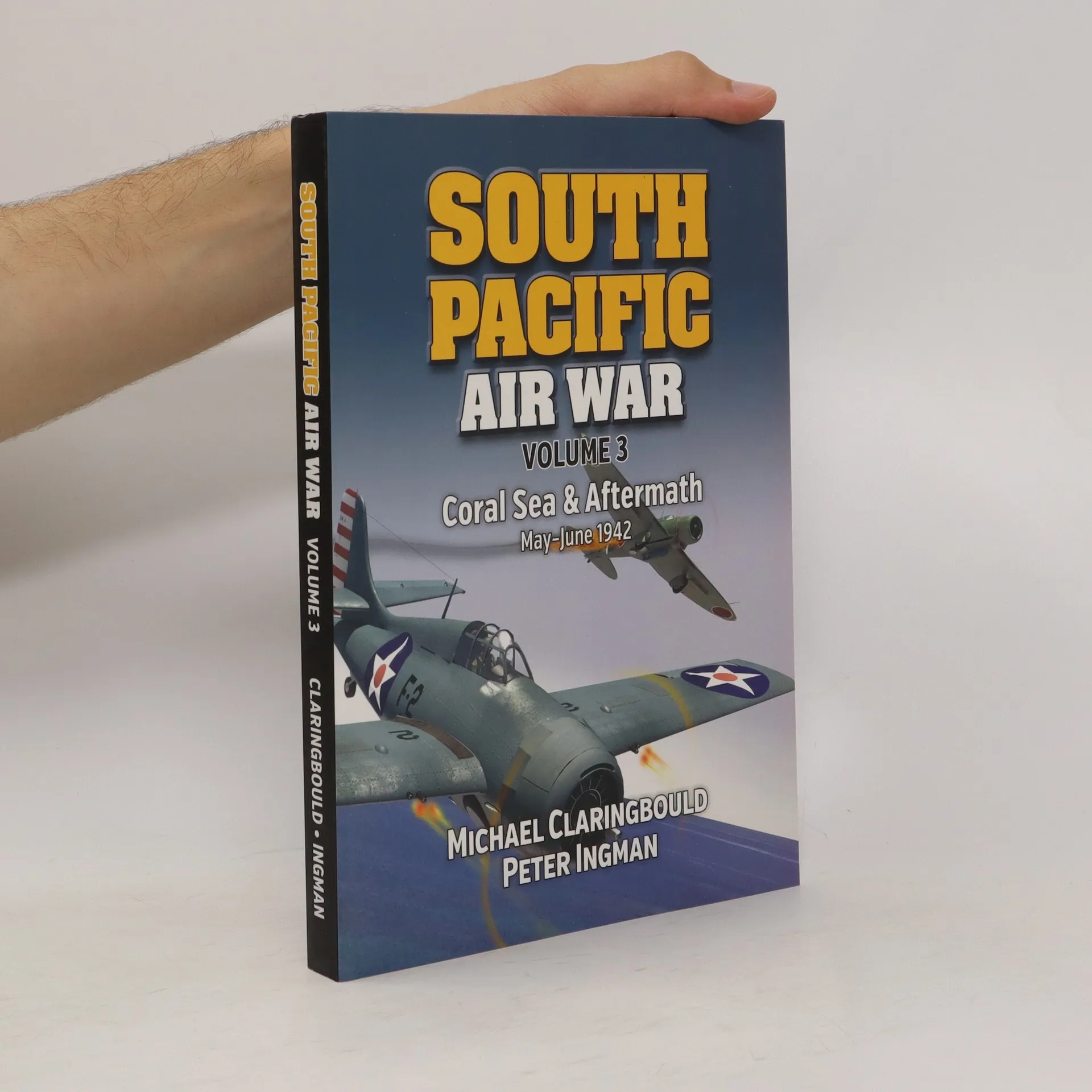
This third volume details aerial warfare in the South Pacific during May and June 1942, focusing on the Battle of the Coral Sea. It can be enjoyed independently or as part of a trilogy covering the first half of the Pacific War. In early May, Japan initiated Operation MO to capture Tulagi and Port Moresby, leading to a historic clash between opposing fleet carriers. The battle resulted in the loss of the USS Lexington and the withdrawal of the USS Yorktown. While traditionally viewed as an Allied victory that thwarted Japan's plans for Port Moresby, the authors argue that Japan's invasion capacity remained largely intact, and postponing the invasion was a significant miscalculation. Following the Coral Sea battle, a fierce aerial campaign ensued between land-based air forces, resembling a slugfest between Lae and Port Moresby, just an hour apart by air. The Allies launched offensives with B-17, B-25, and B-26 bombers from Australia, while P-39 Airacobra fighters defended Port Moresby, suffering heavy losses. Japanese forces, utilizing Betty and Nell bombers, targeted Moresby and its harbor, protected by the skilled Zero fighters of the Tainan Kokutai. This campaign is presented in unprecedented detail, combining Allied and Japanese accounts. The authors, Michael Claringbould and Peter Ingman, bring unique expertise to this critical chapter of military history.