Christopher Marlowe had never liked Robert Greene when he was alive. But when Greene is found dead shortly after sending Kit a desperate letter, he feels duty bound to find out who killed him. Before long, the playwright-sleuth finds himself in the midst of a baffling murder investigation - where nothing is as it first appears.
The inaugural performance of Christopher Marlowe's controversial new play is marred by sudden, violent death in this lively 16th century mystery.December, 1592. England is entering dangerous waters as thoughts turn to the question of the ageing Queen Elizabeth's successor. Christopher Marlowe meanwhile is leading a troupe of the Lord Chamberlain's Men on tour with a controversial new play.Marlowe expects his latest play, Edward II, to ruffle feathers. What he doesn't expect is it to lead to is sudden, violent death. The morning the tour is due to begin, the newest member of the cast is found stabbed to death in the local brothel. And when a second murder, and then a third, disrupt rehearsals for the inaugural performance in the Great Hall at Scudbury Manor, it becomes clear that someone is determined to prevent this play from being performed - at any cost. But who ... and why?
London. May, 1878. Private enquiry agents Matthew Grand and James Batchelor
have been hired by the artist James Whistler to dig into the past of outspoken
critic John Ruskin. But the detectives are sidetracked by the murder of a
prostitute in nearby Cremorne Gardens. Could there be a connection between the
Cremorne killer and their art world case?
June, 1381. A horde of angry peasants marching to London forces Geoffrey
Chaucer and his fellow travellers to abandon their annual pilgrimage and hole
up at the Tabard Inn. That night, a woman's body is fished out of the River
Thames. When he discovers that the victim was the wife of one of his fellow
pilgrims, Chaucer determines to investigate.
The wedding of Matthew Grand's sister is marred by cold-blooded murder in the intriguing new Grand & Batchelor Victorian mystery. March, 1873. Private investigators Matthew Grand and James Batchelor have arrived at Matthew's substantial family home on the Maine coast for the wedding of his sister Martha. Friends and relatives have gathered from far and wide to celebrate the occasion ? but nothing is going according to plan. A long-lost cousin turns up out of the blue after an absence of fourteen years. The best man is nowhere to be found. And no one seems to have a good word to say about the bridegroom.Preparations are thrown into chaos when a body is discovered in an upstairs bedroom. As Grand and Batchelor investigate, they discover that more than one member of the household has a scandalous secret to hide. And several more family skeletons are destined to tumble from the closet before the two enquiry agents uncover the shocking truth
April, 1380. About to set off on his annual pilgrimage, GeoffreyChaucer
abandons his plans when an old friend appeals for help. His formerguardian has
been found dead in his bedroom at his Suffolk castle, the doorlocked from the
inside. Who among the castle's inhabitants is a cold-heartedkiller? It's up to
Chaucer to root out the evil within.
1875. After a call for help from an old acquaintance, private enquiry agents Grand and Batchelor arrive at Fort Abraham Lincoln, deep in Dakota territory, and discover it to be a powder keg of suspicion and closely-guarded secrets. When a body is discovered during a scouting patrol, some of those secrets rise uncomfortably close to the surface.
October, 1900. London. As an archaeologist, Dr Margaret Murray is used to examining ancient remains, but she's never before had to investigate the circumstances surrounding a newly-dead corpse. When the body of one of her students is discovered, Margaret rejects the official verdict of suicide and determines to find out how the girl really died.
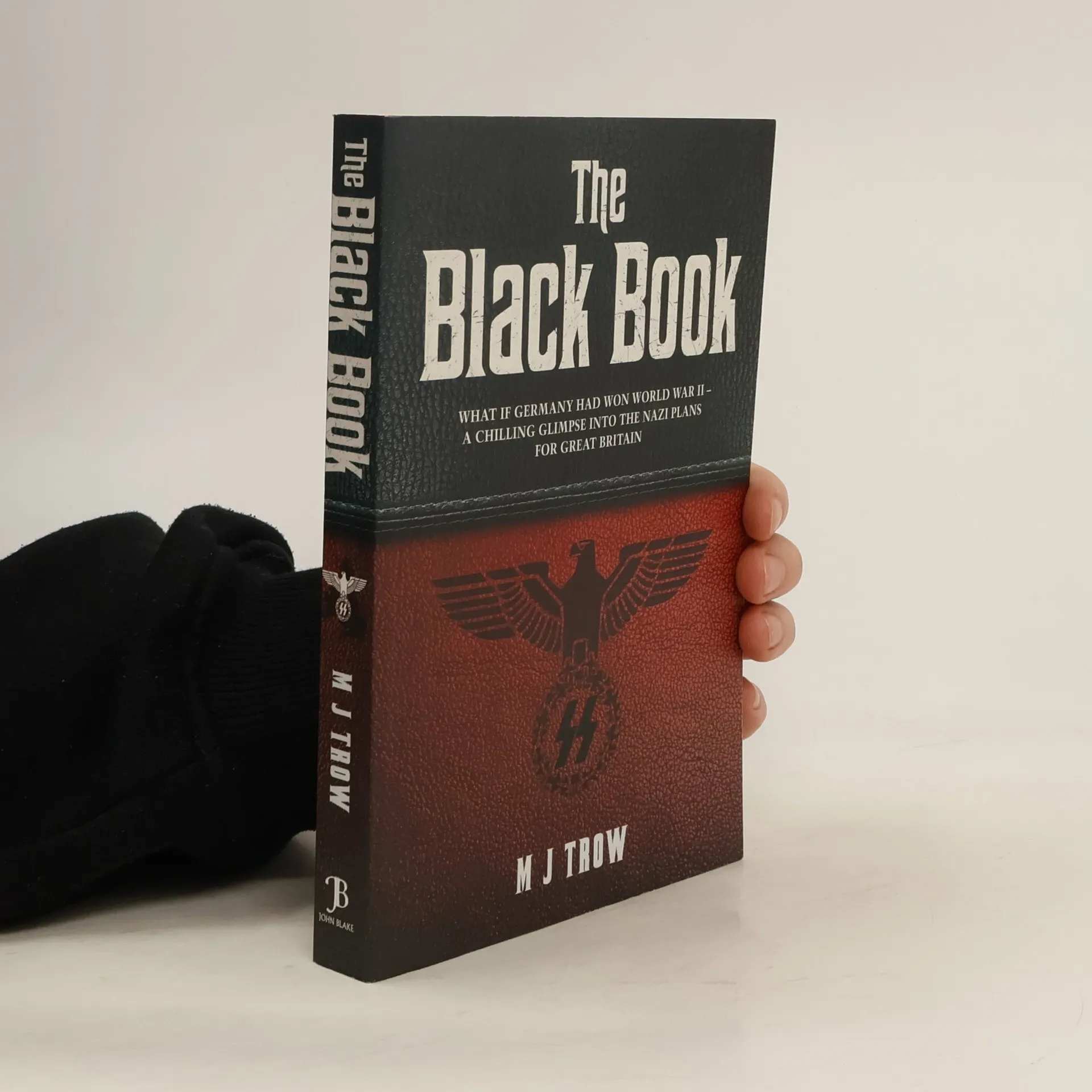
In July 1940, Walter Schellenberg of the German Secret Service drew up a list of 2,694 people believed to be living in Britain, who were known enemies of the Reich. In that month, the Wehrmacht was poised across the Channel ready to hit Britain with blitzkrieg, the terrible and hugely successful tactic that had already overwhelmed Poland, Denmark, Norway, Holland, Luxembourg, Belgium, and France. The names on Schellenberg's list represent the heart and soul of a nation that made the British what they were but the List also includes a diaspora from Europe--the intellectuals, politicians, and writers who had been driven out of their own homelands by the speed of the German conquests. All human life is there--lives that were, to the Nazis, unworthy of life. Historians have found the List a curiosity. Surely, it cannot be real? It was. The Black Book is the first book to evaluate the list, and look at the chilling reality of what Hitler had in store for the nation.
Private enquiry agents Grand and Batchelor have been hired by timber merchant Selwyn Byng to discover what's happened to his heiress wife. The only clue they have to go on is a badly spelled note demanding £5,000 if Byng is to see Emilia again. Then a human torso is found floating in the River Thames. Could there be a connection?