

Focusing on the historical significance of Communist movements, this volume explores their global impact, from South Asia to Cuba and China. It emphasizes the concept of internationalism and its influence on Communist campaigns, providing a counter-narrative to mainstream historical accounts that often overlook these movements. The essays are well-researched and articulate, making a compelling case for the importance of understanding Communist histories in shaping contemporary society. This is the first book in a series dedicated to this critical examination.
Vijay Prashad Reihenfolge der Bücher (Chronologisch)
Vijay Prashad ist ein führender indischer Historiker und Journalist, dessen Werk sich auf globale Ungleichheiten und die Geschichte des Globalen Südens konzentriert. Seine Schriften verknüpfen tiefgehende Analysen sozialer und politischer Prozesse mit einer kritischen Perspektive auf den Kolonialismus und seine anhaltenden Auswirkungen. Prashads Schreibansatz zeichnet sich durch den Versuch aus, komplexe sozialwissenschaftliche Konzepte einem breiteren Publikum zugänglich zu machen und die Perspektiven marginalisierter Gemeinschaften zu verstehen. Seine Arbeit ermutigt die Leser, über die gegenwärtige Weltordnung nachzudenken und nach alternativen Wegen zur sozialen Gerechtigkeit zu suchen.

Will the Flower Slip Through the Asphalt?
Writers Respond to Capitalist Climate Change
- 122 Seiten
- 5 Lesestunden
Exploring the intersection of climate change and occupation, this collection features Naomi Klein's impactful Edward Said lecture, emphasizing how marginalized communities are disproportionately affected by environmental crises. Accompanying essays from global writers, including John Bellamy Foster and Ghassan Hage, reflect on Klein's ideas. Contributors share diverse perspectives, from Karachi's coast to Malaysia's cultural dynamics, and India's climate struggles, culminating in Amitav Ghosh's reflections on globalization and transformation through the lens of spices.
Namaste Sharon
- 122 Seiten
- 5 Lesestunden
The book explores the convergence of Hindutva and Sharonism as they seek to unite against Islamic terrorism, influenced by George W. Bush's evangelical imperialism. It examines Ariel Sharon's historic visit to India in 2003 and questions the broader implications of this alliance for the Indian populace. Political commentator Vijay Prasad critiques the underlying agendas of these right-wing ideologies, revealing a complex web of political motivations and the potential consequences for both nations involved.
The book explores the legacy of the first socialist state, which lasted seventy years, highlighting its achievements despite its eventual collapse. It argues that the existence of such a state demonstrated the potential for policies that prioritize the welfare of workers and peasants over the wealthy. The narrative emphasizes the state's ability to foster education and health, challenging the notion that its failure negates its merits. Through this examination, the book invites readers to reconsider the broader implications of socialism in history.
Marx's Capital
- 138 Seiten
- 5 Lesestunden
Understanding capitalism requires engaging with Marx's Capital, a complex work spanning over 2,000 pages. This Reader, crafted by seven prominent Marxist scholars, serves as a comprehensive guide for both beginners and advanced readers. It begins with foundational concepts, progresses through theoretical discussions, and culminates in an application of Marx's methods to contemporary capitalism. By providing essential conceptual tools and fresh insights, this volume unlocks the depth of Marx's analysis, making it accessible and relevant for all readers.
Das Buch konzentriert sich auf den US-Imperialismus und präsentiert eine fesselnde Erzählung, die detaillierte Berichte über historische Ereignisse mit einer umfassenderen politischen Kritik verknüpft. Es schildert die düsteren Realitäten, mit denen sozialistische und kommunistische Bewegungen in der Dritten Welt konfrontiert sind, und hebt die Handlungen unterdrückerischer Figuren sowie Regierungspläne gegen diese Bewegungen hervor. Anstatt in Verzweiflung zu verfallen, zielt es darauf ab, die Kämpfe und die Widerstandsfähigkeit derjenigen zu beleuchten, die für Gerechtigkeit kämpfen. Dies macht es zu einem bedeutenden Beitrag zum marxistischen Journalismus und zur historischen Diskussion.
Red Star Over the Third World
- 144 Seiten
- 6 Lesestunden
An inspiring reminder of the great strength of twentieth century Communism in the Global South.
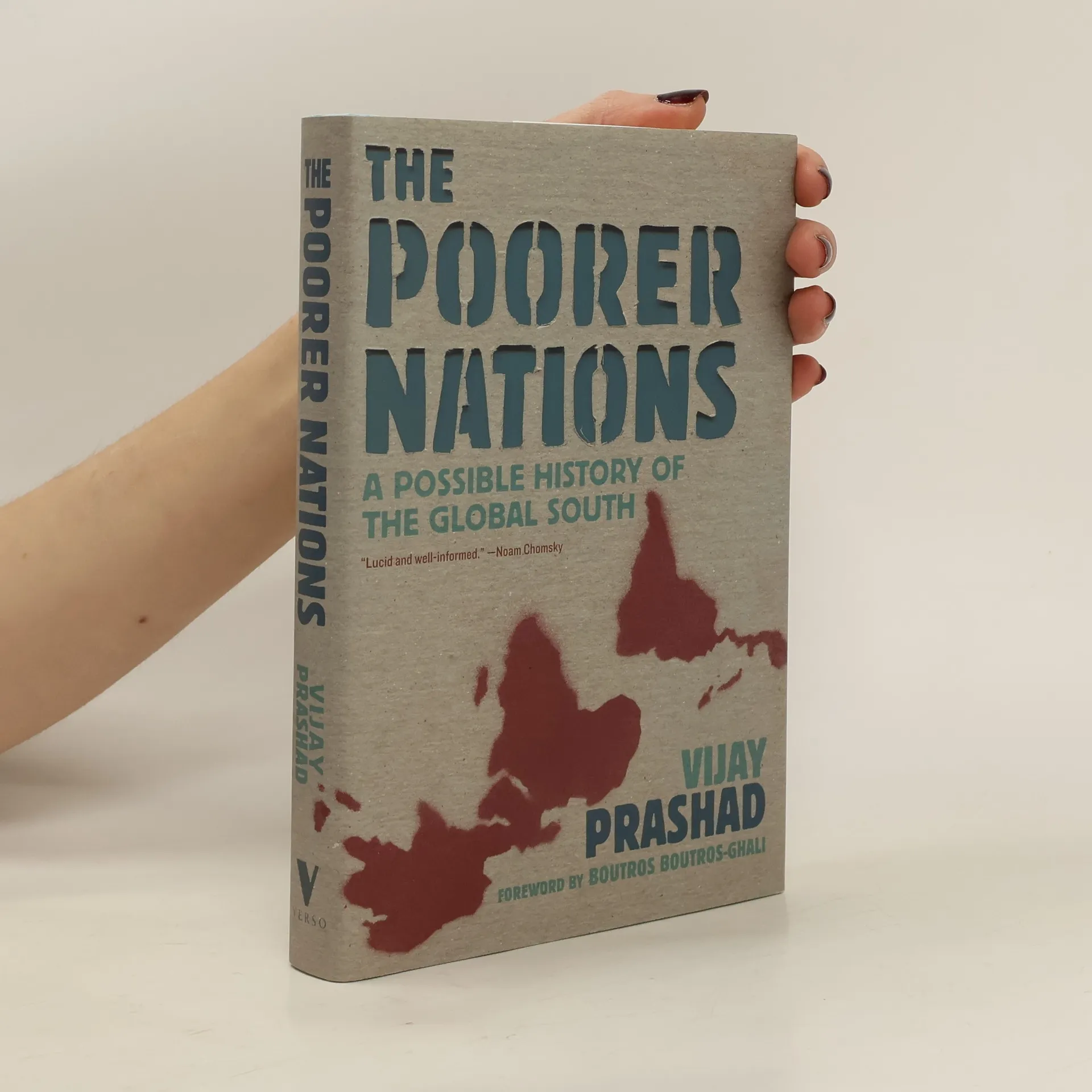
The Poorer Nations
- 292 Seiten
- 11 Lesestunden
In The Darker Nations, Vijay Prashad provided an intellectual history of the Third World and traced the rise and fall of the Non-Aligned Movement. With The Poorer Nations, Prashad takes up the story where he left off. Since the '70s, the countries of the Global South have struggled to build political movements. Prashad analyzes the failures of neoliberalism, as well as the rise of the BRICS countries, the World Social Forum, issuebased movements like Via Campesina, the Latin American revolutionary revival--in short, efforts to create alternatives to the neoliberal project advanced militarily by the US and its allies and economically by the IMF, the World Bank, the WTO, and other instruments of the powerful. Just as The Darker Nations asserted that the Third World was a project, not a place, The Poorer Nations sees the Global South as a term that properly refers not to geographical space but to a concatenation of protests against neoliberalism. In his foreword to the book, former Secretary-General of the United Nations Boutros Boutros-Ghali writes that Prashad "has helped open the vista on complex events that preceded today's global situation and standoff." The Poorer Nations looks to the future while revising our sense of the past.