

This Element presents the usual material taught in a yearlong course of theoretical computer science using the intuitive language and methodology of category theory. Perfect for students or professionals working in computers or physics, or mathematics.
Noson S. Yanofsky Bücher


The Outer Limits of Reason
- 428 Seiten
- 15 Lesestunden
Many books explain what is known about the universe, but this work investigates what cannot be known. It studies the limits of science, mathematics, and reason, focusing on what cannot be predicted, described, or understood. The author considers the limitations of computers, physics, logic, and human thought processes. He highlights tasks that would take computers trillions of centuries to complete and problems they can never solve, as well as perfectly formed English sentences that lack meaning. The exploration includes different levels of infinity, the peculiarities of quantum mechanics, the implications of relativity theory, chaos theory, and math problems unsolvable by conventional methods. Yanofsky also addresses true statements that cannot be proven and the limitations of our intuitions regarding space, time, and motion. By moving from concrete examples to abstract concepts, he uncovers a variety of unsolvable problems and paradoxes. He reveals that many limitations share a common pattern, suggesting that by examining these patterns, we can gain insight into the structure and limitations of reason itself. Yanofsky even attempts to look beyond the confines of reason to explore what may lie beyond.
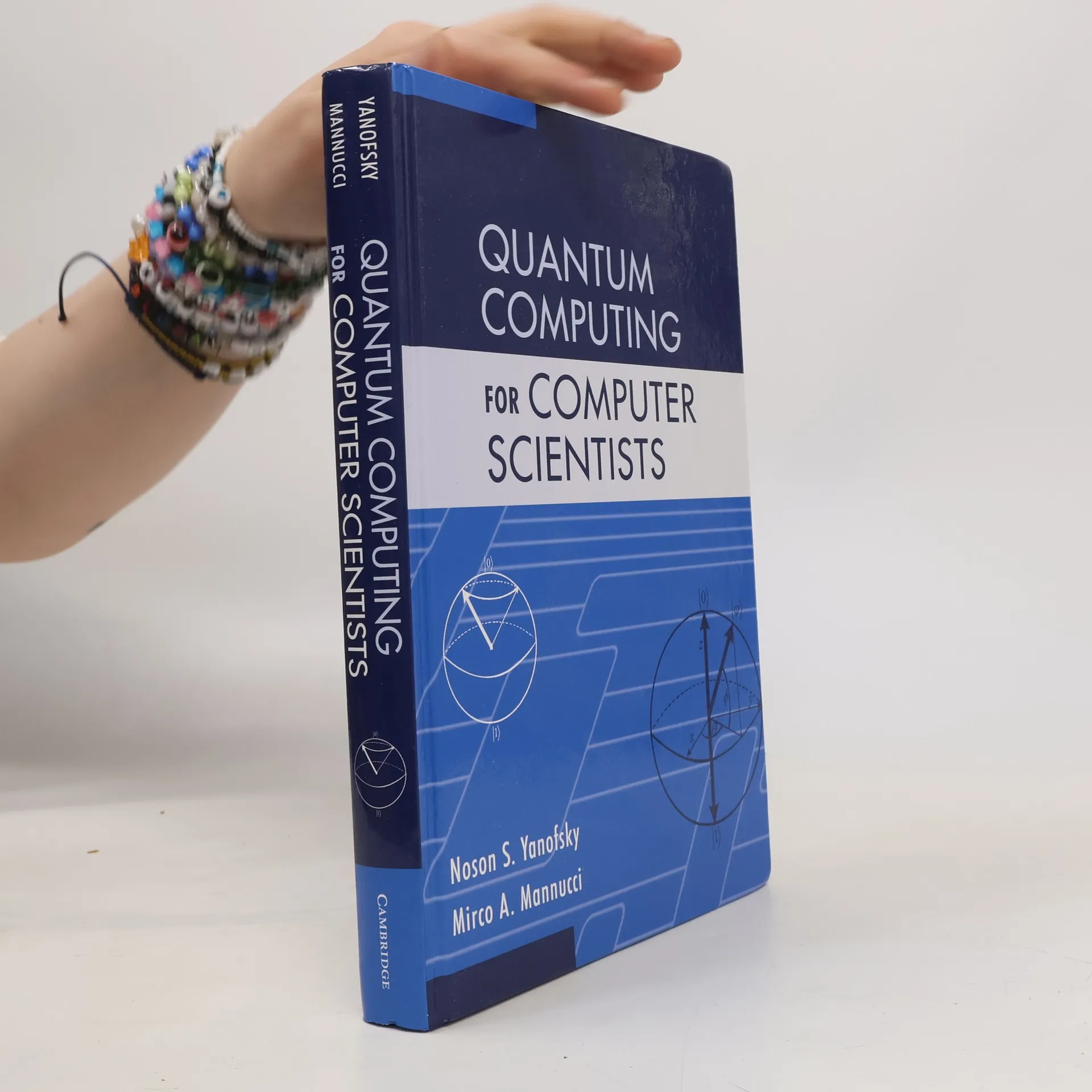
Quantum Computing for Computer Scientists
- 402 Seiten
- 15 Lesestunden
The multidisciplinary field of quantum computing strives to exploit some of the uncanny aspects of quantum mechanics to expand our computational horizons. Quantum Computing for Computer Scientists takes readers on a tour of this fascinating area of cutting-edge research. Written in an accessible yet rigorous fashion, this book employs ideas and techniques familiar to every student of computer science. The reader is not expected to have any advanced mathematics or physics background. After presenting the necessary prerequisites, the material is organized to look at different aspects of quantum computing from the specific standpoint of computer science. There are chapters on computer architecture, algorithms, programming languages, theoretical computer science, cryptography, information theory, and hardware. The text has step-by-step examples, more than two hundred exercises with solutions, and programming drills that bring the ideas of quantum computing alive for today’s computer science students and researchers.