
Bookbot

James H Willbanks

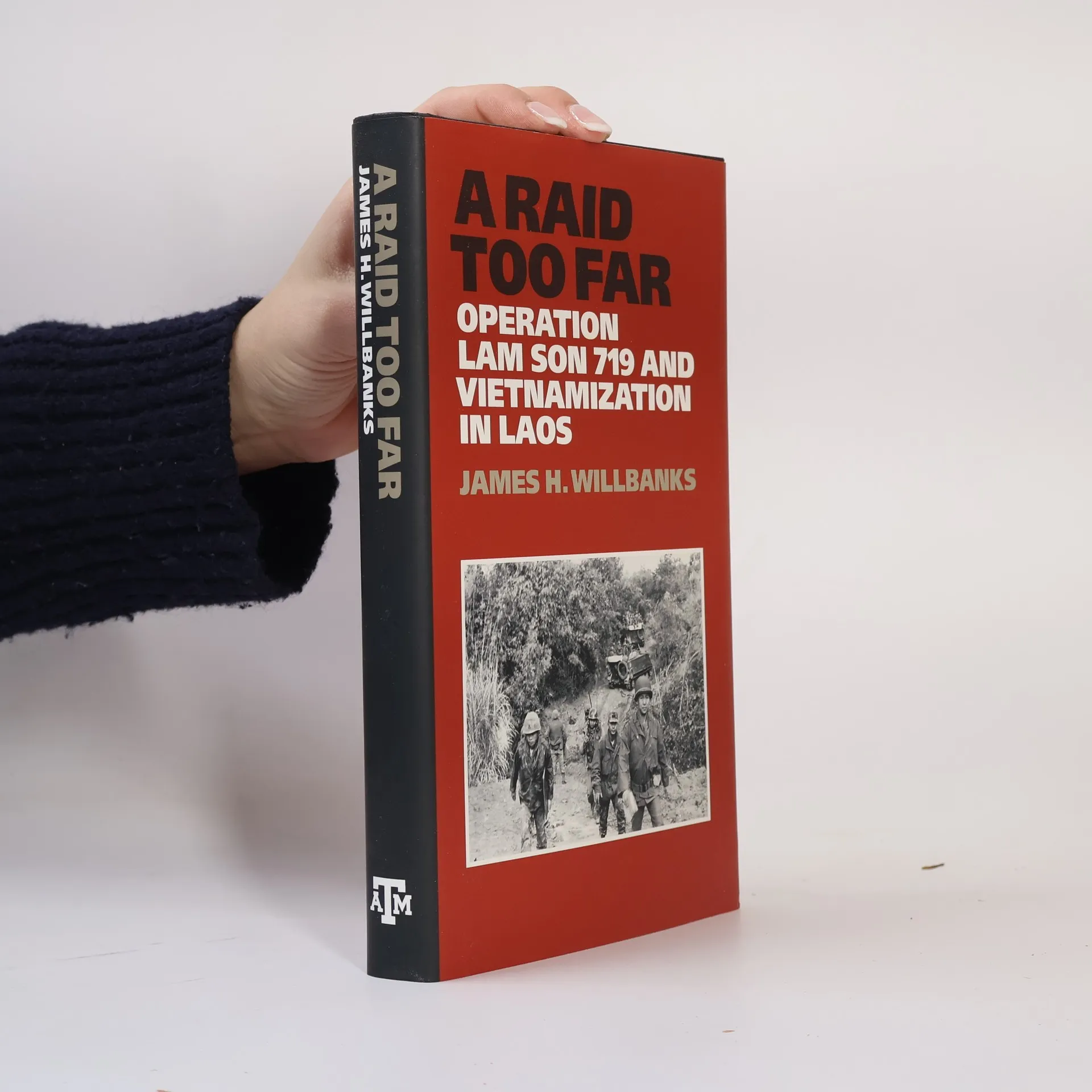
    Texas A&M University Military History Series - 143: A Raid Too Far
    The Battle of Hue 1968
    • The Battle of Hue 1968

      • 96 Seiten
      • 4 Lesestunden

      In late January 1968, some 84,000 North Vietnamese and Viet Cong troops launched a country-wide general offensive in South Vietnam. The bitter fighting that raged in Hue for more than three weeks drew the attention of the world. Hue was the ancient capital of Vietnam, and as such, had been previously avoided by both sides; it had not seen any serious fighting prior to 1968. All that changed on the night of January 31 that year when four North Vietnamese battalions and supporting Viet Cong units simultaneously attacked and occupied both parts of the city straddling the Perfume River. The Communist forces dug in and prepared to defend their hold on the city. US Marines and South Vietnamese soldiers were ordered to clear the city, supported by US Army artillery and troops. A brutal urban battle ensued as combat raged from house to house and door to door. Eventually, the Marines and the South Vietnamese forces retook Hue, but it was a bloody fight and resulted in large-scale destruction of the city. This illustrated volume details one of the longest and bloodiest battles of the Tet Offensive, which led to a sea change in US policy in Vietnam.

      The Battle of Hue 1968
      2,7
    • Texas A&M University Military History Series - 143: A Raid Too Far

      Operation Lam Son 719 And Vietnamization In Laos

      • 270 Seiten
      • 10 Lesestunden

      In February 1971, the Army of the Republic of Vietnam (ARVN) launched an incursion into Laos in an attempt to cut the Ho Chi Minh Trail and destroy North Vietnamese Army (NVA) base areas along the border. This movement would be the first real test of Vietnamization, Pres. Richard Nixon’s program to turn the fighting over to South Vietnamese forces as US combat troops were withdrawn. US ground forces would support the operation from within South Vietnam and would pave the way to the border for ARVN troops, and US air support would cover the South Vietnamese forces once they entered Laos, but the South Vietnamese forces would attack on the ground alone.The operation, dubbed Lam Son 719, went very well for the first few days, but as movement became bogged down the NVA rushed reinforcements to the battle and the ARVN forces found themselves under heavy attack. US airpower wreaked havoc on the North Vietnamese troops, but the South Vietnamese never regained momentum and ultimately began to withdraw back into their own country under heavy enemy pressure.In this first in-depth study of this operation, military historian and Vietnam veteran James H. Willbanks traces the details of battle, analyzes what went wrong, and suggests insights into the difficulties currently being incurred with the training of indigenous forces.

      Texas A&M University Military History Series - 143: A Raid Too Far