

The perfect companion for the Bruegel year of 2019: an introduction to the famous painter through stunning large close-up details in a beautiful coffee table book. Flemish painter Pieter Bruegel the Elder (1525-1569), known for his beautiful landscapes and peasant scenes, is among the most popular artists in the history of Netherlandish painting. Reproducing all of Bruegel's best-known paintings, drawings and prints, this book reveals them as never before, in stunning large close-up details that showcase his mastery. Organized by his major themes - landscapes, daily life, biblical subjects and festive celebrations - it offers astonishing views of popular works of art such as Hunters in the Snow, Peasant Wedding and The Tower of Babel. The printings and drawings section includes his series on Sins and Virtues. Bruegel expert Manfred Sellink reveals how the painter introduced new subject matter into fine art and examines his use of landscape, perhaps the artist's greatest innovation.
Samuel Mareel Bücher
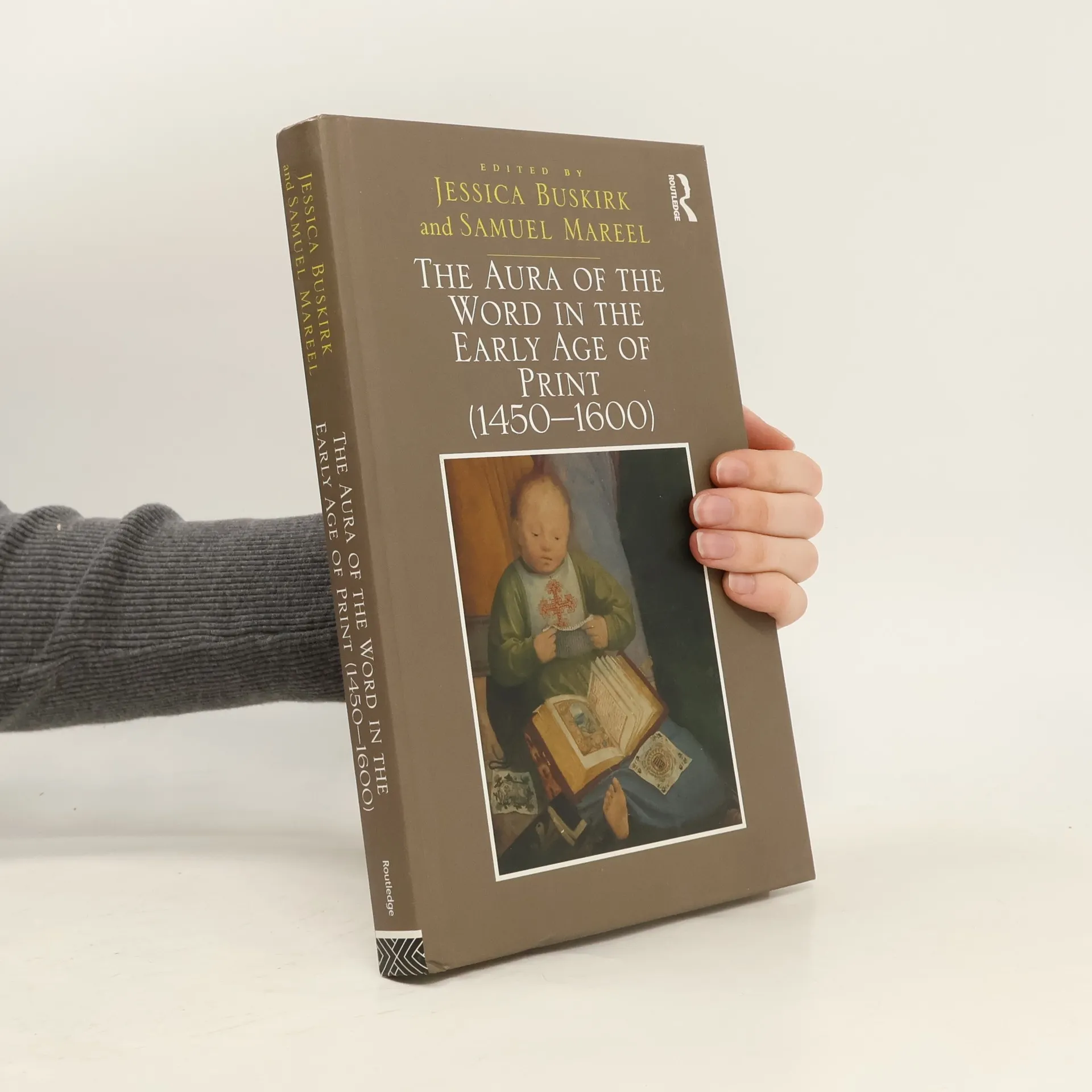

The Aura of the Word in the Early Age of Print
- 232 Seiten
- 9 Lesestunden
Did the invention of movable type change the way that the word was perceived in the early modern period? In his groundbreaking essay "The Work of Art in the Age of Mechanical Reproduction," the cultural critic Walter Benjamin argued that reproduction drains the image of its aura, by which he means the authority that a work of art obtains from its singularity and its embeddedness in a particular context. The central question in The Aura of the Word in the Early Age of Print (1450-1600) is whether the dissemination of text through print had a similar effect on the status of the word in the early modern period. In this volume, contributors from a variety of fields look at manifestations of the early modern word (in English, French, Latin, Dutch, German and Yiddish) as entities whose significance derived not simply from their semantic meaning but also from their relationship to their material support, to the physical context in which they are located and to the act of writing itself. Rather than viewing printed text as functional and lacking in materiality, contributors focus on how the placement of a text could affect its meaning and significance. The essays also consider the continued vitality of pre-printing-press kinds of text such as the illuminated manuscript; and how new practices, such as the veneration of handwriting, sprung up in the wake of the invention of movable type.