

Meyer Fortes Bücher

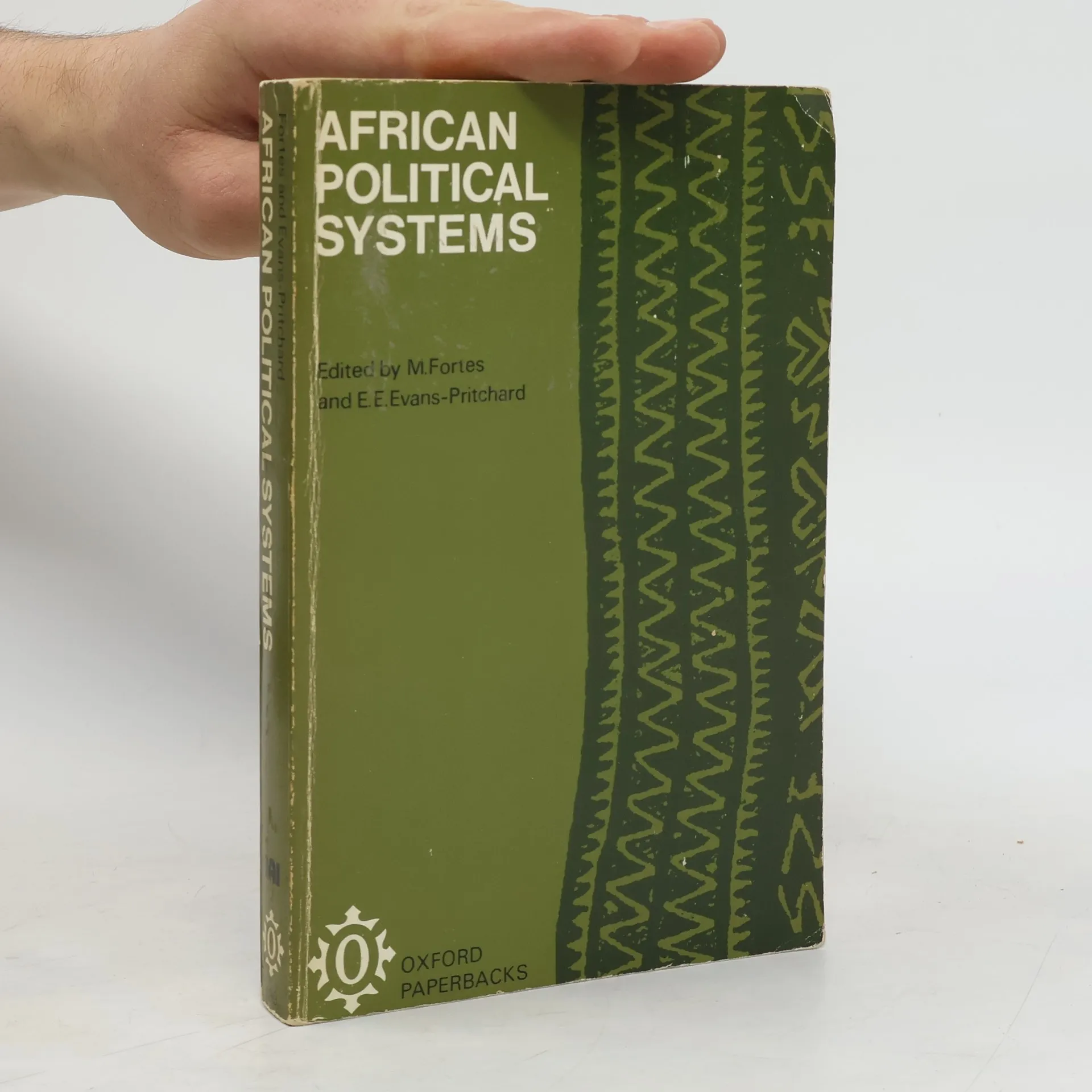
African Political Systems
- 326 Seiten
- 12 Lesestunden
"The result of field studies carried out by trained investigators in eight widely separated areas of the African continent, this book describes the types of social organization found among a number of African peoples: the Zulu of South Africa, the Ngwato of Bechuanaland, the Bemba in north-eastern Rhodesia, the Ankole in Uganda, the Kede in northern Nigeria, the Bantu of Kavirondo, the Tallensi of the northern Gold Coast, and the Nuer of the southern Sudan. The societies and traditional forms of government described, while differing greatly, represent common types of African political systems; although not every such type is included, the editors can fairly claim that the major principles of African political organization are covered by these studies."-- Back cover
Marriage in Tribal Societies
- 176 Seiten
- 7 Lesestunden
Continuing a policy of devoting a whole issue to a single topic, the third volume of the series deals with aspects of marriage in tribal societies. Three papers by Esther Goody, Grace Harris and Jean La Fontaine give accounts of observations in African tribal societies; the fourth, by Marguerite Robinson, is a reassessment of Malinowski's data on the Trobrian islanders. Marriage in tribal societies is a transaction: it is also an institution with a place in the social structure. Status in marriage is seen as a crucial issue. The movement from filial to conjugal status in a first marriage is fundamental and irreversible; it is not diminished by subsequent divorce and remarriage. The partners may change, the status remains. Nevertheless, the rights and obligations of marriage, once authorised, are meant to be respected by all others. Hence the jural penalties for adultery. These are some of the themes which initiate important theoretical discussions in these papers. In his introductory essay Professor Fortes unifies the material, notes the important generalizations which emerge, and points the way to further research.