A History of the Supreme Court of the United States
672 Seiten
24 Lesestunden
Focusing on the United States Supreme Court, this book offers a comprehensive history that extends beyond its rulings to explore the individuals who serve as justices and the selection process involved. It delves into the Court's operational methods and its interactions with other governmental branches. By emphasizing the importance of understanding the institution itself, the author provides a nuanced perspective on the significance of its decisions without passing judgment on them.
The death penalty evokes strong emotions, with some viewing it as a just punishment and others as an inhumane act. This intensity often overshadows its complex history in the United States. For the first time, a comprehensive account details the evolution of capital punishment over four centuries. Law professor Stuart Banner chronicles how the administration and perception of the death penalty have transformed dramatically. In the seventeenth and eighteenth centuries, it was a common punishment for a wide range of crimes, with public hangings attracting large crowds. These events served religious purposes, aiming to promote salvation for both the condemned and the audience. However, by the nineteenth century, executions became more secular and private, reflecting changing societal values. In the modern era, despite becoming a quiet and technological process, the death penalty remains highly divisive. By exploring the experiences of the condemned, executioners, and spectators, Banner provides a deeper understanding of the multifaceted meanings of capital punishment. With nearly four thousand inmates on death row and around one hundred executions annually, the debate surrounding this issue is unlikely to fade. This work is essential for grasping the complexities of America's approach to the ultimate punishment.
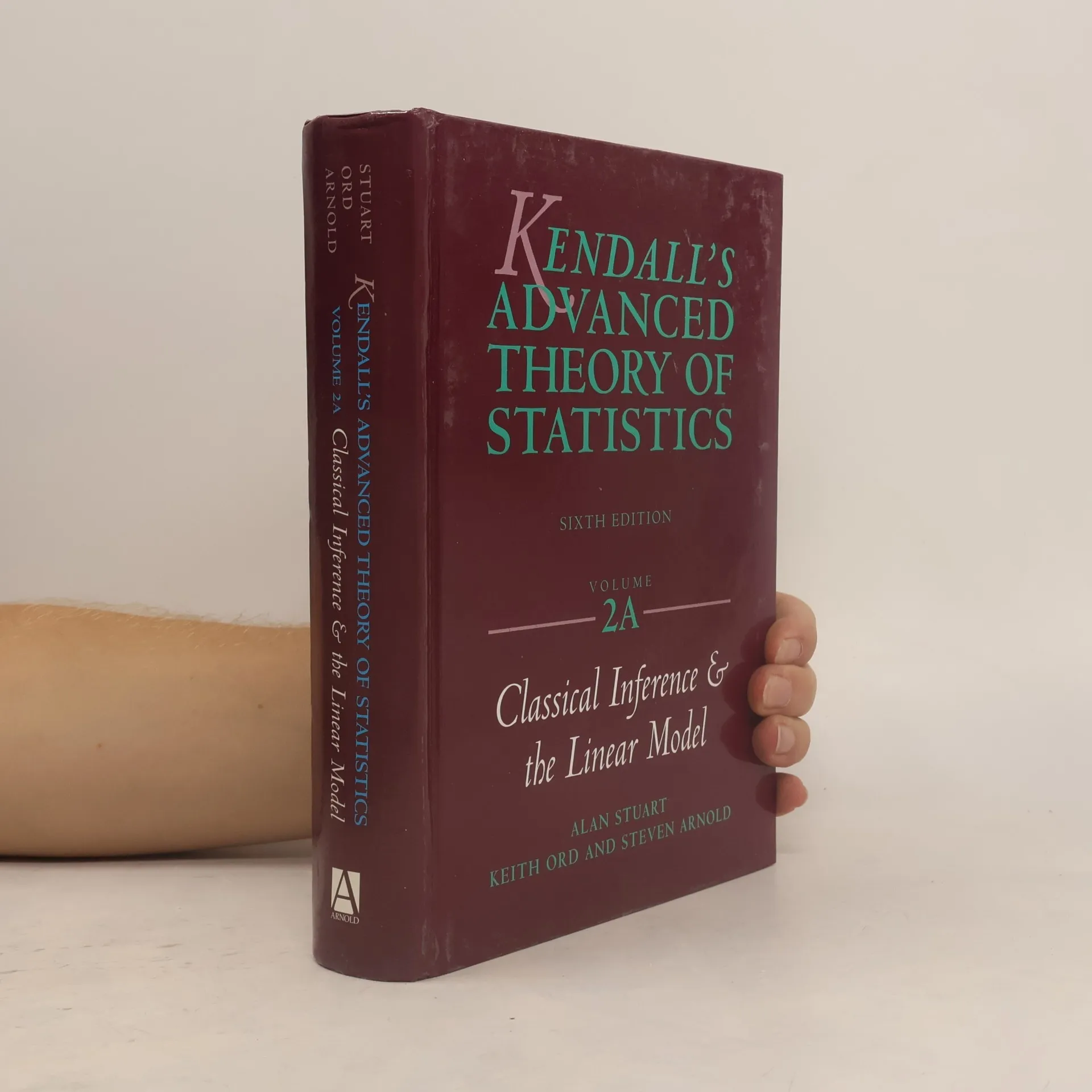
Classical Inference & The Linear Model - Sixth Edition
912 Seiten
32 Lesestunden
This new edition of the classic statistical book Classical Inference and Relationship completes the current three-volume set of Kendall's Advanced Theory of Statistics. It has been fully revised and expanded to over 800 pages, representing the state of the art in classical statistical inference.
This new edition responds to the developments and advances that have taken place in this area over the last few years, and offers the reader a comprehensive, up-to-date overview of Bayesian statistics. Every chapter has been thoroughly revised and updated, as have the exercises at the end ofeach chapter. Clearly written and offering a wide-ranging introduction to Bayesian statistics, this book will be an essential reference for students, researchers and practitioners in statistics.