


Gratis Versand ab 14,99 €. Mehr Infos.
Bookbot

Miriam Meyerhoff

    The Routledge Sociolinguistics Reader
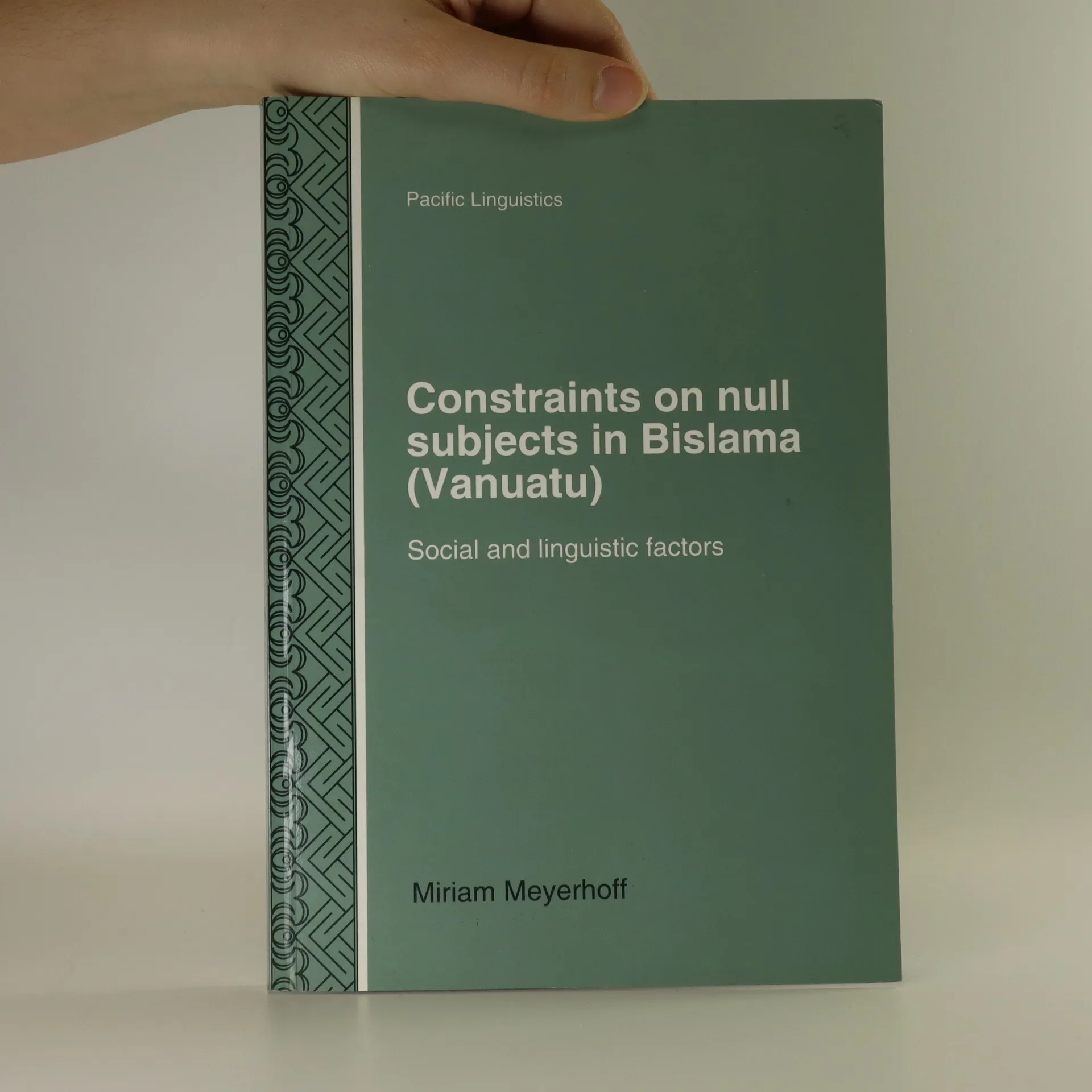
    Constraints on null subjects in Bislama (Vanuatu)
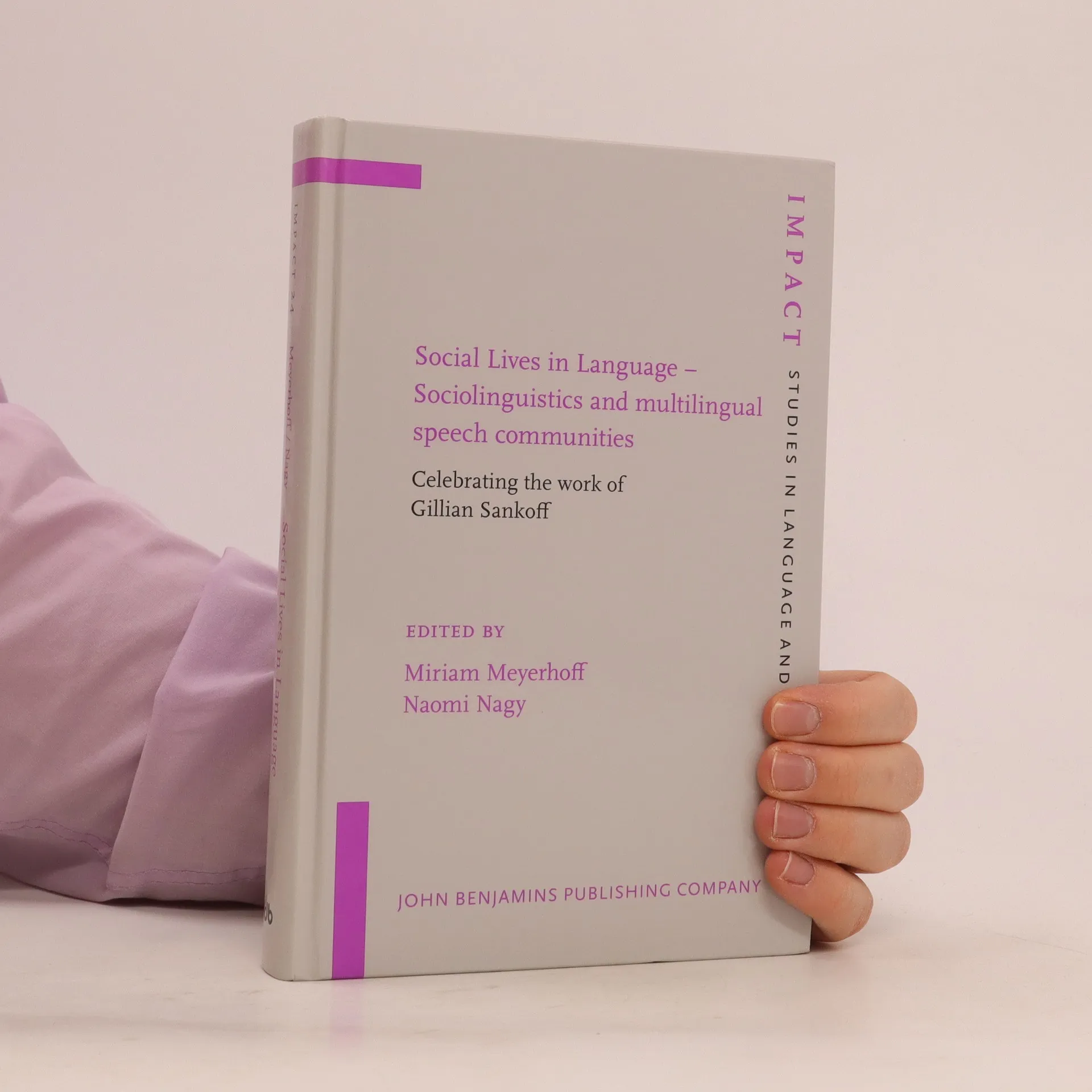
    Social lives in language-sociolinguistics and multilingual speech communities. Celebrating the work of Gillian Sankoff
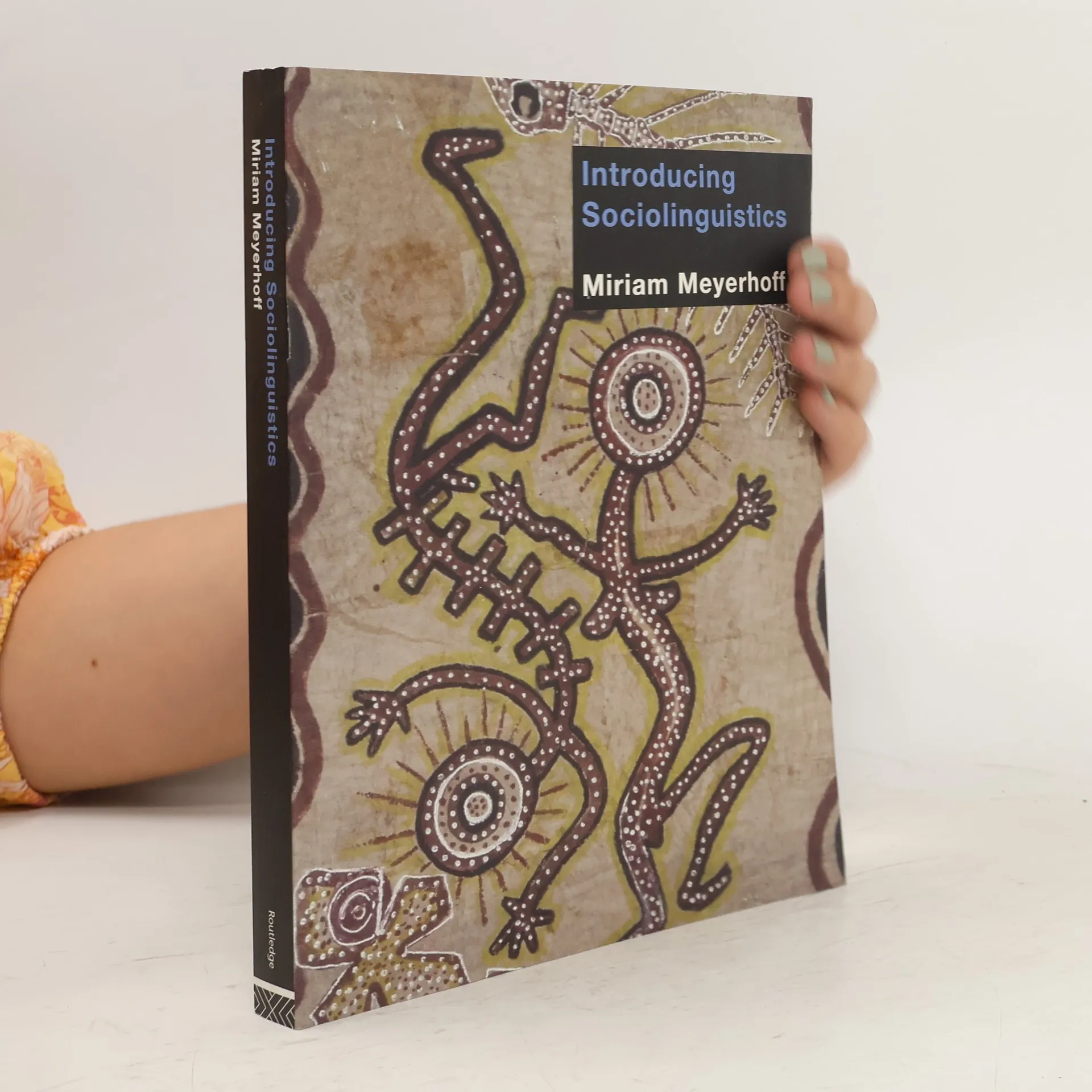
    Introducing Sociolinguistics
    The handbook of Language and Gender
    • Both a companion to Introducing Sociolinguistics , Miriam Meyerhoff's bestselling textbook, and a stand-alone Reader in sociolinguistics, this collection includes classic foundational readings and more recent innovative articles. Intended to be highly user-friendly, The Routledge Sociolinguistics Reader includes substantial section introductions, further reading, a reader's guide on how to use the book and an introductory chapter providing advice on how to undertake qualitative and quantitative research. This introduction is supplemented by exercises focussing on data handling and collection. The Reader is divided into six sections and each section is thematically organised. Each reading is accessible to beginning students of sociolinguistics but the entire selection is assembled to also help advanced students focus on themes, principles and concepts that cut across different researchers' work. Beginning and advanced students are supported by Content Questions to assist understanding of essential features in the readings, and Concept Questions which help advanced students make connections across readings, apply theory to data, and critically engage with the readings. A companion website supports and connects the Reader and textbook with structured exercises, links to associated websites and video examples, plus an online glossary. The Routledge Sociolinguistics Reader is essential reading for students on courses in sociolinguistics, language and society, and language and variation. Authors: Allan Bell, Jennifer Hay, Stefanie Jannedy, Norma Mendoza-Denton, Qing Zhang, John Laver, Sachiko Ide, Dennis R. Preston, Thomas Purnell, William Idsardi, John Baugh, Gibson Ferguson, Isabelle Buchstaller, Jinny K. Choi, Don Kulick, Christopher Stroud, Jan-Peter Blom, John J. Gumperz, David Britain, Monica Heller, Ben Rampton, Miriam Meyerhoff, Nancy Niedzielski, William Labov, Rika Ito, Sali Tagliamonte, Gillian Sankoff, H�l�ne Blondeau, Peter Trudgill, Richard Cameron, Lesley Milroy, James Milroy, Paul Kerswill, Ann Williams, Terttu Nevalainen, Penelope Eckert, Janet Holmes, Stephanie Schnurr, Niloofar Haeri, Elinor Ochs, Scott Fabius Kiesling, Rusty Barrett Go to www.routledge.com/textbooks/meyerhoff for online resources supporting The Routledge Sociolinguistics Reader and Introducing Sociolinguistics (Meyerhoff 2011)

      The Routledge Sociolinguistics Reader2010
    • This volume offers a synthetic approach to language variation and language ideologies in multilingual communities. Although the vast majority of the world s speech communities are multilingual, much of sociolinguistics ignores this internal diversity. This volume fills this gap, investigating social and linguistic dimensions of variation and change in multilingual communities. Drawing on research in a wide range of countries (Canada, USA, South Africa, Australia, Papua New Guinea, Solomon Islands, Vanuatu), it explores: connections between the fields of creolistics, language/dialect contact, and language acquisition; how the study of variation and change, particularly in cases of additive bilingualism, is central to understanding social and linguistic issues in multilingual communities; how changing language ideologies and changing demographics influence language choice and/or language policy, and the pivotal place of multilingualism in enacting social power and authority, and a rich array of new empirical findings on the dynamics of multilingual speech communities.

      Social lives in language-sociolinguistics and multilingual speech communities. Celebrating the work of Gillian Sankoff2008
    • Introducing Sociolinguistics

      • 320 Seiten
      • 12 Lesestunden

      Providing a comprehensive overview of sociolinguistic methods and areas of investigation, this text explains the patterns and systems that underlie language variation in use, as well as the ways in which alternations between different language varieties index personal style, social power and national identity.

      Introducing Sociolinguistics2006
      3,6
    • The handbook of Language and Gender

      • 776 Seiten
      • 28 Lesestunden

      "The Handbook of Language and Gender is a collection of articles written by a team of leading specialists in the field that examines the implications of gender ideologies for the ways we interact. The volume includes data and case-studies from interactions in a number of different social contexts and from a range of different communities, and theoretical discussions about the problems, pitfalls, and potential benefits of research on and discourses about gender." "This handbook provides a comprehensive, up-to-date, and stimulating picture of the field of language and gender for students and researchers in a wide range of disciplines, including linguistics, gender studies, communication, management, psychology, sociology, and anthropology. Book jacket."--Jacket

      The handbook of Language and Gender2005
      4,2
    • How can developments in a contact language inform the inquiry into the structural nature of language? How do they help us better understand the nature of language change and the processes of grammaticisation? Using data from everyday conversations in Bislama (the national language of Vanuatu), this book focuses on one variable, the alternation between overt pronominal and phonetically null subjects. It shows how an emergent system of subject-verb agreement in Bislama interacts with functional constraints on the interpretability of a subject; this interaction accounts for much of the alternation between the two forms of subject. The rich array of social functions that Bislama serves in the communities studied is examined in some detail, and yet it is shown that as Bislama becomes increasingly elaborate morphosyntactically, this kind of structural innovation takes place largely independently of social factors. By adopting the methods of sociolinguistics grounded in participant observation, and being grounded in theoretical treatments of subject agreement, this volume shows how the study of change in a contact language helps to bridge issues in different subfields of linguistics.

      Constraints on null subjects in Bislama (Vanuatu)2000