
Gratisversand in ganz Deutschland!
Bookbot

Christian Gastgeber

    Christian Gastgeber
    Johannes Sambucus, János Zsámboki, Ján Sambucus (1531-1584)
    Kopie und Fälschung
    Barock
    Vom Griffel zum Kultobjekt
    Die Ostkirchen in Wien
    Schrift als Dekor
    • 2018

      Band VI der Singularia Vindobonensia widmet sich nach Band II (Iohannes Cuspinianus) wieder ausschließlich einem Humanisten und seinem kulturellen Umfeld: Johannes Sambucus, der im Umkreis des Wiener Habsburgerhofes als Vermittler und führender Exponent des transalpinen (Spät)Humanismus agierte. Die hier versammelten Beiträge gehen teils auf ein eigens auf diese Persönlichkeit konzentriertes Symposium zurück und wurden um weitere Untersuchungen von ExpertInnen ergänzt, um einen breiten Einblick in diesen prägenden Humanisten der zweiten Hälfte des 16. Jahrhunderts zu geben. Der „nationalen Vielfalt“ seiner Person und seines Wirkens (geboren im damals ungarischen Tyrnavia, heute Trnava, Slowakei; Lebensmittelpunkt in Wien) wurde insofern Rechnung getragen, als an diesem Band ungarische, slowakische und österreichische WissenschafterInnen mitarbeiteten.
      Johannes Sambucus, János Zsámboki, Ján Sambucus (1531-1584)
    • 2016

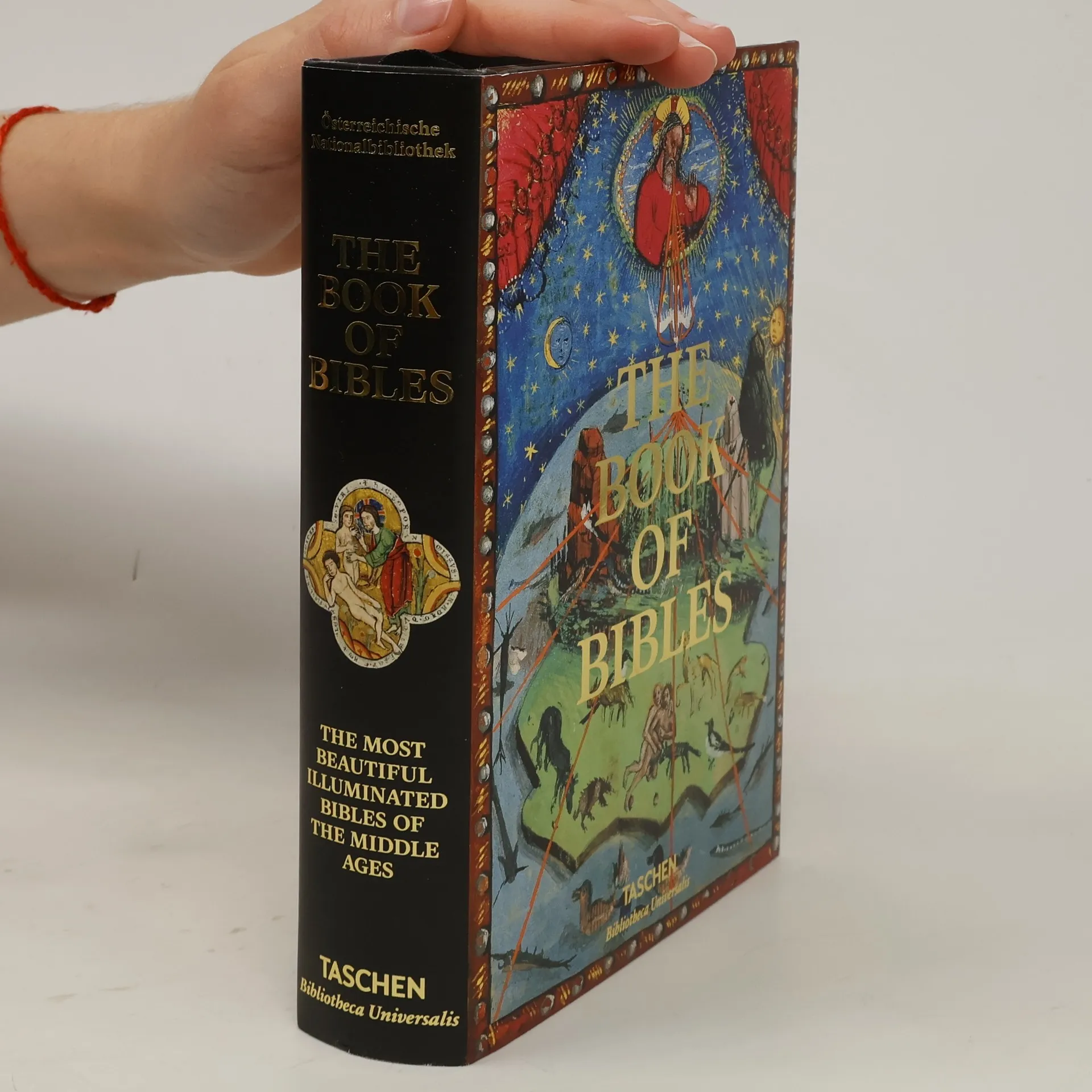
      Discover 50 of the most exquisite and important medieval bible manuscripts, at once art historical treasures and precious religious artifacts. Published in partnership with the Austrian National Library, this stunning collection spans every epoch of the Middle Ages, revealing both the evolution of the Bible and the shifting history of the age.

      The book of Bibles : the most beautiful illuminated Bibles of the middle ages
    • 2015

      The Ecclesiastical History of Nicephorus Xanthopoulus, written at the turn of the 14th century in 18 books, presents a unique case of Byzantine historiography; it revives the literary genre of church history, having reached a climax in late antiquity, at a time when Byzantium, under Emperor Andronikos II. Palaiologos, was religiously redefining itself after the exile in Nicaea (1204–1261) as well as the traumatic Latin occupation and dissolved the enforced church union with the Pope. Against the background of political strengthening in consequence of the recapture of the capital and the denial of religious subordination Xanthopoulos wrote a new church history from the creation of the world until the year 610 n. Chr.; it is dedicated to the “new Constantine” Emperor Andronikos II., who has preserved Byzantium from the “heresy” of the Latins. The work extensively draws from the early Byzantine predecessors and, between criticism and admiration, aims at a revised compilation in the spirit of Byzantine mimesis and emulation. In order to analyze his work and sources by internationally recognized experts of each used author, a symposium was organized in 2011 whose results are presented in these proceedings.

      Ecclesiastical history and Nikephoros Kallistou Xanthopoulos
    • 2015

      Barock

      Geschichte der Buchkultur 7

      • 634 Seiten
      • 23 Lesestunden

      Eine Geschichte der Buchkultur für die Epoche des Barock (ausgehendes 16. bis Mitte 18. Jahrhundert) zu schreiben, stellt eine besondere Herausforderung dar. Mit der Erfindung des Buchdrucks hatte sich die Buchproduktion innerhalb kürzester Zeit vervielfacht und war um die Mitte des 17. Jahrhunderts explosionsartig angestiegen.

      Barock
    • 2015

      Der internationale Kongress „Byzanz als Brücke zwischen West und Ost“ (3.–5. Mai 2012) an der Österreichischen Akademie der Wissenschaften hat die Vermittlungsrolle von Byzanz zwischen den Kulturen im Westen und Osten bzw. der eigenen Kultur zu den Nachbarvölkern hervorgestrichen. Diese Vermittlung wurde dabei nicht nur im Sinne einer Beeinflussung thematisiert, sondern auch in einer rezeptiven Funktion, symbolisiert in seiner Brückenrolle. Eine solche Brücke war ebenso innerhalb von Byzanz zu schlagen, und zwar am Übergang von einer paganen zu einer christlichen Kultur. Der Aktenband, der um weitere Beiträge von SpezialistInnen ergänzt wurde, untermauert die Bedeutung der byzantinischen Kultur und Politik für ein Gesamtverständnis der spätantiken, mittelalterlichen und frühneuzeitlichen Geschichte und führt einmal mehr Byzanz aus einem verklärt orientalischen, weit entfernten, mysteriösen Reich wieder in die europäische Geschichts- und Kulturlandschaft zurück. Dabei liegt der Schwerpunkt besonders auf seinem enormen Impuls, seiner Rezeption und seiner Vermittlung zwischen Europa und dem Orient, in einem immerwährenden process of mobility zwischen Europa, Afrika und Asien.

      Byzantium as bridge between West and East
    • 2013

      Das in zwei griechischen Handschriften der Österreichischen Nationalbibliothek erhaltene „Register des Patriarchats von Konstantinopel“ enthält mehr als 800 Dokumente, die zwischen 1315 und 1402 vom oder für das Patriarchat und die Synode der Bischöfe von Konstantinopel verfasst wurden, und stellt eine der wichtigsten Quellen für die kirchliche, politische und soziale Geschichte des Byzantinischen Reiches in den letzten Jahrhunderten seines Bestehens dar. Im Jahr 2009 versammelte ein internationaler Kongress Experten aus dem In- und Ausland in Wien, die verschiedene Aspekte dieser Texte aus paläographischen, kodikologischen, soziolinguistischen, diplomatischen, kirchen-, rechts-, sozial- und wirtschaftsgeschichtlichen Perspektiven beleuchteten. Die in diesem Band versammelten Beiträge in deutscher, englischer und französischer Sprache eröffnen damit einen neuen Blick auf das mittelalterliche Patriarchat von Konstantinopel und sein Register, aber auch insgesamt auf die fortwährende Bedeutung des Byzantinischen Reiches als spirituelles Zentrum in Ost- und Südosteuropa und im gesamten Mittelmeerraum in einer Epoche, in der seine politische Macht wenige Jahrzehnte vor der Eroberung durch die Osmanen 1453 bereits dramatisch geschrumpft war. Damit ist der Band sowohl für Byzantinisten als auch für die Mittelalterforschung insgesamt von großem Interesse. Preserved in two Greek manuscripts of the Austrian National Library, the “Register of the Patriarchate of Constantinople” contains more than 800 documents, which were written between 1315 and 1402 by or for the Patriarchate and the Synod of Bishops of Constantinople; it is one of the most important sources for the religious, political and social history of the Byzantine Empire in the last centuries of its existence. In 2009, an international congress assembled experts from Austria and abroad in Vienna, who illuminated various aspects of these texts from the perspectives of palaeography, codicology, sociolinguistics, church history, law, social and economic history, and history of diplomacy. The contributions collected in this volume (in German, English and French) open a new view on the medieval Patriarchate of Constantinople and its Register, but also in general on the continued significance of the Byzantine Empire as a spiritual centre in Eastern and South-Eastern Europe and in the entire Mediterranean in an era in which its political power was already shrunk dramatically a few decades before the conquest by the Ottomans in 1453. Thus, the volume is of great interest both for experts from the field of Byzantine as well as Medieval Studies.

      The register of the Patriarchate of Constantinople
    • 2013

      Le volume présente des articles sur l’histoire de la littérature byzantine et la culture de Byzance, mettant en lumière de nouvelles interprétations des sources primaires, tant publiées qu’inédites, pour approfondir la compréhension de la société byzantine. Il rend hommage à Paolo Odorico, un spécialiste éminent de la philologie et de l’histoire sociale byzantines, dont l'œuvre s'étend du grec classique au grec moderne. Odorico a proposé une approche audacieuse, considérant chaque œuvre littéraire comme le produit d’un contexte social spécifique. Il soutient que l’analyse littéraire vise à révéler la réalité sociale derrière les textes. Selon lui, la recherche ne doit pas se limiter à la question des faits mentionnés, mais explorer « Qui écrit un fait, pour quelle audience et dans quel but ? ». Il encourage à examiner la littérature byzantine non pas comme un simple corpus documentaire, mais à partir de la perspective de l’auteur et de son audience. Pour honorer sa mémoire, des collègues et amis, sceptiques envers une recherche strictement positiviste, ont été invités à appliquer cette approche dans leurs propres recherches. Le volume contient des articles en français, anglais et allemand.

      Pour l'amour de Byzance