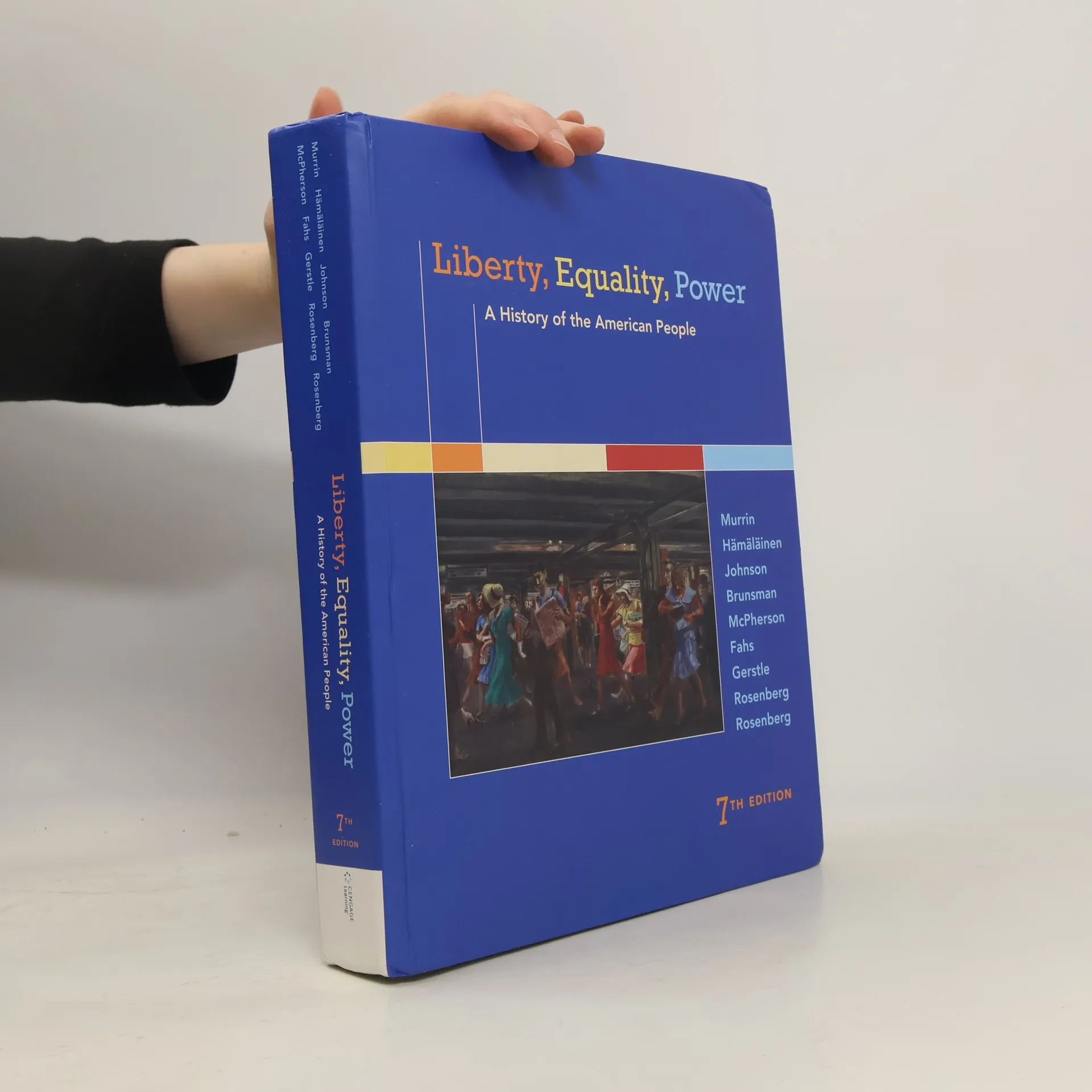
Understanding the past helps us navigate the present and future. This book teaches readers about American history and exposes them to movies and other forms of popular culture that tell the stories of the nation's past. A highly respected and thoroughly modern approach to U.S. history, LIBERTY, EQUALITY, POWER, Seventh Edition, shows how the United States was transformed, in a relatively short time, from a land inhabited by hunter-gatherer and agricultural Native American societies into the most powerful industrial nation on Earth. This approach helps readers understand the impact of the notions of liberty and equality, which are often associated with the American story, and recognize how dominant and subordinate groups have affected and been affected by the ever-shifting balance of power.
Paul E. Johnson Bücher
Paul Johnson war ein angesehener Historiker, Journalist und Autor, der sich mit einer breiten Palette von Themen beschäftigte. Seine Werke tauchten häufig tief in die Geschichte ein und analysierten die Entwicklung von Gesellschaften und Kulturen mit einem scharfen Blick für Details und Zusammenhänge. Johnsons umfangreicher Publikationskatalog zeugt von seiner unstillbaren Neugier und seiner Fähigkeit, komplexe historische Erzählungen einem breiten Publikum zugänglich zu machen. Sein Schreiben zeichnet sich durch Klarheit und überzeugende Einblicke aus und bietet den Lesern fesselnde Perspektiven auf die Vergangenheit.