

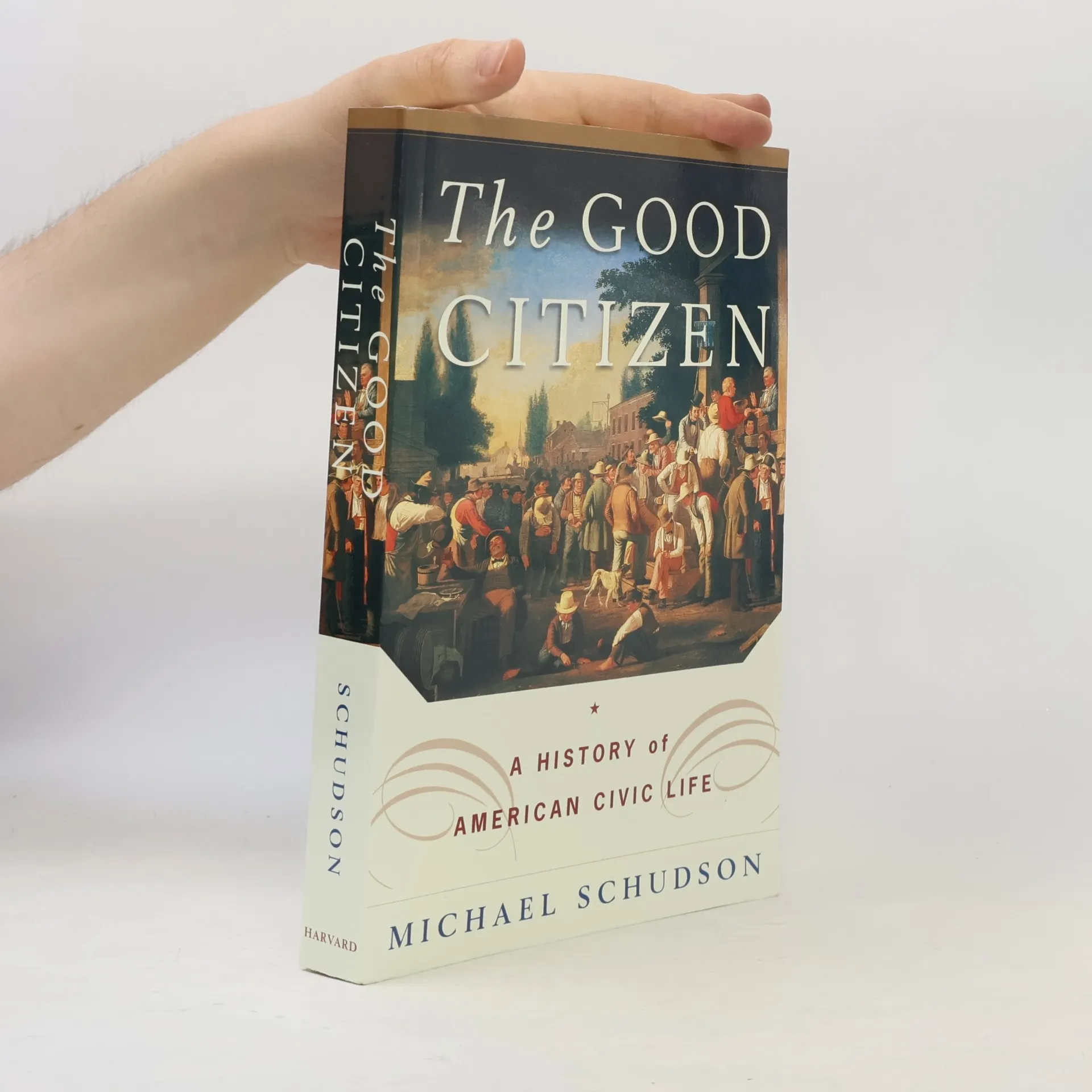
In 1996, less than half of all eligible voters bothered to vote. Fewer citizens each year follow government and public affairs regularly. Is popular sovereignty a failure? Not necessarily, argues Michael Schudson in this provocative history of citizenship in America. Schudson sees American politics as evolving from a "politics of assent" in colonial times and the eighteenth century, in which voting generally reaffirmed the social hierarchy of the community; to a "politics of affiliation" in the nineteenth century, in which party loyalty was paramount for the good citizen . Progressive reforms around the turn of the century reduced the power of parties and increased the role of education, making way for the "informed citizen," which remains the ideal in American civic life. Today a fourth model, "the rights-bearing citizen," supplements the "informed citizen" model and makes the courthouse as well as the voting booth a channel for citizenship.
Michael Schudson Reihenfolge der Bücher (Chronologisch)
Michael Schudson ist ein Soziologe und Historiker, der sich mit den amerikanischen Nachrichtenmedien, der Werbung und der Populärkultur befasst. Seine Arbeit untersucht, wie sich Nachrichten und kulturelle Formen im Laufe der Zeit entwickelt haben und analysiert deren gesellschaftliche Auswirkungen. Schudson interessiert sich besonders für das kulturelle Gedächtnis und dafür, wie kollektive Erinnerungen die Gegenwart prägen. Seine einflussreichen Essays sind in führenden Publikationen erschienen und bieten tiefe Einblicke in die Dynamik der amerikanischen Informationslandschaft.
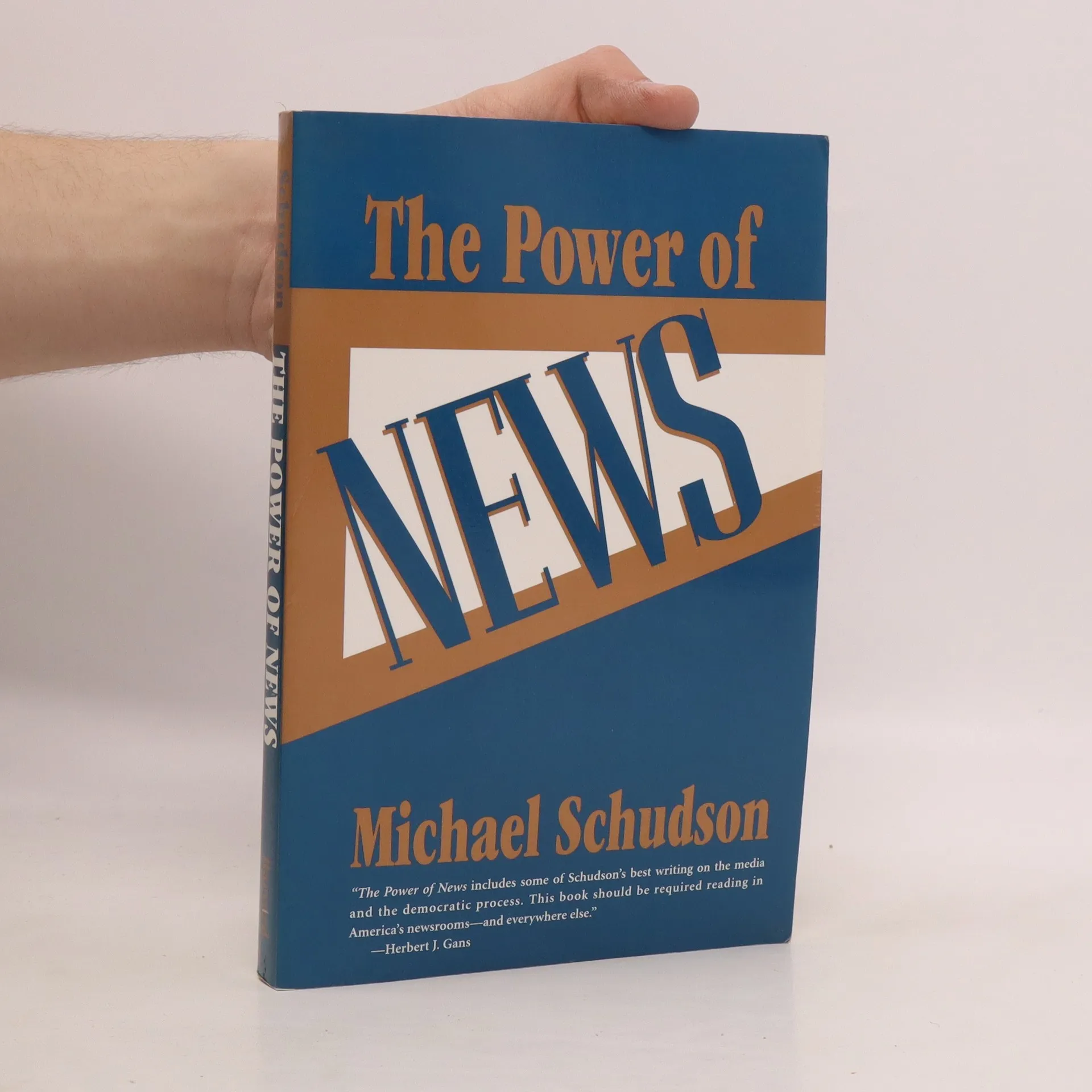
Some view news as mere information reflecting the world, while others see it as propaganda with a partisan slant. Michael Schudson argues that news is both and neither; it is a cultural form with its own conventions, wielding subtle and complex power. This exploration reveals the news media as a central institution in modern society, serving as a repository of common knowledge and cultural authority. Schudson, a leading voice in journalism and mass communication, traces the evolution of news alongside American democracy and industry, influenced by broader social forces. He delves into the roots of contemporary journalistic practices, such as interviews, summary leads, and the reporter's detached stance on politics. His work challenges myths held by journalists and critics alike, debunking the notion that the press instigated the Spanish-American War or toppled Nixon, or that television swayed public opinion during the Kennedy-Nixon debates or the Vietnam War. So, what is the role of news? Schudson illustrates that media serve to mediate; by publicizing knowledge, news transforms its nature and empowers people to act in new, meaningful ways. His analysis is enriched by historical scholarship and insightful inquiries into the production, meaning, and reception of news today.
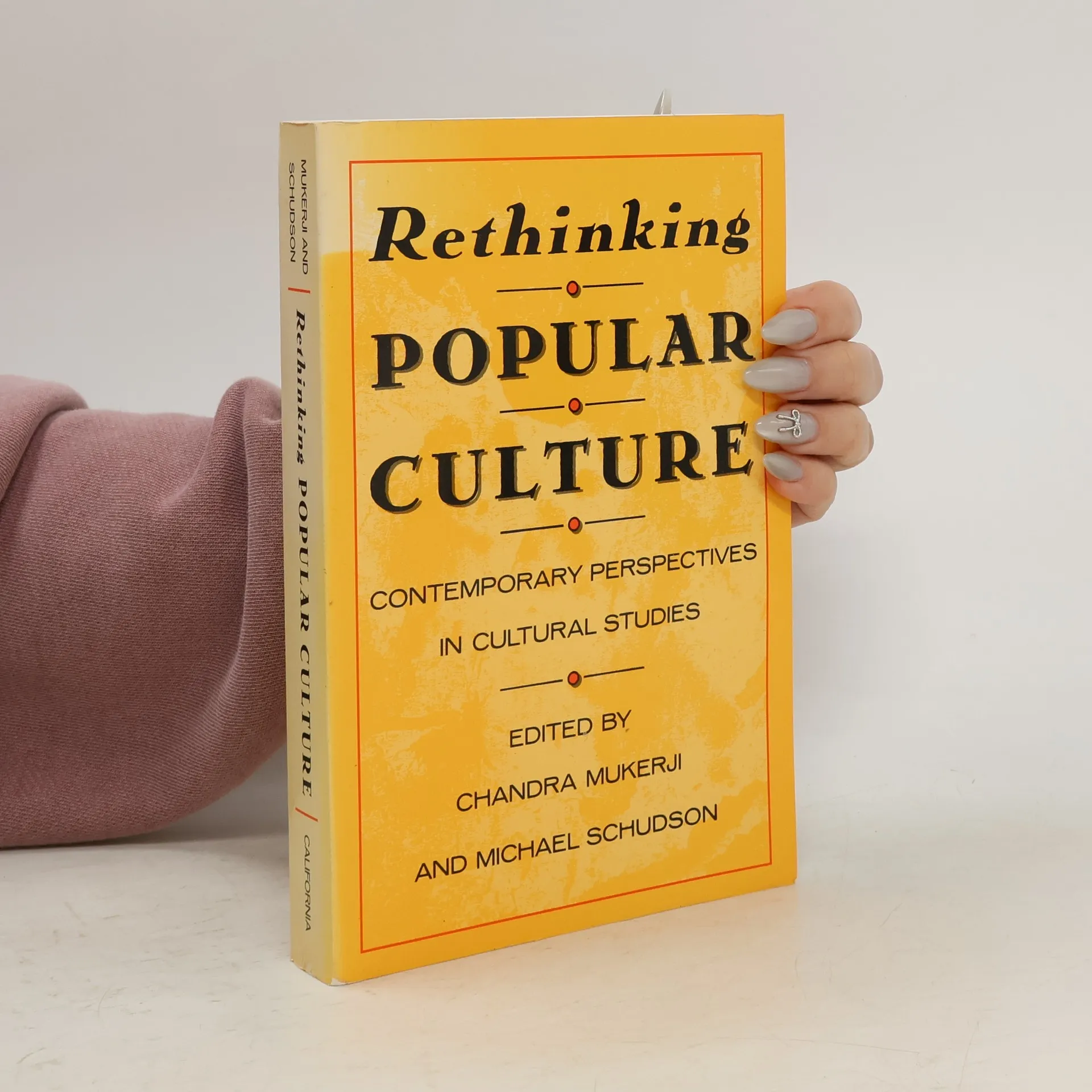
Rethinking Popular Culture selects some of the best and most important recent work analyzing popular culture. Drawing upon recent developments in cultural theory and the exciting new techniques of critical analysis, the essays in this volume break down disciplinary boundaries in a fresh and innovative fashion.Eclectic and wide-ranging, Rethinking Popular Culture includes works by authors in the humanities and social sciences. The essays touch on a variety of features of popular culture, from photography to fashion, romance novels to television, jokes to food habits.The editors' comprehensive introduction sets each essay in the context of intellectual developments in history, sociology, literature, and anthropology and in the study of popular culture as a whole. Arguing that recent scholarship has revolutionized our understanding of popular culture, the editors articulate what that new perspective is while introducing some of the most influential and important work that gave rise to it.