
General aspects of nucleic acid uptake by mammalian cells have been the subject of several reviews during the last few years (PAGANO, 1970; BHARGAVA and SHANMUGAM, 1971; DUBES, 1971; RYSER, 1967). These reviews covered methods used for the infection of cells by viral nucleic acids as well as interaction of mammalian cells with non-viral nucleic acids. This article is restricted to a discussion of experiments with poliovirus RNA and focuses special attention on the steps following the uptake of RNA into a cell, aspects that were not discussed in earlier review articles. The fate of input RNA once inside the cell is determined by the host cell but experimental conditions can be chosen to favor the survival of input RNA and the induction of a virus growth cycle by interfering with host-cell meta bolism through events that, in the case of infection with intact virus, might be controlled by viral proteins.
Peter Hans Hofschneider Bücher


Current Topics in Microbiology and Immunology
- 278 Seiten
- 10 Lesestunden
Several discoveries are noteworthy for allowing us to probe the recesses of the virus infected cell and to search for cryptic viral genomes which might provide clues in our studies of cancer etiology or developmental biology. One of the most notable was the dis covery of reverse transcriptase. This marked a momentous occasion in the history of molecular biology. Not only did it provide insight into the mechanism of persistence of retroviruses but it also provided us with an enzyme that could synthesize a DNA copy of any RNA. This DNA copy could then be used as a hybridization reagent to search for both complementary DNA and viral-specific RNA. Thus one could follow the course of any viral infection or probe in tumor cells for hidden viral genomes. Second, a great deal of credit must be given to the geneticists who isolated the various deletion mutants in the 'avian retrovirus system and thus provided us with the frrst means of isolating gene-spe cific probes. Finally, the laboratories which have mapped the genome have provided us with the framework in which to ask very specific questions with our gene-specific probes. Recently, numerous excellent reviews concerning various aspects of the retroviruses have appeared. In this review I shall not even attempt to present a comprehensive review of retroviruses.
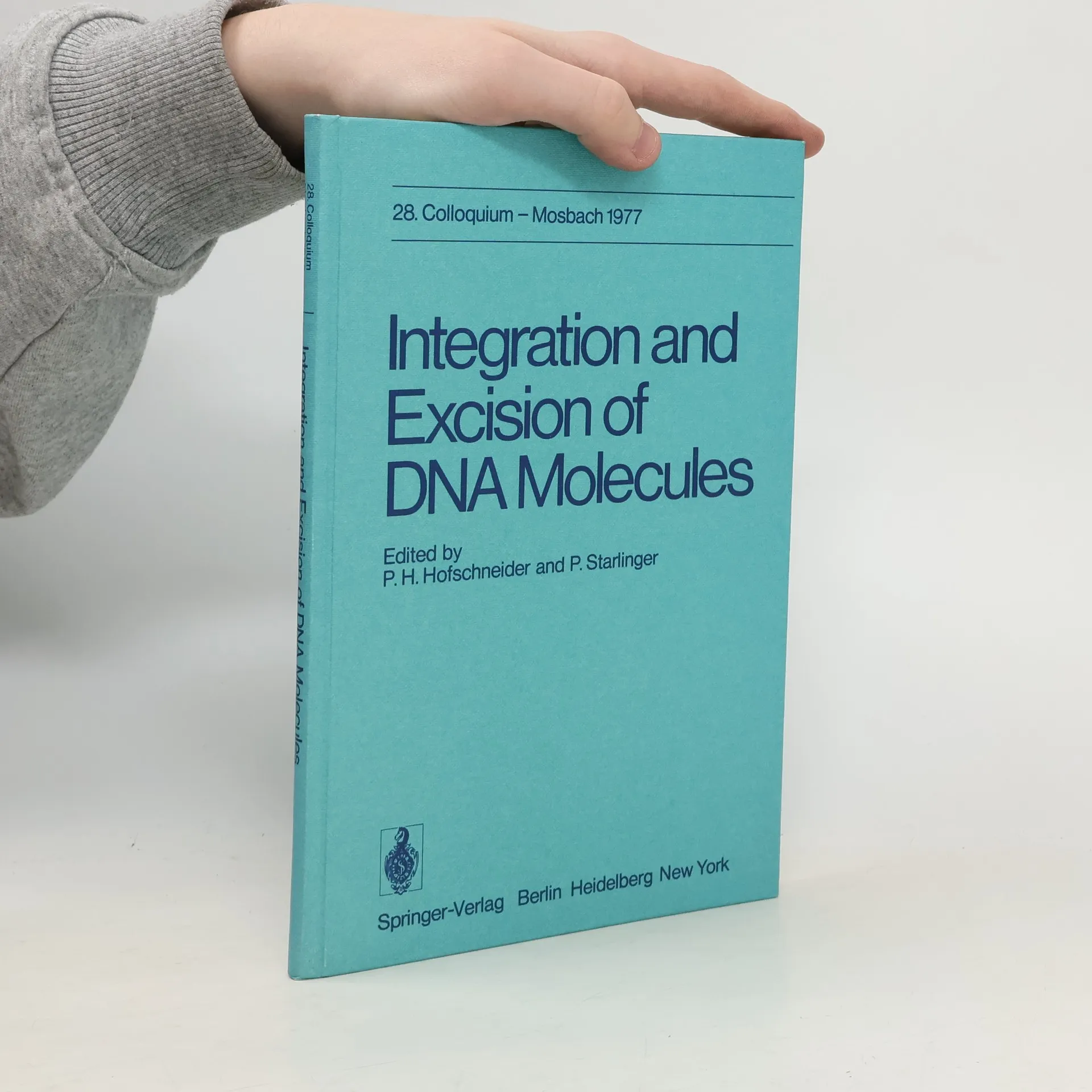
Colloquium - 28: Integration and Excision of DNA Molecules
28. Colloquium der Gesellschaft für Biologische Chemie, am 21.–23. April 1977 in Mosbach/Baden
- 136 Seiten
- 5 Lesestunden
The topic of this years' osbach Colloquium was DNA integration. We have tried to bring together experts from different fields of research who are studying natural processes by which DNA molecules from differ ent sources are linked. It has been known for a long time that such linkage occurs between the chromosomes of bacteriophages and plasmids on the one hand and the chromosome of the bacterial host on the other. This process has been especially well studied in bacteriophage A. Since it is controlled in a complicated way, we began with a lecture by M. ptashne on these regulatory processes. H. Nash described the inte gration of bacteriophage A into the bacterial chromosome. To put this site-specific process into perspective, G. Mosig lectured on genetic recombination in prokaryotes in general and K. Murray described the use of bacteriophage A as an artificial vector for genetic engineering. A different kind of bacteriophage integration is shown by bacteriophage Mu, which is much less specific in its choice of an integration site than A. The properties of this phage were described by P. van de Putte."