

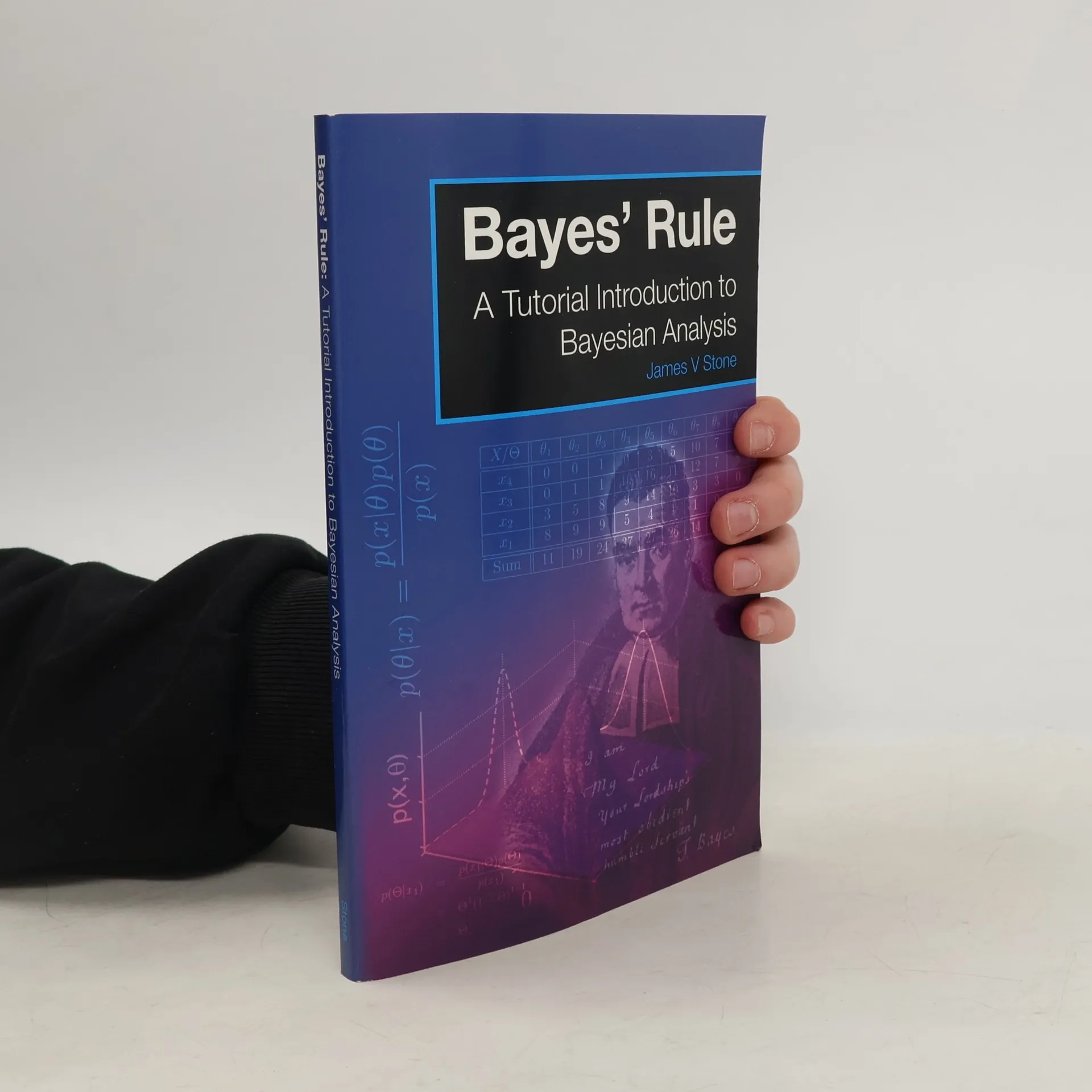
What does a medical test tell us about the chances of having a particular disease?How can we tell if a spoken phrase is, 'four candles’ or 'fork handles’?How do we a perceive a three-dimensional world from from the two-dimensional images on our retinas?The short answer is Bayes’ rule, which transforms meaningless statistics and raw data into useful information. Discovered by an 18th century mathematician and preacher, Bayes' rule is a cornerstone of modern probability theory. In this richly illustrated book, intuitive visual representations of real-world examples are used to show how Bayes' rule is actually a form of common sense reasoning. The tutorial style of writing, combined with a comprehensive glossary, makes this an ideal primer for novices who wish to gain an intuitive understanding of Bayesian analysis. As an aid to understanding, online computer code (in MatLab, Python and R) reproduces key numerical results and diagrams. Stone’s book is renowned for its visually engaging style of presentation, which stems from teaching Bayes’ rule to psychology students for over 10 years as a university lecturer.
James V. Stone Bücher
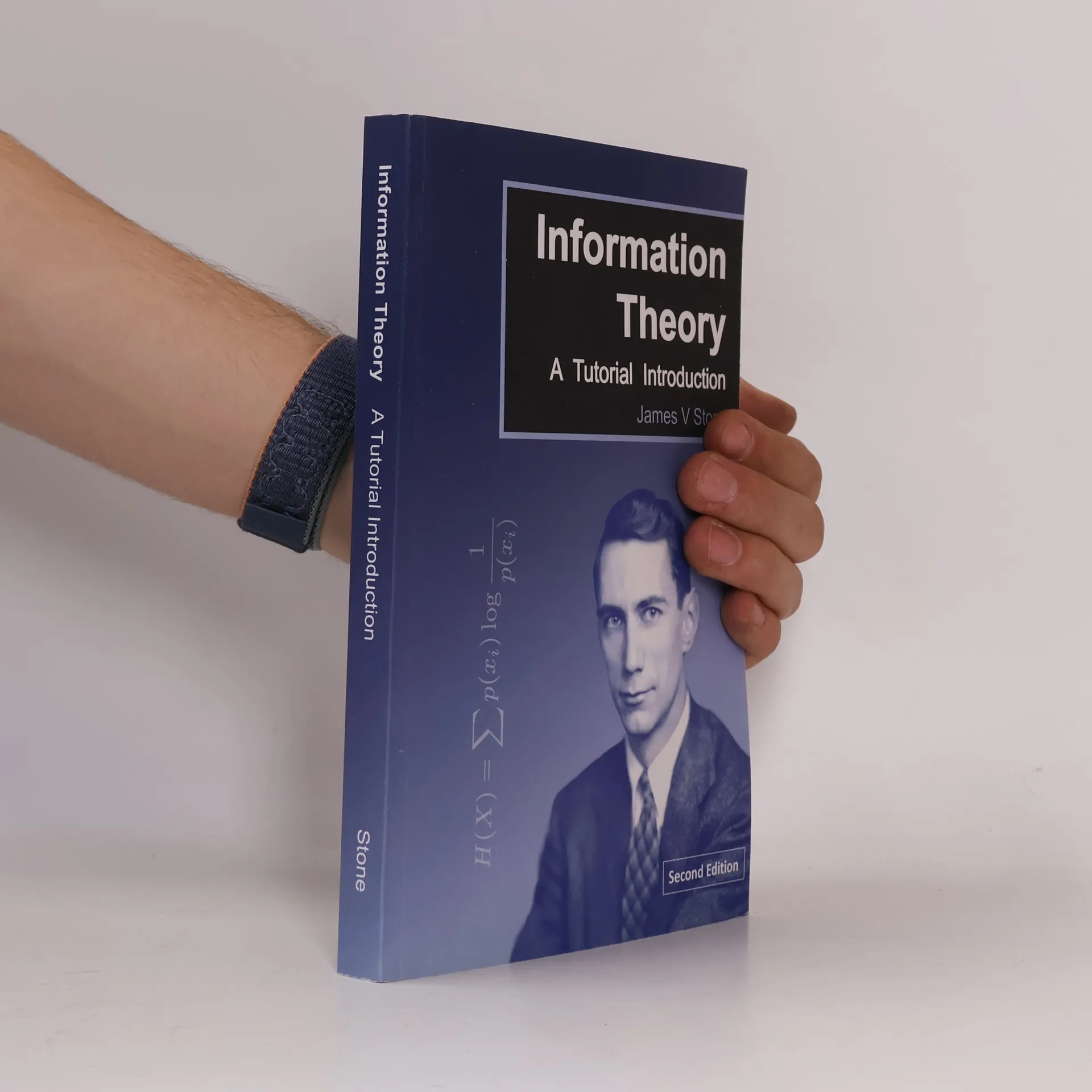
Originally developed by Claude Shannon in the 1940s, information theory laid the foundations for the digital revolution, and is now an essential tool in telecommunications, genetics, linguistics, brain sciences, and deep space communication. In this richly illustrated book, accessible examples are used to introduce information theory in terms of everyday games like ‘20 questions’ before more advanced topics are explored. Online MatLab and Python computer programs provide hands-on experience of information theory in action, and PowerPoint slides give support for teaching. Written in an informal style, with a comprehensive glossary and tutorial appendices, this text is an ideal primer for novices who wish to learn the essential principles and applications of information theory. This Second Edition includes two new chapters on on the theory and applications of Transfer Entropy and Rate Distortion Theory.