

Gratis Versand ab 16,99 €. Mehr Infos.
Bookbot

Thomas G. Wong

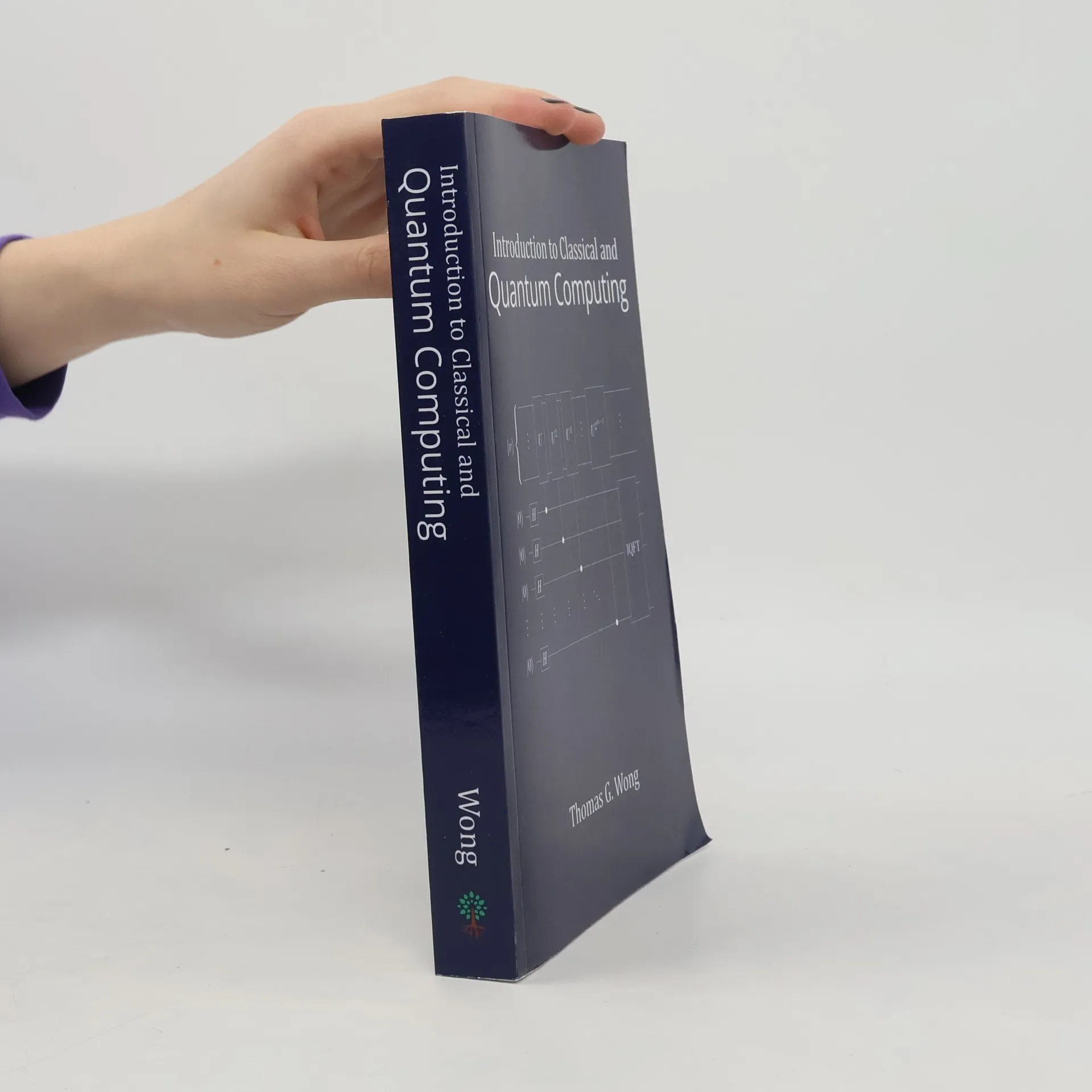
    Introduction to Classical and Quantum Computing
    Wie Dinge sind
    • Wie Dinge sind

      • 104 Seiten
      • 4 Lesestunden

      Unabhängigkeit, Verantwortung und Erwartungen sind die Themen von „Wie Dinge sind“.In mehreren Episoden wird die Geschichte einer jungen Frau mit Migrationshintergrund erzählt, die zwischen ihren alten, kranken Eltern und deren aus- und unausgesprochenen Erwartungen versucht, ihren Platz im Lebenzu finden. Fotografierend hält sie das Leben und ihre Umgebung in Bildern fest. Doch durch eine Verwechslung wird sie mit dem Leben einer anderen, ihr ähnlichen jungen Frau konfrontiert. Überraschend ergibt sich die Möglichkeit, dem Leben einen ganz anderen Verlauf zu geben. Aber kann man den eigenen Erfahrungen und Erlebnissen einfach so entkommen?Nach mehreren Kurzgeschichten legt die kanadische Autorin gg mit „Wie Dinge sind“ ihre erste längere Erzählung vor und zeigt, weshalb sie zu den interessantesten neuen Stimmen Nordamerikas zählt. Mit ihren oft wortlosen, sehr detaillierten Sequenzen, die durch den Verzicht auf Sprechblasen oft wie untertitelte Standbilder aus einem Nouvelle Vague-Film erscheinen, schafft sie eine unvergleichliche Atmosphäre.

      Wie Dinge sind
      3,0
    • Introduction to Classical and Quantum Computing is for students who want to learn quantum computing beyond a conceptual level, but who lack advanced training in mathematics. The only prerequisite is trigonometry, and mathematics beyond that will be covered, including linear algebra. This book is suitable as a course textbook or for independent study.The text begins with a significant overview of classical computing, from how they add numbers to their computational limits, and it mirrors many of the quantum computing topics that are covered later. Then, the investigation of quantum computing begins with a single qubit and quantum gates acting on it, first using geometry and elementary algebra, and later using linear algebra. Computer algebra systems are utilized, and code for both Mathematica and SageMath is included. After one qubit, multi-qubit systems are covered, including how quantum computers add numbers, universal gate sets, and error correction. After this, readers learn how to program quantum circuits on actual quantum processors using IBM Quantum Experience. Afterward, entanglement and quantum protocols are explored. Finally, quantum algorithms are examined, culminating in Shor's algorithm for factoring. Abundant use of the Quirk quantum simulator is used throughout. Finally, a short discussion of careers in quantum computing is provided, along with some possible technical topics to learn next.

      Introduction to Classical and Quantum Computing