Bookbot

Jonathan Sacks

    8. März 1948 – 7. November 2020

    Rabbi Lord Jonathan Sacks war ein tiefgründiger Denker, dessen Schriften sich mit einer breiten Palette von Themen befassten, von Ethik und religiösem Fundamentalismus bis hin zur Beziehung zwischen Wissenschaft und Religion. Seine Arbeit bietet tiefe Einblicke in die Komplexität des modernen Lebens und sucht nach bedeutungsvollen Verbindungen zwischen Tradition und zeitgenössischem Denken. Sacks war eine gefragte Stimme für seine Fähigkeit, die jüdische Philosophie so zu artikulieren, dass sie ein breites Publikum ansprach, und seine Essays und Bücher werden für ihre intellektuelle Tiefe und rhetorische Gewandtheit geschätzt. Er befasste sich mit wichtigen Fragen von Krieg und Frieden und hinterließ ein Erbe als umsichtiger und inspirierender Schriftsteller.

    Jonathan Sacks
    The Koren Sacks Rosh Hashana Mahzor: Rohr Family Edition: High Holiday Prayer Book
    Studies in Spirituality
    Judaism's Life-Changing Ideas: A Weekly Reading of the Jewish Bible
    I Believe: A Weekly Reading of the Jewish Bible
    The Jonathan Sacks Haggada: The Applbaum Edition
    Wie wir den Krieg der Kulturen noch vermeiden können
    • Ist der 'Krieg der Kulturen' unausweichlich? Kann es gelingen, in einer immer enger werdenden Welt, in der sich fremde Kulturen näher rücken, einander freundlich und nicht feindlich zu begegnen? Welche Haltung kann den 'Kampf der Kulturen' verhindern? Jonathan Sacks skizziert in diesem Buch die Prinzipien einer Ethik globaler Gemeinschaft. Inmitten der hilflosen Gewalttätigkeit der Gegenwart macht Sachs deutlich, wo die Orientierungsmarken liegen für den Weg hinaus aus der Spirale des Hasses. Denn: 'Nie stand mehr auf dem Spiel - und wir haben die Wahl.' TIMES-Buch des Jahres 'Ein großes Werk!' INDEPENDENT-Buch des Jahres 'Ein prophetisches Buch.'
      Wie wir den Krieg der Kulturen noch vermeiden können
      4,8
    • Rabbi Jonathan Sacks, Chief Rabbi of the United Hebrew Congregations of the Commonwealth in the United Kingdom offers a refreshing and insightful commentary to the Koren Haggada, together with illuminating essays on the themes and motifs of the Festival of Freedom. Sensitively translated, the traditional texts are carefully balanced alongside the Chief Rabbi's contemporary ideas, in a modern and user-friendly design. With new interpretations and in-depth analyses of the Passover liturgy and ritual, Rabbi Sacks' style is engaging, intelligent at times daring in its innovation and always inspiring. With essay titles as diverse as Pesah, Freud and Jewish Identity and Pesah and the Rebirth of Israel, as well as explorations of the role of women in the exodus, and the philosophy of leadership and nation-building, the Chief Rabbi's Haggada is a thought-provoking and essential companion at the Seder table.

      The Jonathan Sacks Haggada: The Applbaum Edition
      4,9
    • Time and again, in the midst of troubled times or facing difficult decisions, I've found the words of the weekly parasha giving me guidance - or, conversely, the events themselves granting me deeper insight into the Torah text. For that is what 'Torah' means: teaching, instruction, guidance. Torah is a commentary on life, and life is a commentary on Torah. Together they constitute a conversation, each shedding light on the other. So wrote Rabbi Sacks in the introduction to his first collection of essays on the weekly Torah portion. In I Believe, the final cycle of Covenant & Conversation essays written before his untimely passing, we are brought full circle, with Rabbi Sacks giving us a personal and intimate demonstration of how he came to see the world through listening attentively to the Torah and its message for the present and for all times. In this deeply uplifting collection of essays, Rabbi Sacks identifies and explores a different Jewish belief in each weekly portion, showing us how his own beliefs were formed from an ongoing conversation between the Torah and his life, and how we can achieve the same.

      I Believe: A Weekly Reading of the Jewish Bible
      4,9
    • What is Judaism? A religion? A faith? A way of life? A set of beliefs? A collection of commands? A culture? A civilization? It is all these, but it is emphatically something more. It is a way of thinking about life, a constellation of ideas. One might think that the ideas Judaism introduced into the world have become part of the common intellectual heritage of humankind, at least of the West. Yet this is not the case. Some of them have been lost over time; others the West never fully understood. Yet these ideas remain as important as ever before, and perhaps even more so. In this inspiring work, Rabbi Sacks introduces his readers to one Life-Changing Idea from each of the weekly parashot.

      Judaism's Life-Changing Ideas: A Weekly Reading of the Jewish Bible
      4,7
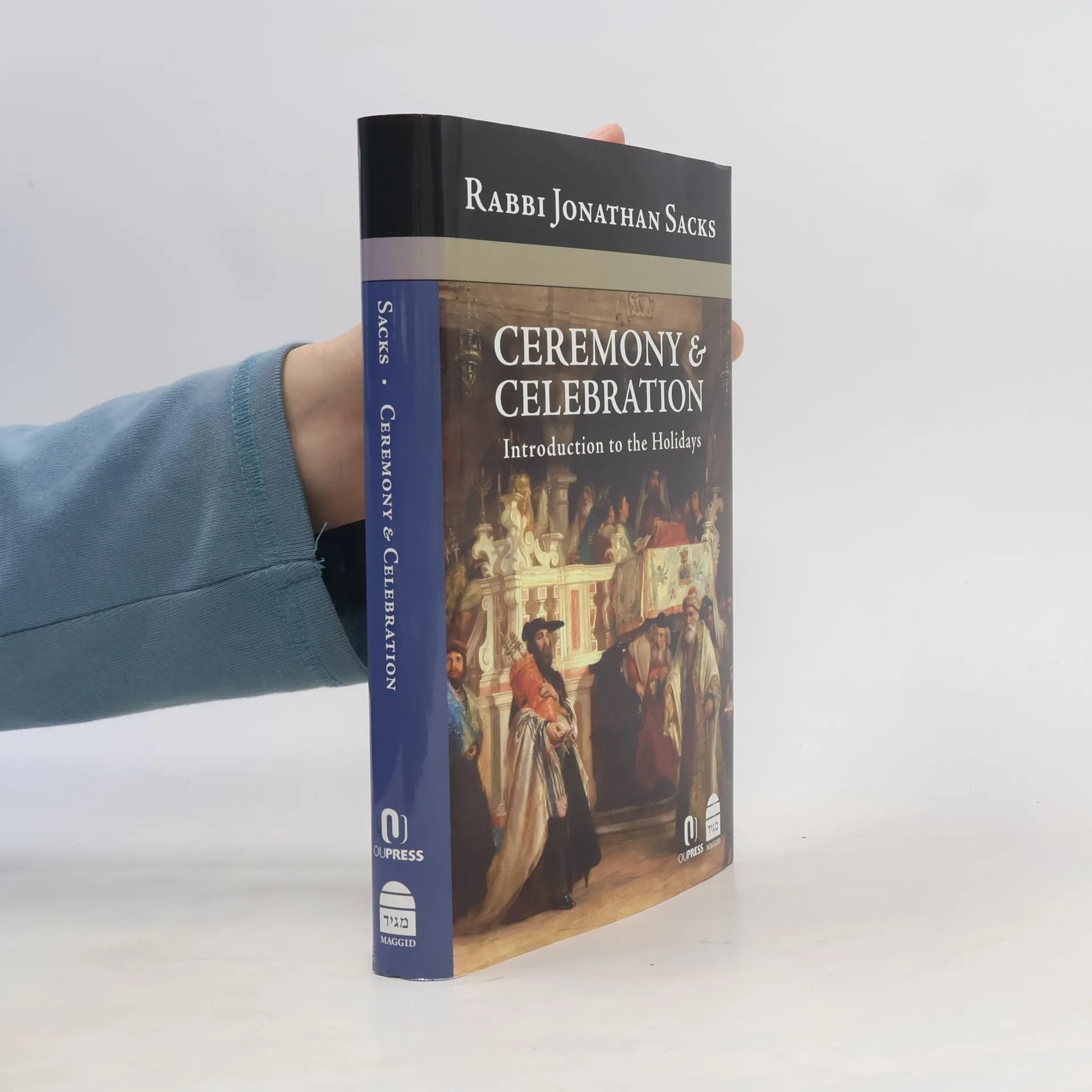
    • The Koren Sacks Rosh HaShana Mahzor combines Koren's sophisticated graphic design with Rabbi Jonathan Sacks' insightful translation, introduction, and commentary. This elegant prayer book provides a profound and meaningful experience for the Jewish New Year, appealing to both traditional and contemporary readers seeking inspiration and connection during this significant time.

      The Koren Sacks Rosh Hashana Mahzor: Rohr Family Edition: High Holiday Prayer Book
      4,8
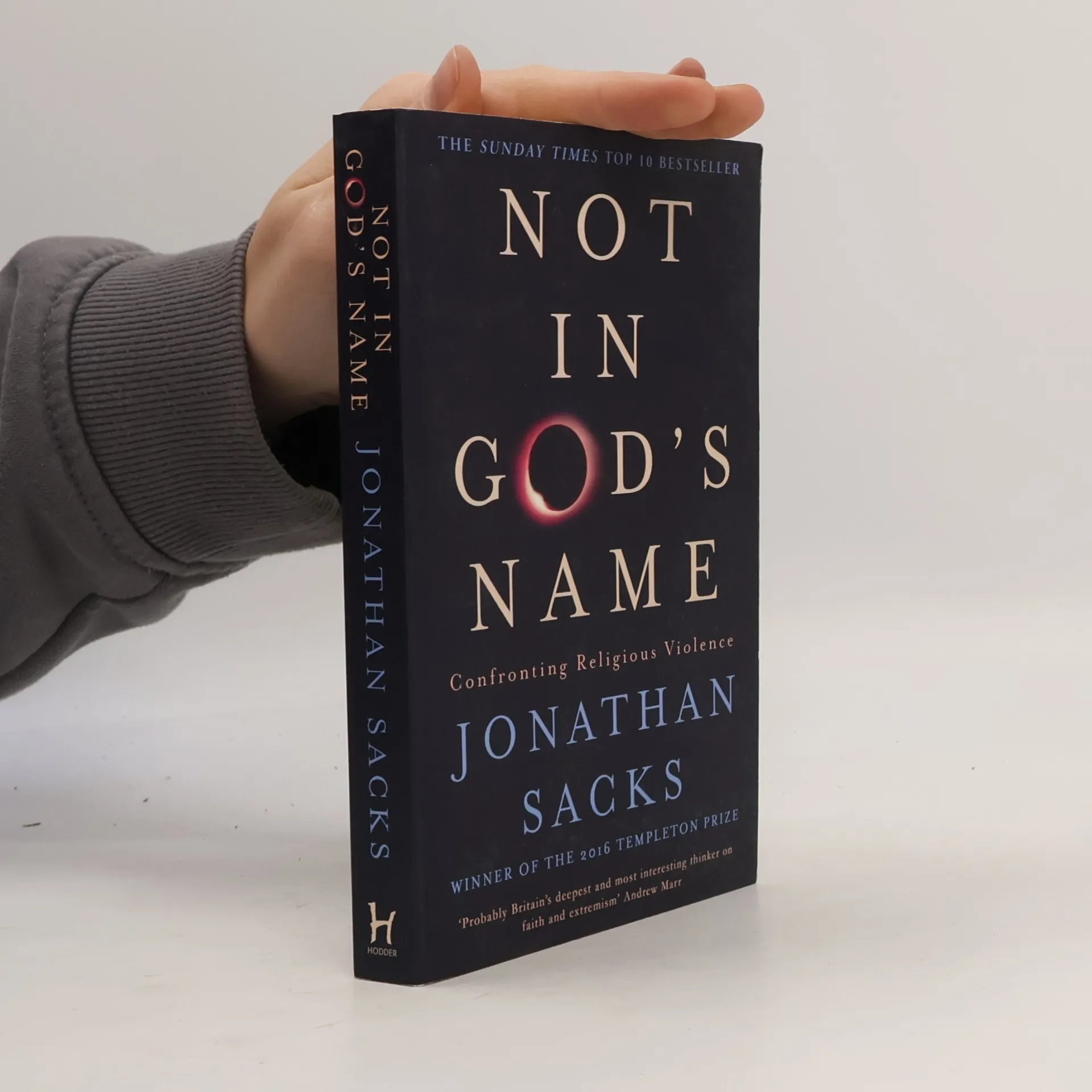
    • Not in God's Name

      • 320 Seiten
      • 12 Lesestunden

      Despite predictions of continuing secularisation, the twenty-first century has witnessed a surge of religious extremism and violence in the name of God. In this powerful and timely book, Jonathan Sacks explores the roots of violence and its relationship to religion, focusing on the historic tensions between the three Abrahamic faiths: Judaism, Christianity and Islam. Drawing on arguments from evolutionary psychology, game theory, history, philosophy, ethics and theology, Sacks shows how a tendency to violence can subvert even the most compassionate of religions. Through a close reading of key biblical texts at the heart of the Abrahamic faiths, Sacks then challenges those who claim that religion is intrinsically a cause of violence, and argues that theology must become part of the solution if it is not to remain at the heart of the problem. This book is a rebuke to all those who kill in the name of the God of life, wage war in the name of the God of peace, hate in the name of the God of love, and practise cruelty in the name of the God of compassion. For the sake of humanity and the free world, the time has come for people of all faiths and none to stand together and declare: Not In God's Name.

      Not in God's Name
      4,7
    • To Heal a Fractured World

      The Ethics of Responsibility

      • 288 Seiten
      • 11 Lesestunden

      Focusing on the importance of community over individualism, the author emphasizes that ethics are rooted in our shared existence. Rabbi Sacks critiques the tendency to prioritize self-interest, advocating instead for a collective approach to morality and life. The book includes a new foreword by Rowan Williams, adding depth to its exploration of ethical living and social responsibility.

      To Heal a Fractured World
      4,6
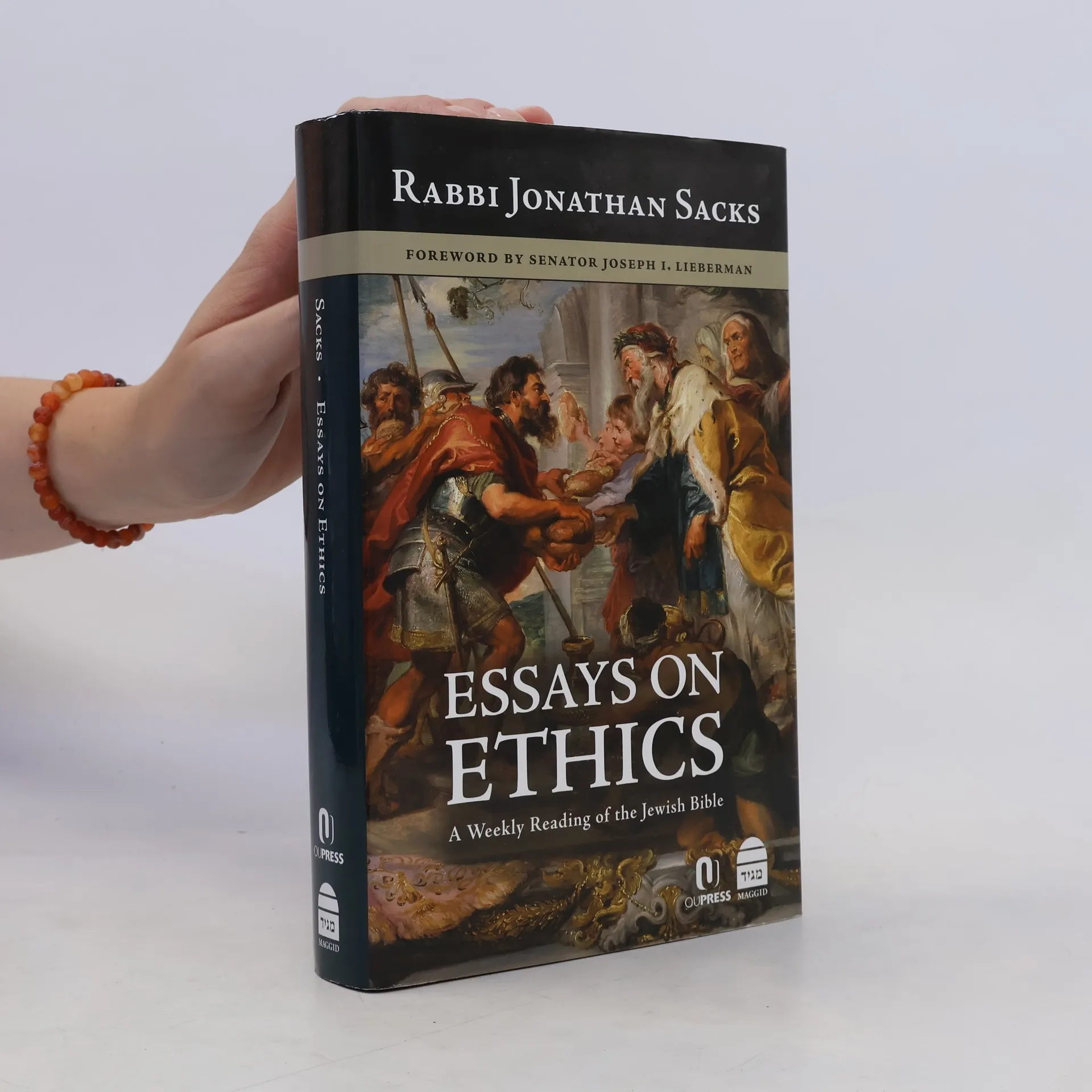
    • Essays on Ethics

      • 342 Seiten
      • 12 Lesestunden

      Why was Abraham ordered to sacrifice his son? Was Jacob right in stealing the blessings? Why were we commanded to destroy Amalek? What was Moses' sin in hitting the rock? And how did the Ten Commandments change the Jewish people, and humankind, for good? Essays on Ethics is the second companion volume to Rabbi Jonathan Sacks's celebrated series Covenant & Conversation. Believing the Hebrew Bible to be the ultimate blueprint for Western morality, Rabbi Sacks embarks upon an ethical exploration of the weekly Torah portion, uncovering its message of truth and justice, dignity and compassion, forgiveness and love.

      Essays on Ethics
      4,6
    • Set against the backdrop of the summer of 2020, the narrative explores the profound interconnectedness of individuals during challenging times. It delves into themes of community, resilience, and the essential support systems that emerge when faced with adversity. The story highlights personal and collective experiences that reveal the importance of solidarity and understanding in navigating a crisis, ultimately emphasizing our shared humanity.

      Plough Quarterly No. 25 - Solidarity
      5,0