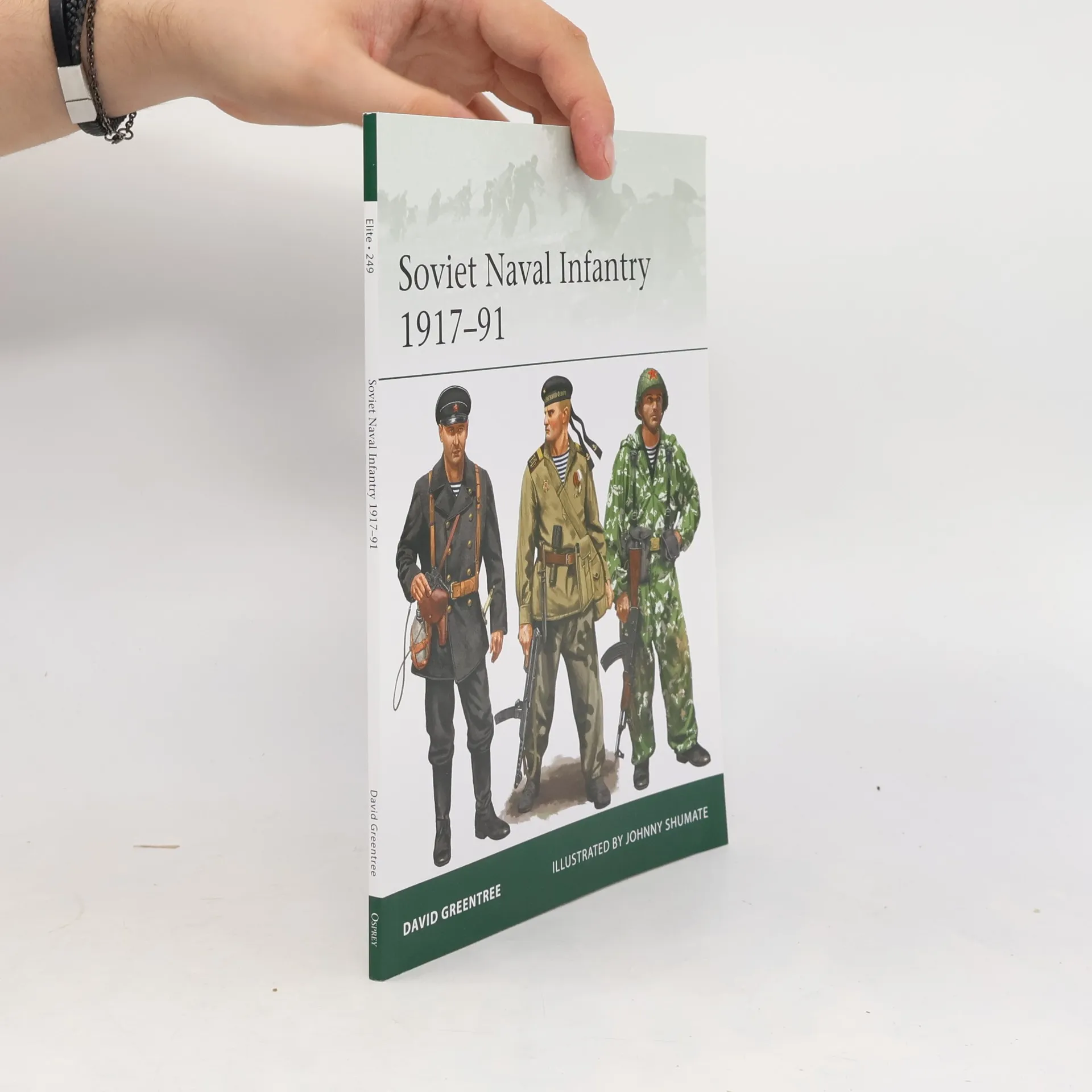
Drawing upon Soviet sources, this book assesses the evolving organization, uniforms, insignia, weaponry and personal equipment of Soviet naval infantry units from 1917 to 1991.Featuring eight plates of specially commissioned artwork alongside carefully chosen archive photographs, this study charts the history and appearance of the Soviet Union's naval infantry, from the October Revolution to the end of the Soviet era.Although Russian naval infantry achieved fame during the October Revolution they were quickly disbanded, only being re-established in 1939. Following the Axis invasion of 1941 some 500,000 Soviet Navy personnel served on land, fighting in the defence of Leningrad, Odessa and Sevastopol and the recapture of the Crimea in 1943–44; Soviet naval troops also participated in the invasion of Manchuria in 1945.During the Cold War era the Soviet Union developed an amphibious assault capability that had a vital strategic role – to capture an aggressor's geographical exits to the oceans and thereby forestall threats to Soviet submarine bases. Naval infantry forces could deploy a wealth of firepower assets, while the use of amphibious ships, hovercraft and helicopters aided their rapid deployment, even amid ice-bound terrain in the Arctic. All of these developments are described and illustrated in absorbing detail in this study.
David Greentree Reihenfolge der Bücher (Chronologisch)


Narvik 1940
- 96 Seiten
- 4 Lesestunden
In early 1940, a battle raged to control the ice-free, iron-ore port in northern Norway – with changing fortunes until the very end.This highly detailed book covers both the naval battles and the individual Norwegian, British, Polish, French and German units that fought the land campaign over northern Norway. Highly detailed maps guide you step by step through the events. Few other books on Narvik give you as much detail on the forces of the fighting five. From Gebirgsjägers to Guardsmen, Fallschirmjägers to Foreign Legionnaires, it offers you an impressive level of tactical detail, even down to company command, whilst also helping you understand the strategic confusion surrounding the whole Allied expedition to the north too.Among the naval clashes covered in this action-packed story are the destroyer battles in the fjords, the sinking of the aircraft carrier HMS Glorious and the roles the famous battlecruisers Scharnhorst and Gneisenau played in the fighting. No less dramatic are the land battles, which include amphibious landings, sabotage, commando raids, daring ski missions and a rare parachute insertion by Gebirgsjäger troops.
This fully illustrated volume compares two of the most iconic AFV's: the SU-152/ISU-152 and the Tiger, used on the Eastern Front during World War II. On the Eastern Front in 1943, the Tiger-equipped heavy Panzer battalions gave German armored divisions an unmatched capability that cost the Red Army dearly. The Tiger's 88mm gun carved through Soviet defenses in the attack, and caused havoc amongst advancing Soviet armored formations when used in defense. Neither of the Red Army's heavy tanks (the KV-1 and KV-2) could match the Tiger's gun, and, more importantly, penetrate its armor at anything approaching standard combat range. The Soviet response was a stopgap vehicle that mounted a 152mm artillery piece onto the KV tank's chassis: the SU-152. This fascinating volume describes how the SU-152 was first deployed at Kursk in 1943, where its shell proved capable of killing Tigers, and documents its evolution into the ISU-152 in late 1943 (the latter carried the same gun on an IS chassis, and featured increased frontal armor). Packed with superb illustrations, it also explores the widely differing tactical employment of these two iconic AFVs, unit organization, equipment and weaponry, and crew roles.
Hitlerjugend Soldier vs Canadian Soldier
- 80 Seiten
- 3 Lesestunden
Canadian and Waffen-SS troops of 12 SS-Panzer-Division Hitlerjugend faced one another in a series of bloody battles following the D-Day landings of June 1944. The Canadian units were drawn from a number of distinguished regiments, while the Hitlerjugend Division were drawn from the ranks of the Hitler Youth organizations. Officers and NCOs were joined by inexperienced teenagers, and clashed with the Canadians repeatedly, notably at Authie, Bretteville, and Hill 168. The struggle quickly took on an especially bitter nature, fueled by the massacre of Canadian prisoners by Hitlerjugend personnel. Employing first-hand accounts and the latest research, as well as specially commissioned artwork and carefully selected archive photographs, this absorbing study investigates the origins, ethos, training, fighting techniques, and weapons of both sides during the epic struggle for Normandy.
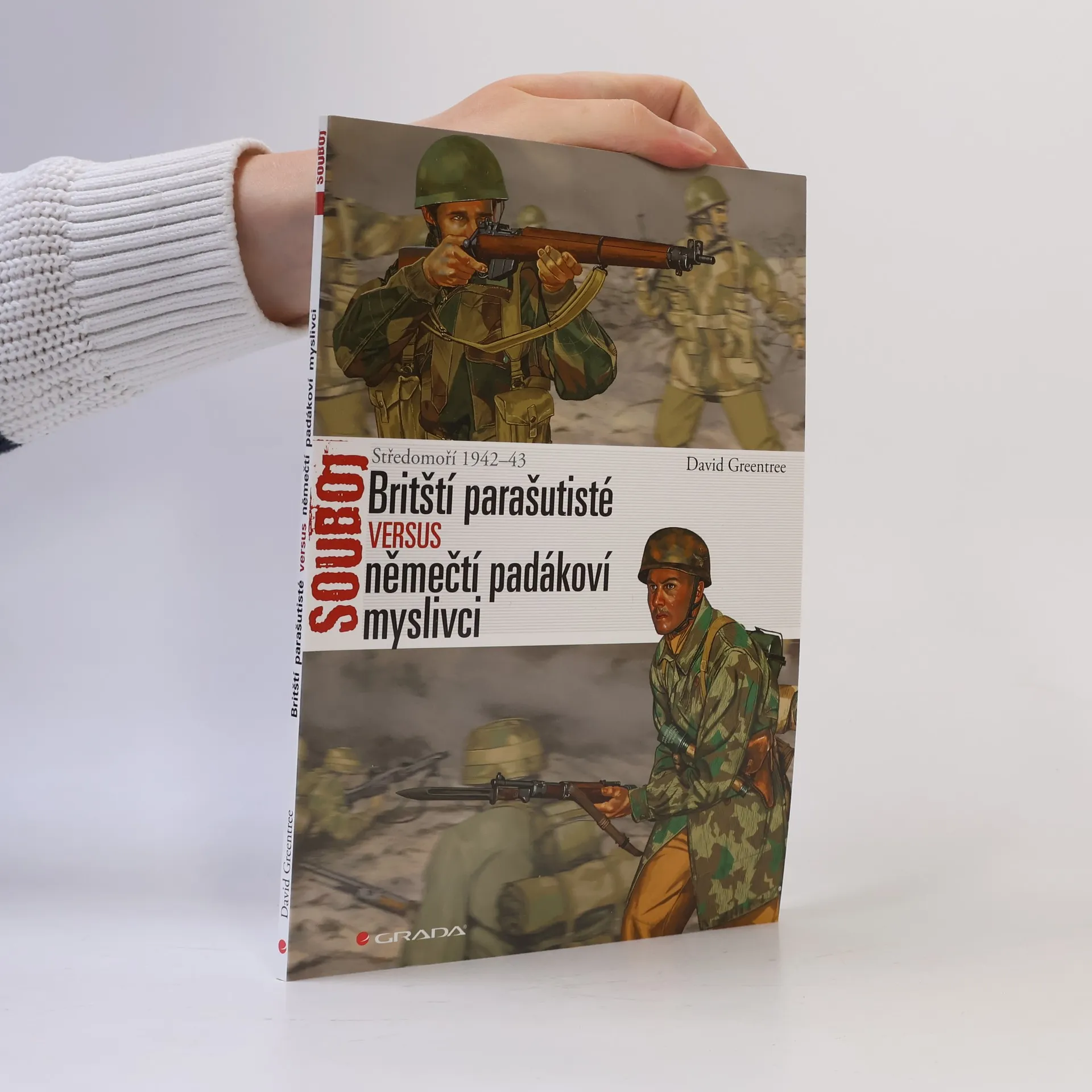
Britští parašutisté versus němečtí padákoví myslivci : Středomoří 1942-43
- 80 Seiten
- 3 Lesestunden
Britské a německé výsadkové síly patřily k nejlepším jednotkám druhé světové války, a pokud se střetly v boji, byla výsledkem nelítostná zkouška sil. Kniha popisuje tři střetnutí britských výsadkářů s německými padákovými myslivci (Fallschirmjäger) v Tunisku a na Sicílii, během nichž byly otestovány výcvik, taktika, zkušenosti, morálka i výzbroj jednotek na hranice možností. Od britského pokusu obsadit letiště v Depienne a Oudně přes krvavý noční boj o Djebel Azzag (Zelený kopec) až po trpký zápas o most Primosole na Sicílii si tyto důkladně vycvičené výsadkové jednotky měřily síly se svými protějšky, tříbily taktiku a získávaly cenné zkušenosti. Zařazena jsou líčení přímých účastníků, dobové fotografie, detailní mapy a ilustrace určené výhradně pro toto vydání. Dozvíme se zajímavé informace o rozdílných zkušenostech obou znepřátelených stran, o výcviku a vybavení k boji, v němž tito elitní vojáci stáli proti sobě, a nechybí ani autorova analýza jejich výkonů ve vzájemných střetech.
British Paratrooper vs Fallschirmjager
- 80 Seiten
- 3 Lesestunden
The airborne forces of Britain and Germany were among their best troops of World War II and when they met in battle the result was a brutal trial of strength. These highly trained parachute troops clashed with their opposite numbers, gaining experience, refining tactics and learning valuable lessons. This book deals with this topic.
Napoleon's Swiss Troops
- 48 Seiten
- 2 Lesestunden
"Ever since the 15th century Switzerland had been exporting professional soldiers to serve as mercenaries for foreign monarchies. Napoleon, therefore, was not the first to make full use of the martial qualities of the Swiss and obtained Swiss agreement to expand the recruitment of regiments for service in the French Army." --Publisher description