

Gratisversand in ganz Deutschland!
Bookbot

McKenzie Wark

    10. September 1961

    McKenzie Wark ist eine Autorin, die die Grenzen von gegenwärtiger Kultur und Theorie erforscht. Ihre Arbeit taucht tief in das digitale Zeitalter, Kunst und Politik ein und bietet scharfsinnige Perspektiven darauf, wie unser Weltverständnis geformt wird. Mit ihrem Schreiben fordert sie die Leser auf, die Beziehung zwischen Technologie, Kunst und Gesellschaft neu zu überdenken. Wark liefert eine kritische Analyse, die in einer Ära des ständigen Wandels Anklang findet.

    McKenzie Wark
    Philosophy for Spiders
    Technicity
    Reverse Cowgirl
    Raven
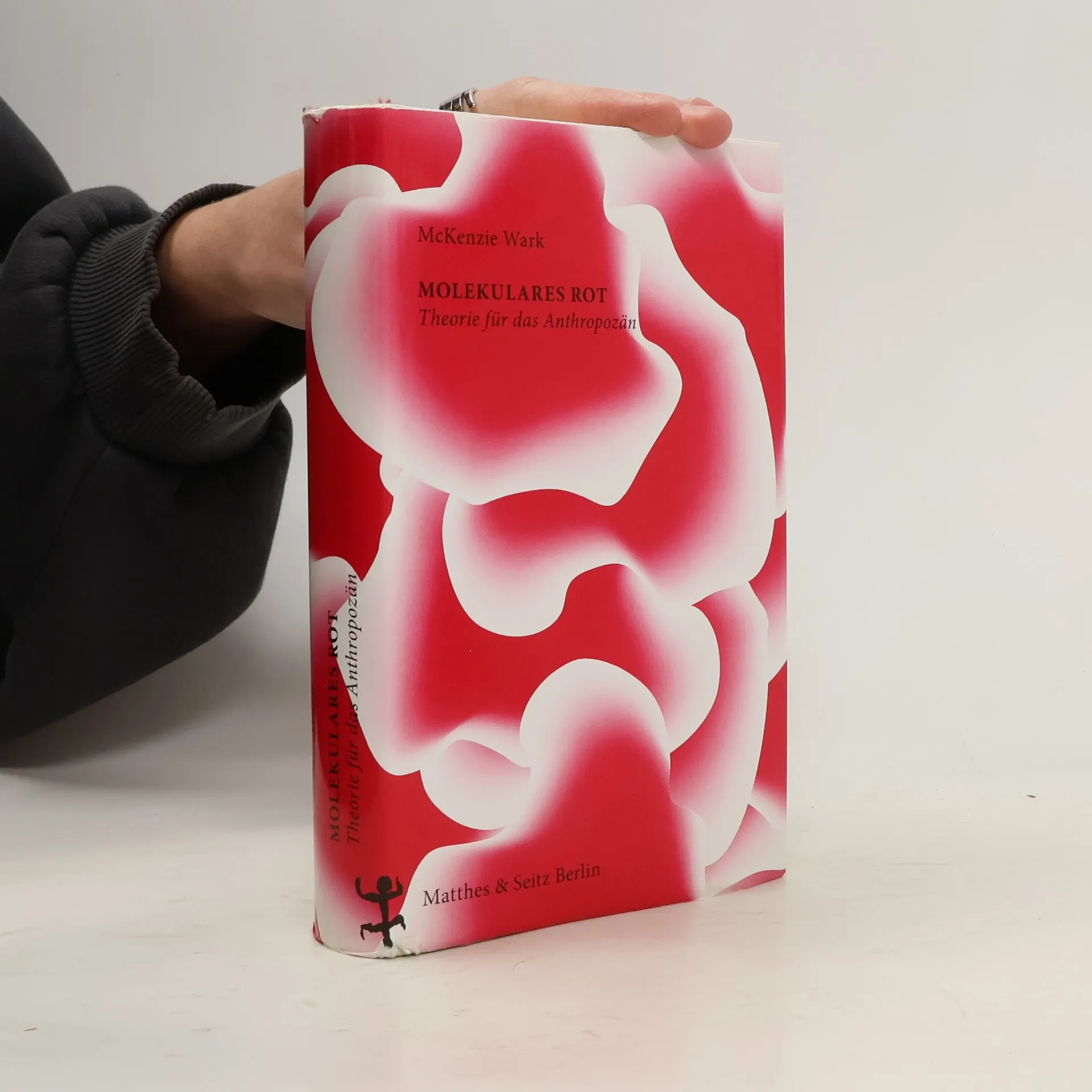
    Das Kapital ist tot. Kommt jetzt etwas Schlimmeres?
    Du hast es mir sehr angetan
    • Auf einem Trip nach Australien lernt die Autorin Kathy Acker 1995 McKenzie Wark kennen. Gerade ist Warks Buch Virtual Geography erschienen, das das Leben mit globalen Medien erforscht. Die beiden verbringen intensive Tage und Nächte miteinander, denen nach Ackers Rückkehr in die USA ein zweiwöchiger E-Mail-Austausch in Hochfrequenz folgt. Mehrmals am Tag schreiben sie sich in einen Rausch, in dem sich die elektronischen Nachrichten überkreuzen und alles zum Mittel ihres transpazifischen Werbens werden kann: Alfred Hitchcock und Stofftiere, Georges Bataille und Elvis Presley, die Simpsons, Phänomenologie, Akte X, Elfriede Jelinek und das I Ging . Die Texte surren vor Sex, Politik und Kultur, Einsichten und Albernheit, über die sich intime Nähe und schmerzhaftes Missverstehen einstellen, bevor der Austausch plötzlich abbricht. Eine Liebesgeschichte in Latenz an der Schwelle zum neuen Jahrtausend, geschrieben von und für Queers, Nerds und Buchverrückte.

      Du hast es mir sehr angetan
    • Was wäre, wenn du trans wärst und es nicht wüsstest? Wenn es eine Lücke in deinem Leben gäbe, von der du nicht mehr als eine unbestimmte Ahnung hast, dass es sie gibt? Wenn du dich nur im Drogenhoch oder beim Sex in deinem Körper zu Hause fühlst? Vom Sydney der 1980er Jahre bis ins heutige New York, in den sich wandelnden politischen und medialen Landschaften des späten zwanzigsten Jahrhunderts, spinnt Reverse Cowgirl eine Komödie der Irrungen. McKenzie Wark ist dabei, als aus dem Aufbruch von 1968, aus Punk, Disco und schwul-lesbischen Subkulturen neue Identitätsentwürfe entstehen – doch sie muss feststellen, dass sich ihr Leben weiterhin den Namen und Kategorien entzieht. Zwischen dem Versuch, als schwuler Mann zu leben, und jenem, als Mann mit Frauen zusammen zu sein, erkennt Wark, dass sie ganz anderer als der etablierten Erzählungen bedarf. Mit Anleihen bei den Genres der Autofiktion und Fiktionskritik entsteht so das gleichermaßen drastisch wie berührende Memoir einer Nichtexistenz: die Autoethnografie der Undurchsichtigkeit unseres Selbst.

      Reverse Cowgirl
    • Technicity

      • 375 Seiten
      • 14 Lesestunden
      4,5(2)Abgeben

      This collection of writings explores the theory and praxis of technicity in contemporary thought. From the ground-breaking explorations of such figures as Freud, Heidegger, Deleuze/Guattari and Derrida to the work of more recent theorists like Bernard Stiegler, Friedrich Kittler and Katherine Hayles, it is becoming possible to speak of a new "technological turn" in contemporary continental theory. Yet despite the plethora of work in the field there has not been any sustained attempt to think through the larger philosophical, cultural and political implications of the new technologies. In this collection, a group of internationally-known figures within the fields of philosophy, linguistics and cultural studies come together to consider the meaning of "technicity" at the beginning of the 21st century. Contributors: Bernard Stiegler, Louis Armand, Arthur Bradley, Christopher Johnson, Hartmut Winkler, J. Hillis Miller, Belinda Barnet, Geert Lovink and Kenneth C. Werbin, Darren Tofts, McKenzie Wark, Niall Lucy, Laurent Milesi, Michael Greaney, Mark Amerika.

      Technicity
    • McKenzie Wark combines an autobiographical account of her relationship with Kathy Acker with her transgender reading of Acker's writing to outline Acker's philosophy of embodiment and its importance for theorizing the trans experience.

      Philosophy for Spiders
    • The Spectacle of Disintegration

      • 224 Seiten
      • 8 Lesestunden
      3,9(91)Abgeben

      Following his acclaimed history of the Situationist International up until the late sixties, The Beach Beneath the Street, McKenzie Wark returns with a companion volume which puts the late work of the Situationists in a broader and deeper context, charting their contemporary relevance and their deep critique of modernity. Wark builds on their work to map the historical stages of the society of the spectacle, from the diffuse to the integrated to what he calls the disintegrating spectacle. The Spectacle of Disintegration takes the reader through the critique of political aesthetics of former Situationist T.J. Clark, the Fourierist utopia of Raoul Vaneigem, René Vienet’s earthy situationist cinema, Gianfranco Sangunetti’s pranking of the Italian ruling class, Alice-Becker Ho’s account of the anonymous language of the Romany, Guy Debord’s late films and his surprising work as a game designer. At once an extraordinary counter history of radical praxis and a call to arms in the age of financial crisis and the resurgence of the streets, The Spectacle of Disintegration recalls the hidden journeys taken in the attempt to leave the twentieth century, and plots an exit from the twenty first. The dustjacket unfolds to reveal a fold-out poster of the collaborative graphic essay combining text selected by McKenzie Wark with composition and drawings by Kevin C. Pyle.

      The Spectacle of Disintegration
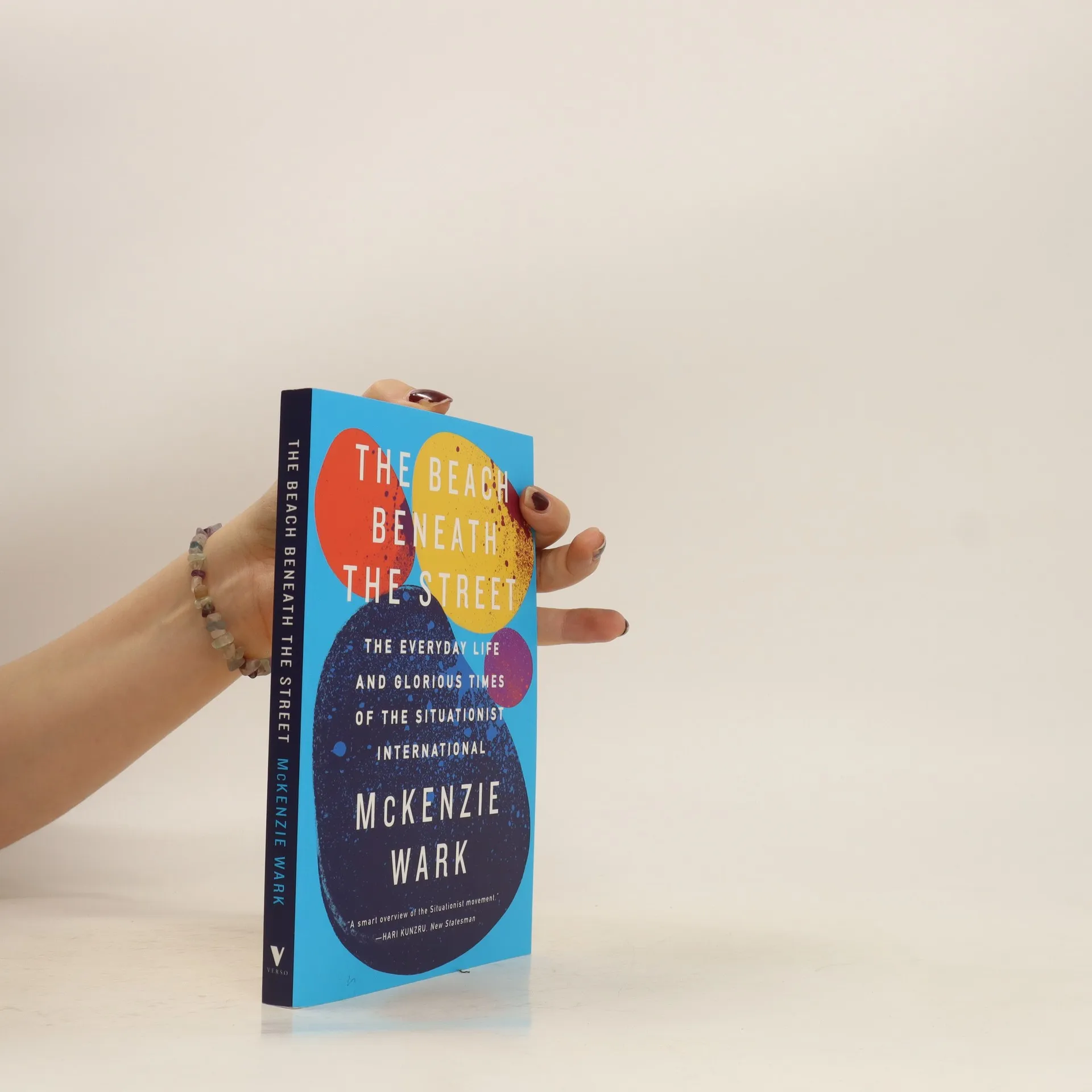
    • Over fifty years after the Situationist International appeared, its legacy continues to inspire activists, artists and theorists around the world. Such a legend has accrued to this movement that the story of the SI now demands to be told in a contemporary voice capable of putting it into the context of twenty-first-century struggles. McKenzie Wark delves into the Situationists’ unacknowledged diversity, revealing a world as rich in practice as it is in theory. Tracing the group’s development from the bohemian Paris of the ’50s to the explosive days of May ’68, Wark’s take on the Situationists is biographically and historically rich, presenting the group as an ensemble creation, rather than the brainchild and dominion of its most famous member, Guy Debord. Roaming through Europe and the lives of those who made up the movement – including Constant, Asger Jorn, Michèle Bernstein, Alex Trocchi and Jacqueline De Jong – Wark uncovers an international movement riven with conflicting passions. Accessible to those who have only just discovered the Situationists and filled with new insights, The Beach Beneath the Street rereads the group’s history in the light of our contemporary experience of communications, architecture, and everyday life. The Situationists tried to escape the world of twentieth-century spectacle and failed in the attempt. Wark argues that they may still help us to escape the twenty-first century, while we still can.

      The beach beneath the street : the everday life and glorious times of the Situationist International
    • "After Kathy Acker met McKenzie Wark on a trip to Australia in 1995, they had a brief fling and immediately began a heated two-week email correspondence. Their emails shimmer with insight, gossip, sex, and cultural commentary. They write in a frenzy, several times a day; their emails cross somewhere over the International Date Line, and themselves become a site of analysis. What results is an index of how two brilliant and idiosyncratic writers might go about a courtship across 7,500 miles of airspace--by pulling in Alfred Hitchcock, stuffed animals, Georges Bataille, Elvis Presley, phenomenology, Marxism, The X-Files, psychoanalysis, and the I Ching. Their correspondence is Plato's Symposium for the twenty-first century, but written for queers, transsexuals, nerds, and book geeks. I'm Very Into You is a text of incipience, a text of beginnings, and a set of notes on the short, shared passage of two iconic individuals of our time."--Page 4 of cover

      I'm very into you : Correspondence 1995-1996
    • General Intellects

      • 336 Seiten
      • 12 Lesestunden
      3,8(82)Abgeben

      What has happened to the public intellectuals that used to challenge and inform us? Who is the Sartre, de Beauvoir or Stuart Hall of the present age? In General Intellects, McKenzie Wark introduces us to 21 thinkers who are transforming the landscape of ideas in the 21st century, covering topics such as politics, culture, psychoanalysis, the anthropocene, and the 'nonhuman'.

      General Intellects