Gerhard Richter
Landschaft





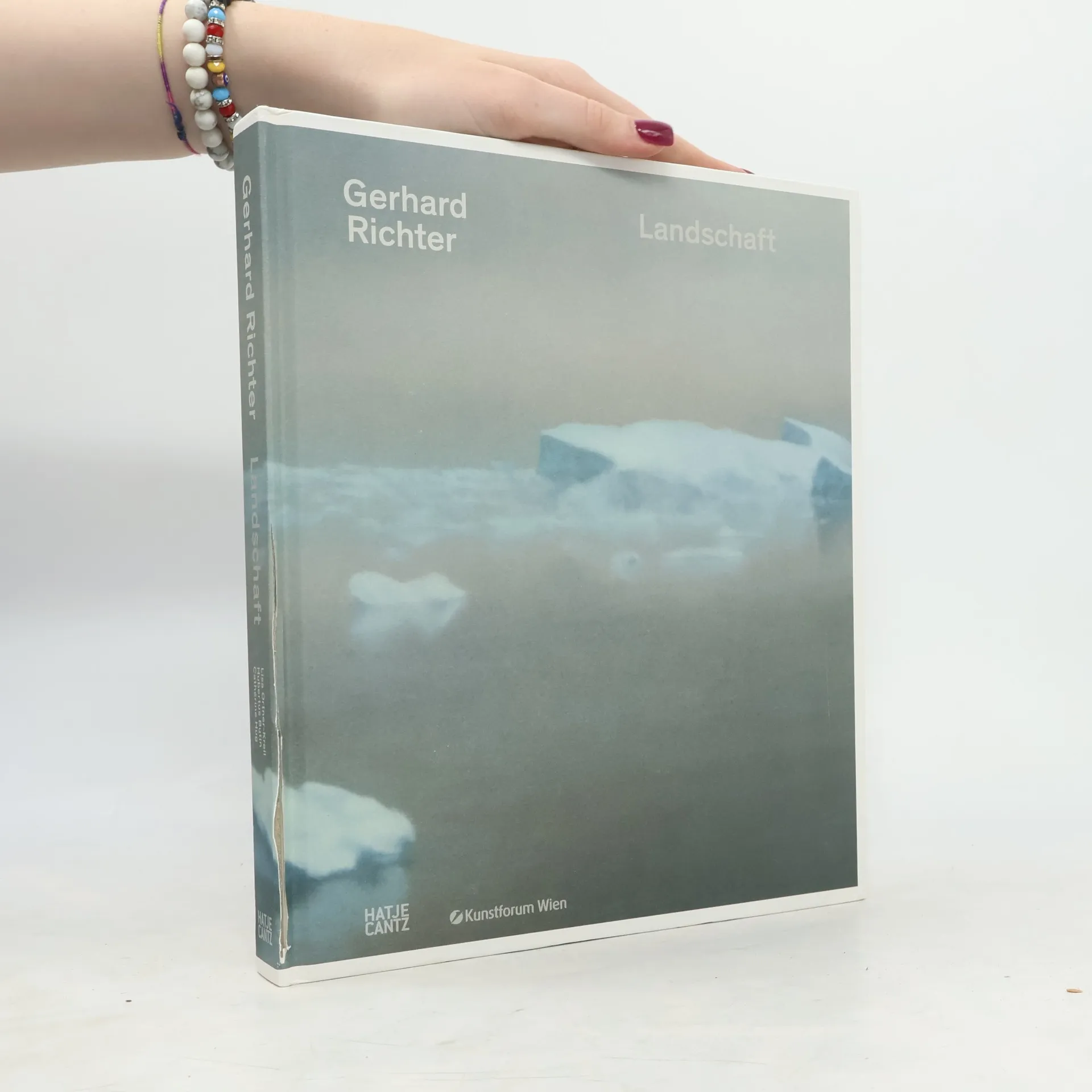
Landschaft
A study of the intersecting fields of art history, ecology, visual culture, geography, and environmental politics. While ecology has received little systematic attention within art history, its visibility and significance has grown in relation to the threats of climate change and environmental destruction. By engaging artists' widespread aesthetic and political engagement with environmental conditions and processes around the globe—and looking at cutting-edge theoretical, political, and cultural developments in the Global South and North—Decolonizing Nature offers a significant, original contribution to the intersecting fields of art history, ecology, visual culture, geography, and environmental politics. Art historian T. J. Demos, author of Return to the Postcolony: Specters of Colonialism in Contemporary Art (2013), considers the creative proposals of artists and activists for ways of life that bring together ecological sustainability, climate justice, and radical democracy, at a time when such creative proposals are urgently needed.
Photography continues to be a central part of international artistic practice. Over the past ten years it has experienced radical changes, in part due to the rise of digital technologies. Photography is now often engaged in by artists who are not just printing in a darkroom, but using the medium as a single aspect of a larger ouvre, as one of several media under exploration. Vitamin Ph focuses on diverse global developments in 'art' photography through the work of 121 contemporary artists, who were nominated by 78 international critics, curators and artists. These selections will be accompanied by a 5000 word introductory text by TJ Demos, aiming to explore ideas relevant to contemporary photography with reference to the works included in the book. In addition, the work of each photographer/artist will be introduced by a short commissioned text of approximately 500 words. Similar in concept, scope and structure to Vitamin P and Vitamin D , Vitamin Ph presents, in A to Z order, artists who have emerged, or in some instances re-emerged, in the last five years using the medium of photography.
Neurofeedback is a technique that merges computer technology with equipment to measure cerebral cortex activity, promoting growth and change at the cellular level of the brain. This training empowers clients to use their minds for personal healing. Until now, there has been no comprehensive, easy-to-understand guide for clinicians wanting to incorporate neurotherapy into their practices. This step-by-step guide serves both newcomers and experienced clinicians seeking a concise treatment manual. It addresses key questions such as how neurotherapy works, its rationale, when it is the preferred treatment, and why it should be integrated into existing healthcare practices. The author also discusses essential elements for establishing a successful practice, including recommended training and equipment, and strategies for incorporating neurofeedback into current offerings. The first section introduces neurofeedback's history and scientific foundation, supported by case studies that allow clinicians to apply their learning. Demos clarify the assessment process, while full-color charts and examples of topographical brain maps serve as teaching aids. Advanced techniques are covered later, alongside additional case studies. The book also teaches how to use biofeedback to enhance neurofeedback training and provides insights into complementary medicine. It concludes with practical advice on marketing, equipment purchases, training, su
In the first edition of the Bancroft Prize-winning Entertaining Satan, John Putnam Demos presented an entirely new perspective on American witchcraft. By investigating the surviving historical documents of over a hundred actual witchcraft cases, he vividly recreated the world of New England during the witchcraft trials and brought to light fascinating information on the role of witchcraft in early American culture. Now Demos has revisited his original work and updated it to illustrate why these early Americans' strange views on witchcraft still matter to us today. He provides a new Preface that puts forth a broader overview of witchcraft and looks at its place around the world--from ancient times right up to the present.
A critique of the discourse on the Anthropocene and the creative alternatives to it to be found through the arts, sciences, and humanities. Addressing the current upswing of attention in the sciences, arts, and humanities to the new proposal that we are in a human-driven epoch called the Anthropocene, this book critically surveys that thesis and points to its limitations. It analyzes contemporary visual culture—popular science websites, remote sensing and SatNav imagery, eco-activist mobilizations, and experimental artistic projects—to consider how the term proposes more than merely a description of objective geological periodization. This book argues that the Anthropocene terminology works ideologically in support of a neoliberal financialization of nature, anthropocentric political economy, and endorsement of geoengineering as the preferred—but likely disastrous—method of approaching climate change. To democratize decisions about the world's near future, we urgently need to subject the Anthropocene thesis to critical scrutiny and develop creative alternatives in the present.
Klimatická kríza je treťou zbierkou edície, ktorú zostavuje umelecký kolektív APART, výskumné a umeleckého združenie Display a angažovaný mesačník Kapitál. Vo výbere piatich textov sa snaží nahliadať na problematiku klimatickej krízy z rôznych perspektív, či už vo vzťahu k jej mediálnej estetickej reprezentácii, nekropolitike a starostlivosti o divočinu, práci a kapitálu alebo psychoanalýze a etike. Klimatickú krízu chápe tiež ako feministický problém. Aj keď sa všetky zaoberajú „tým istým problémom“, každý sa vydáva svojou vlastnou trajektóriou a vykresľuje inú časť mozaiky klimatickej krízy, v ktorej sa nachádzame. Čakajú vás texty T.J. Demosa, Critical Art Ensemble, Karmíny, Wendy Lynne Lee, Donny M. Orange.