Der ökonomische Ansatz zur Erklärung menschlichen Verhaltens
- 351 Seiten
- 13 Lesestunden


Dieser Ökonom konzentriert sich hauptsächlich auf die Familienökonomik, wo seine Arbeit die ökonomische Theorie mit familiären Entscheidungsprozessen verbindet. Seine Analysen im Rahmen der neuen Haushaltsökonomik sind entscheidend für das Verständnis der ökonomischen Dynamik von Haushalten. Er bietet tiefe Einblicke in die sozialen und wirtschaftlichen Interaktionen innerhalb der Familieneinheit durch seinen einzigartigen Ansatz. Seine Forschung leistet wertvolle Beiträge zur neoklassischen Familienanalyse.


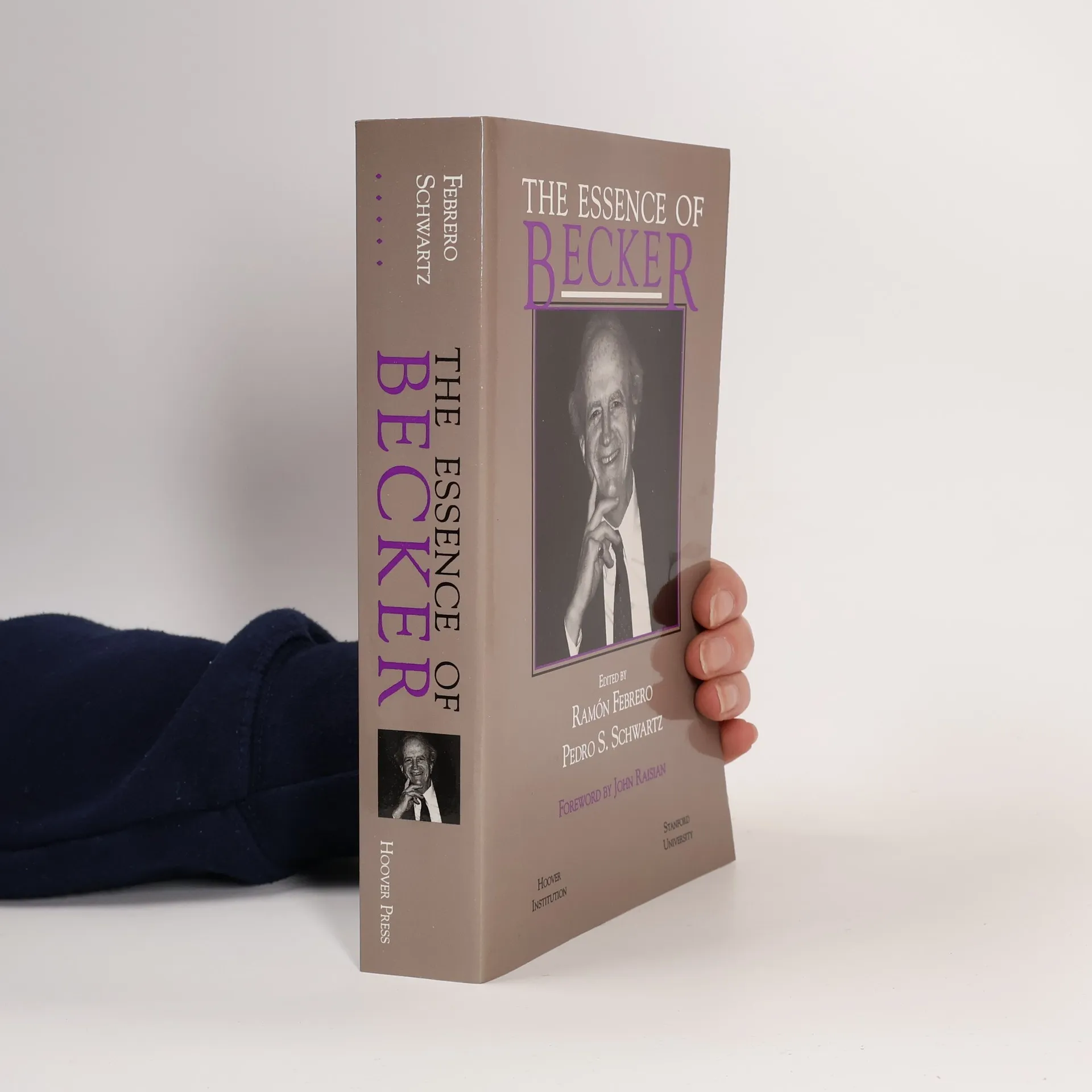


This 1995 volume demonstrates the application of Beckerian theory upon a wide range of social and political activity.
This volume presents twenty-six essays that showcase the brilliant originality and range of economic thought that earned Hoover Institution senior fellow Gary S. Becker the Nobel Prize in Economic Sciences in 1992.
The book showcases the unpublished works of Gary Becker, a Nobel Prize-winning economist known for his contributions to human capital and microeconomics. It highlights his unique thought process and personality through a collection of manuscripts and speeches that reveal his critical and curious nature. This compilation serves as a tribute to Becker's enduring spirit of inquiry, emphasizing that his intellectual journey was driven by a quest for understanding rather than mere publication. It provides valuable insights into the mind of a pioneering figure in economics.
268 pages. Economics & Sociology
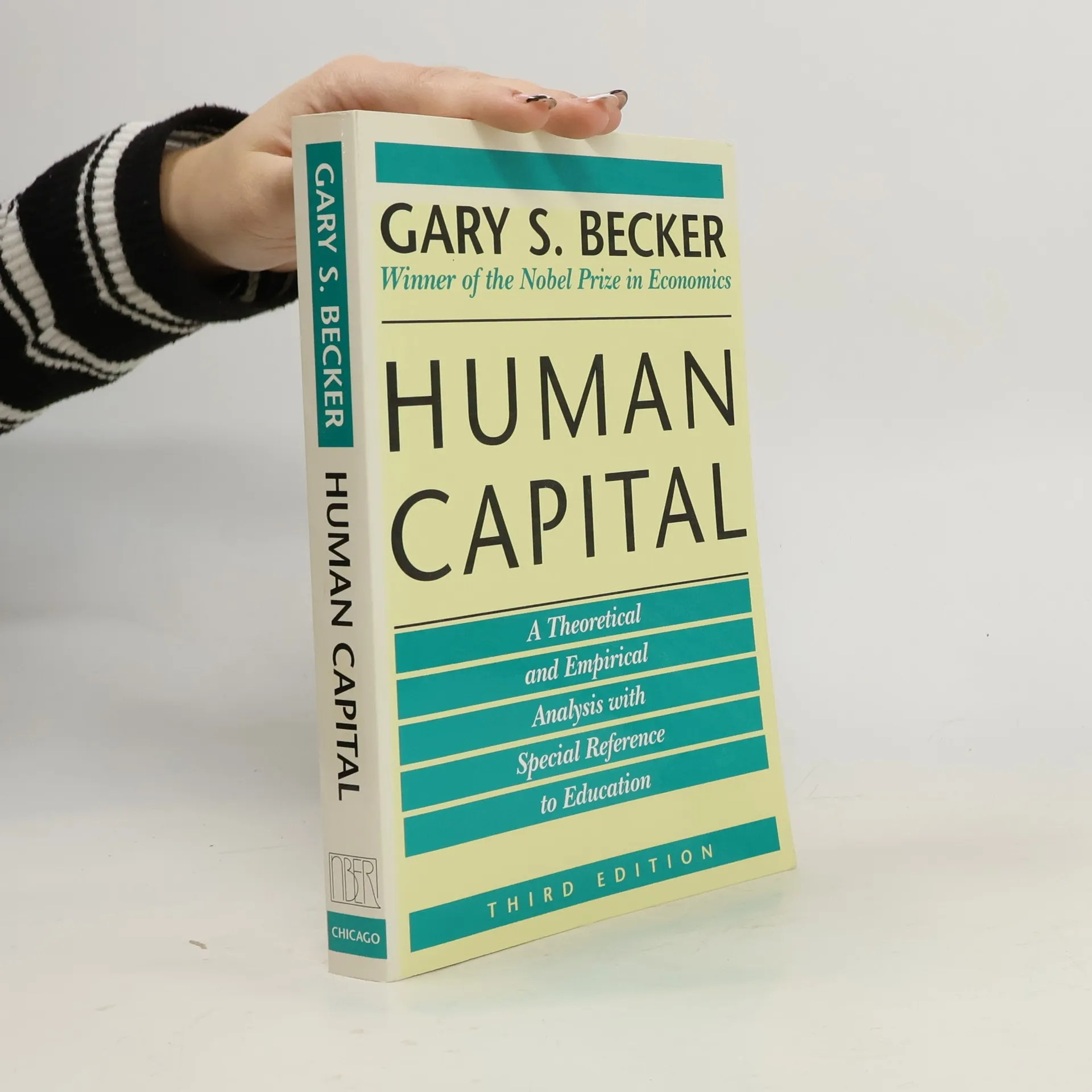
A study of how investment in an individual's education and training is similar to business investments in equipment. This edition has four new chapters, covering topics including: human capital, fertility and economic growth, the division of labour and economic considerations within the family.
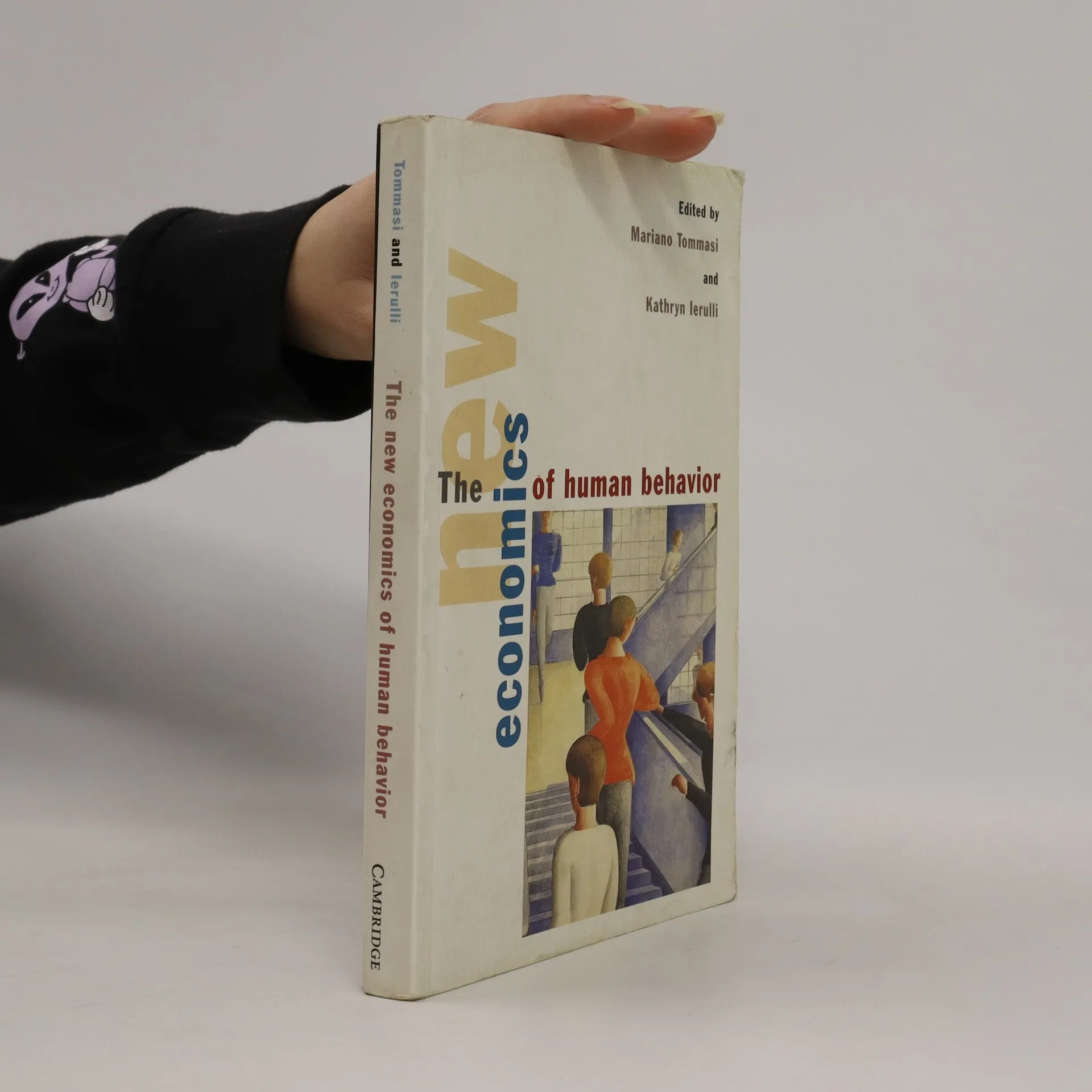
Since his pioneering application of economic analysis to racial discrimination, Gary S. Becker has shown that an economic approach can provide a unified framework for understanding all human behavior. In a highly readable selection of essays Becker applies this approach to various aspects of human activity, including social interactions; crime and punishment; marriage, fertility, and the family; and "irrational" behavior."Becker's highly regarded work in economics is most notable in the imaginative application of 'the economic approach' to a surprising breadth of human activity. Becker's essays over the years have inevitably inspired a surge of research activity in testimony to the richness of his insights into human activities lying 'outside' the traditionally conceived economic markets. Perhaps no economist in our time has contributed more to expanding the area of interest to economists than Becker, and a number of these thought-provoking essays are collected in this book."— ChoiceGary Becker was awarded the Nobel Prize in Economic Science in 1992.
A distinguished and experienced appellate court judge, Posner offers in this new book a unique and, to orthodox legal thinkers, a startling perspective on how judges and justices decide cases.
Emphasizes the differences between law and literature, which are rooted in the different social functions of legal and literary texts. This book include topics such as the cruel and unusual punishments clause of the Constitution, illegal immigration, surveillance, global warming and bioterrorism, and plagiarism.
From economics Nobel Laureate Gary Becker and historian Guity Nashat Becker comes this collection of the economist's popular BusinessWeek columns. These 138 essays have fueled numerous debates, touching on hot-button issues from crime to organization of sports. The Beckers' surprising--and uncompromising--positions on drugs ("legalize them"), immigration ("auction off immigration slots"), welfare ("curtail it sharply"), and other topics provide a provocative commentary on our times.
Economists assume that people make choices based on their preferences and their budget constraints. The preferences and values of others play no role in the standard economic model. This feature has been sharply criticized by other social scientists, who believe that the choices people make are also conditioned by social and cultural forces. Economists, meanwhile, are not satisfied with standard sociological and anthropological concepts and explanations because they are not embedded in a testable, analytic framework.In this book, Gary Becker and Kevin Murphy provide such a framework by including the social environment along with standard goods and services in their utility functions. These extended utility functions provide a way of analyzing how changes in the social environment affect people’s choices and behaviors. More important, they also provide a way of analyzing how the social environment itself is determined by the interactions of individuals.Using this approach, the authors are able to explain many puzzling phenomena, including patterns of drug use, how love affects marriage patterns, neighborhood segregation, the prices of fine art and other collectibles, the social side of trademarks, the rise and fall of fads and fashions, and the distribution of income and status.
"In the five years since Nobel Prize-winning economist Gary S. Becker and renowned jurist and legal scholar Richard A. Posner began writing a blog together, the Becker-Posner Blog has established a reputation as a reliable source of lively, thought-provoking commentary on current events. Uncommon Sense gathers the most important and innovative entries from the blog, arranged by topic, along with updates and even reconsiderations when subsequent events have shed new light on a question."--Jacket
Mohou být ekonomické cíle životní filosofií? Podle teoretiků i ekonomického liberalismu, mezi něž autor této studie patří, je naše chování ekonomickými zřeteli přímo podmíněno. Motivace našich rozhodnutí je vázána na rozvrh našich preferencí.