




Lieferung vor Weihnachten: 1 Tag 4 Stunden
Bookbot

Warren Bennis

    8. März 1925 – 31. Juli 2014

    Warren Bennis war ein Pionier des zeitgenössischen Feldes der Führungswissenschaften, der sich auf Gruppenverhalten und die Förderung demokratischerer und adaptiverer Institutionen konzentrierte. Er stellte die herrschende Meinung in Frage, indem er humanistische, demokratische Führungsstile befürwortete. Bennis' Arbeit hob die Bedeutung dieser Ansätze für die Bewältigung der Komplexität und des Wandels hervor, die für moderne Führungsumgebungen charakteristisch sind.

    Schlüsselstrategien erfolgreichen Führens
    Die Macht der Nr. 2
    Änderung des Sozialverhaltens
    Führen lernen
    Führungskräfte
    Geniale Teams
    • 2024

      The strange facts and foibles of history’s famous figures are divulged in Famous Freaks.

      Famous Freaks
    • 2018
      4,0(222)Abgeben

      Our professional lives are full of challenges and setbacks, but those who achieve elite performance are able to consistently rally their emotional strength in the pursuit of their goals--no matter what gets thrown at them. If you read nothing else on mental toughness, read these ten articles by experts in the field. We've combed through hundreds of articles in the Harvard Business Review archive and selected the most important ones to help you build your emotional strength and resilience--and to achieve high performance. This book will inspire you to: Thrive on pressure like an Olympic athlete Manage and overcome negative emotions by acknowledging them Plan short-term goals to achieve long-term aspirations Surround yourself with the people who will push you the hardest Use challenges to become a better leader Use creativity to move past trauma Understand the tools your mind uses to recover from setbacks--

      Hbr's 10 Must Reads on Mental Toughness
    • 2010

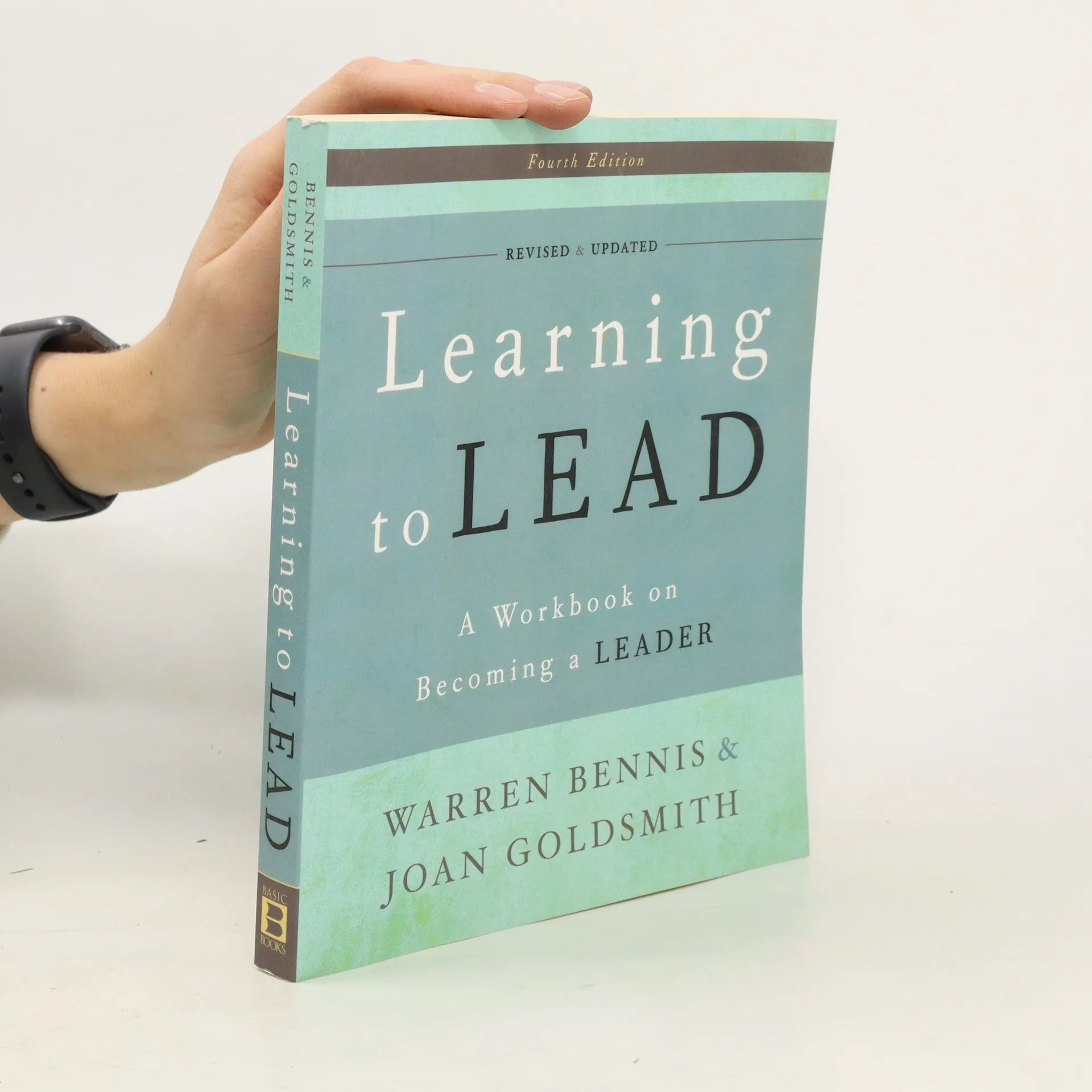
      Over his distinguished career Warren Bennis has shown that leaders are made, not born. In Learning to Lead, written in partnership with management development expert Joan Goldsmith, Bennis provides a program that will help managers transform themselves into leaders. Using wise insights from the world's best leaders, helpful self-assessments, and dozens of one-day skill-building exercises, Bennis and Goldsmith show in Learning to Lead how to see beyond leadership myths and communicate vision to others. With updates throughout, Learning to Lead is both a workbook and a deeply considered treatise on the nature of leadership by two of its finest and most experienced practitioners—and teachers.

      Learning to lead : a workbook on becoming a leader
    • 2007

      Judgment

      • 288 Seiten
      • 11 Lesestunden
      3,7(170)Abgeben

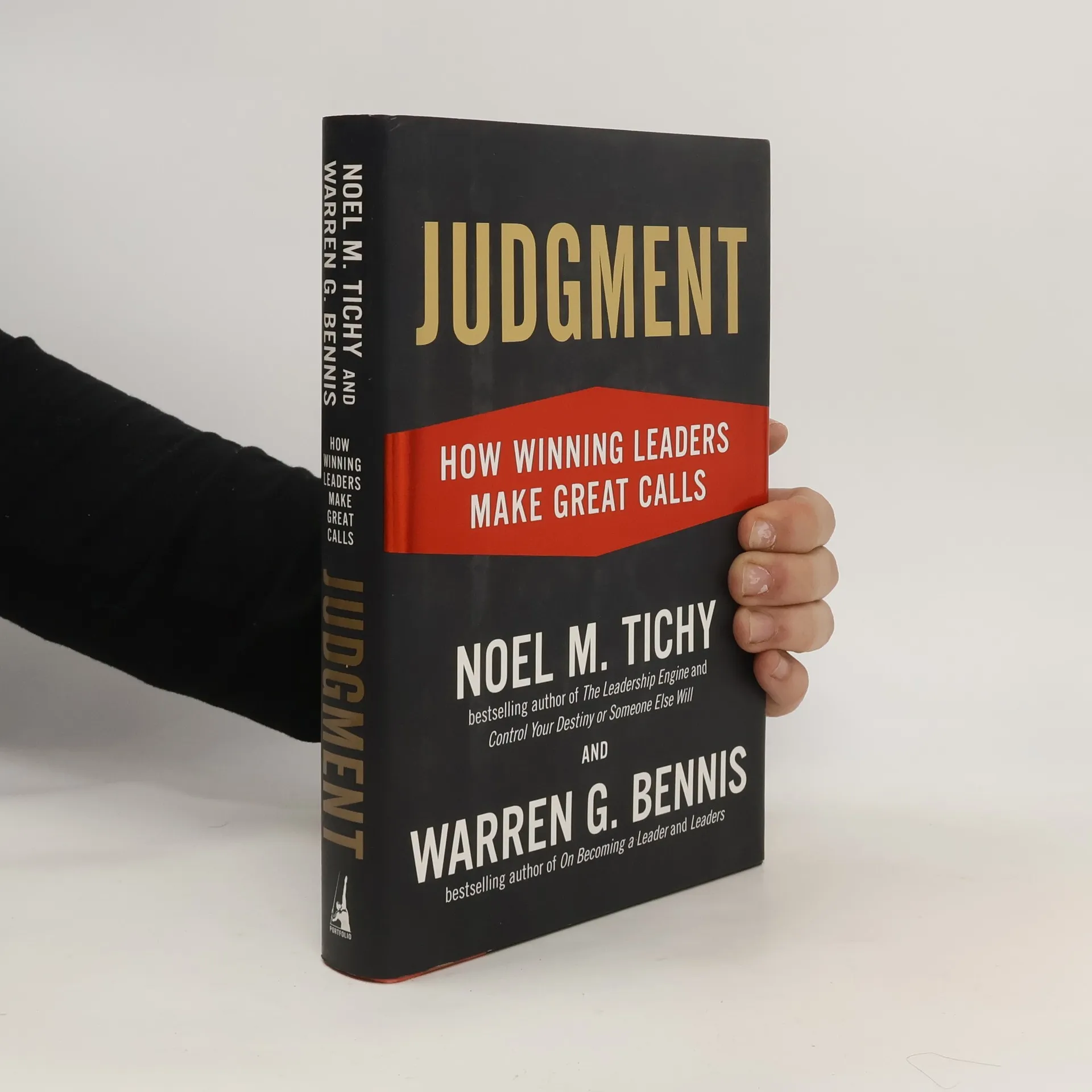
      "A first collaboration by two acclaimed leadership advisors presents a definition of leadership that focuses on one's ability to make the right call in spite of high stakes and limited information, in a guide that explains how to develop judgment skills through a three-step process."--Publisher.

      Judgment
    • 2005

      Reinventing Leadership

      • 187 Seiten
      • 7 Lesestunden
      3,6(26)Abgeben

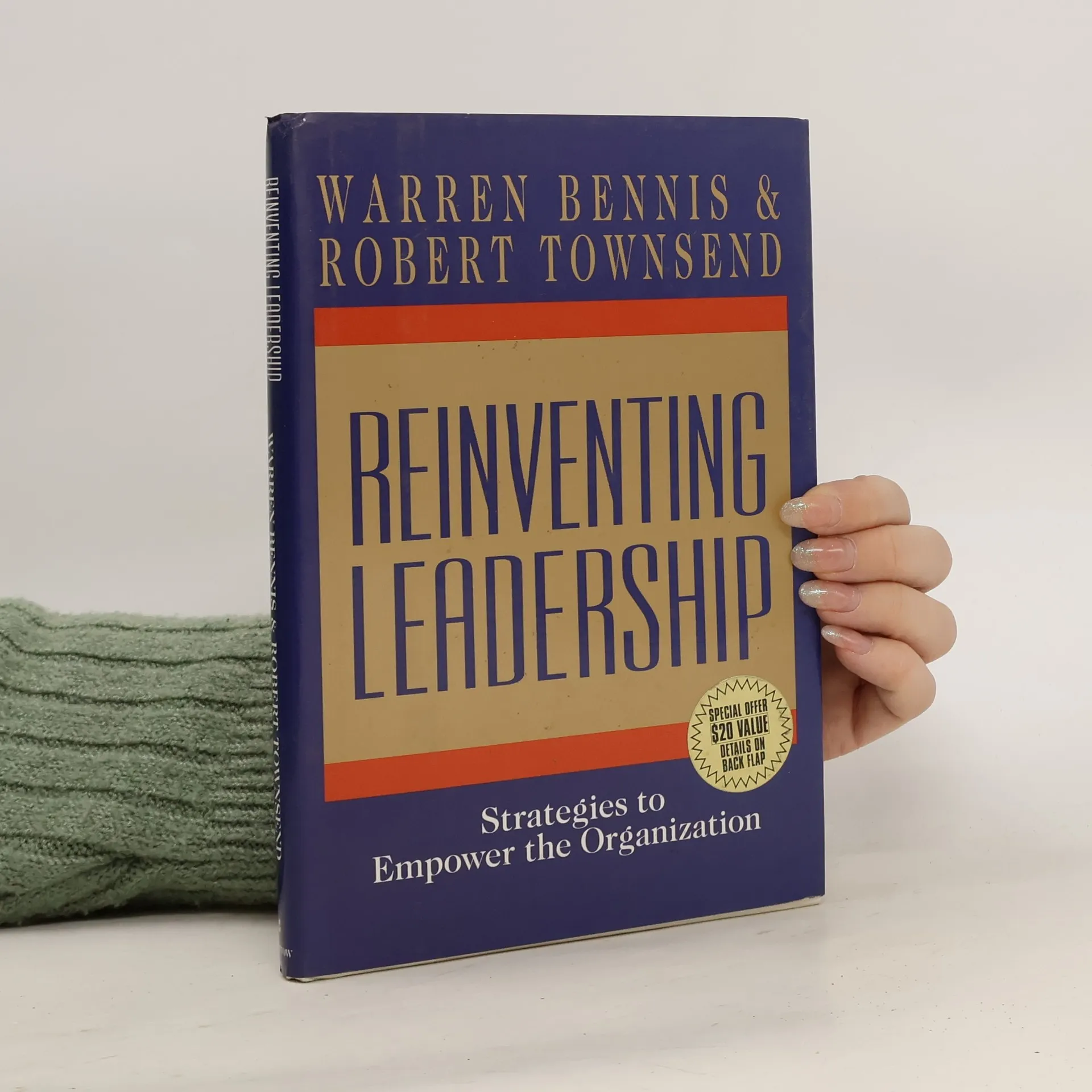
      Leadership for the 21st CenturyThe demands of today's workplace call for stronger and more inspiring leadership in order to motivate employees and to achieve the quality results for which successful organizations constantly strive.In Reinventing Leadership, Warren G. Bennis and Robert Townsend show leaders how to empower their organizations and bring the best out of each employee.Inside you will find useful leadership strategies that include:Moving away from conventional standards of business practice Building trust How to find a mentor Rewarding accomplishmentThese strategies will help transform leadership visions into reality and lead organizations into a future that includes increased employee satisfaction and continued economic growth.

      Reinventing Leadership
    • 2005

      Social Intelligence

      The New Science of Success

      • 289 Seiten
      • 11 Lesestunden
      3,9(18)Abgeben

      Karl Albrecht defines social intelligence (SI) as the ability to get along well with others while winning their cooperation. SI is a combination of sensitivity to the needs and interests of others, sometimes called your “social radar,” an attitude of generosity and consideration, and a set of practical skills for interacting successfully with people in any setting. Social Intelligence provides a highly accessible and comprehensive model for describing, assessing, and developing social intelligence at a personal level. This book is filled with intriguing concepts, enlightening examples, stories, cases, situational strategies, and a self-assessment tool – all designed to help you learn to navigate social situations more successfully.

      Social Intelligence
    • 2003
      4,0(1037)Abgeben

      In this offbeat approach to leadership, college president Steven B. Sample-the man who turned the University of Southern California into one of the most respected and highly rated universities in the country-challenges many conventional teachings on the subject. Here, Sample outlines an iconoclastic style of leadership that flies in the face of current leadership thought, but a style that unquestionably works, nevertheless. Sample urges leaders and aspiring leaders to focus on some key counterintuitive truths. He offers his own down-to-earth, homespun, and often provocative advice on some complex and thoughtful issues. And he provides many practical, if controversial, tactics for successful leadership, suggesting, among other things, that leaders should sometimes compromise their principles, not read everything that comes across their desks, and always put off decisions.

      The contrarian´s guide to leadership
    • 2001

      Blood, Sweat & Tears

      The Evolution of Work

      • 374 Seiten
      • 14 Lesestunden
      3,6(22)Abgeben

      Blood, Sweat & Tears is a captivating history of work, from prehistoric times to the present day. It offers fascinating and intelligent analyses of the individuals, assumptions, theories, developments, and practices that have so much changed work. Based on detailed research from around the world, the author examines early societies, slavery, the guilds, the creation of trade secrets and the influence of religion on work (such as the humanist ideals of the great Quaker industrialists). Donkin also investigates the ideas of the theorists, such as F. W. Taylor, Max Weber, Elton Mayo, Mary Parker Follett, and W. Edwards Demming, and the impact they have had on our lives. And, controversially, the author challenges the work ethic on behalf of all those whose lives have increasingly become subsumed by the demands of employers, asking the Why do we do it?

      Blood, Sweat & Tears
    • 2000

      Old Dogs, New Tricks

      • 192 Seiten
      • 7 Lesestunden
      4,0(1)Abgeben

      In today's dog-eat-dog world of competition and constant change, people in every position - especially the old dogs - must learn to work in teams rather than as lone wolves. They must learn the relatively new tricks of collaboration and innovation to create faster, better and more profitable organizations. These essays reflect the thinking and insights of Warren Bennis, showing how authoritarian managers may be transformed into collaborative and creative thinkers.

      Old Dogs, New Tricks