
Bookbot

Jonathan Lear

    9. Oktober 1948

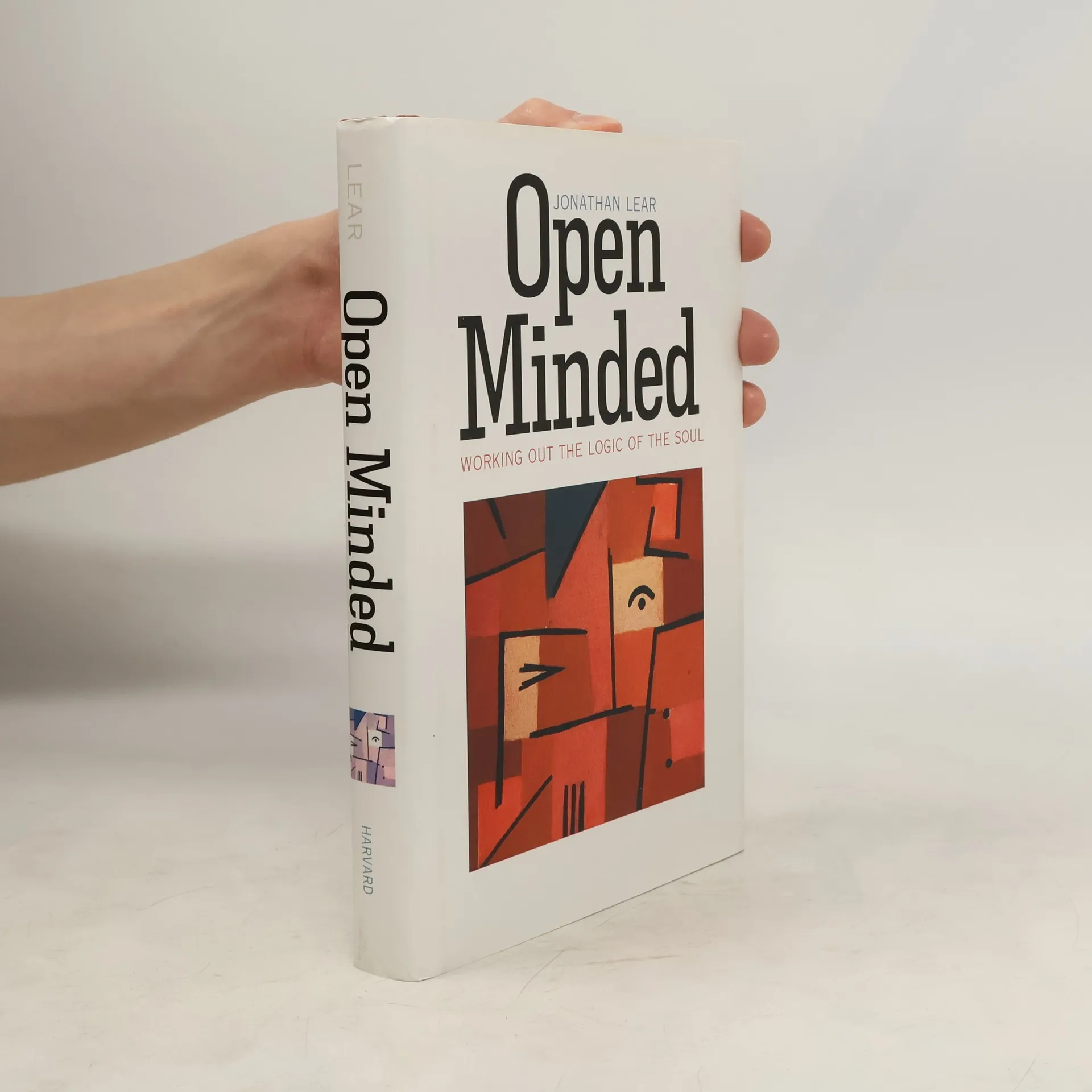
    Jonathan Lear befasst sich mit dem philosophischen Verständnis der menschlichen Psyche und den ethischen Implikationen, die sich aus unserer Natur als Wesen ergeben. Seine Arbeit konzentriert sich hauptsächlich auf philosophische Konzeptionen des menschlichen Geistes, die von der sokratischen Zeit bis heute reichen. Lear verbindet Philosophie mit Psychoanalyse und bietet tiefe Einblicke in die menschliche Verfassung. Seine Schriften untersuchen, wie unsere inneren Motivationen und unser Charakter unser ethisches Handeln prägen.

    Jonathan Lear
    Aristotle and Logical Theory
    Aristotle
    A Case for Irony
    Guerrilla Teaching
    Wisdom Won from Illness
    Radikale Hoffnung
    • Radikale Hoffnung

      Ethik im Angesicht kultureller Zerstörung

      Auf Grundlage der Anthropologie und Geschichte der nordamerikanischen Ureinwohner sowie mittels Philosophie und psychoanalytischer Theorie erforscht Jonathan Lear die Geschichte des Volkes der Crow im Angesicht der kulturellen Zerstörung. Sein Buch ist eine tiefschürfende und höchst originelle philosophische Studie über eine eigentümliche Verletzlichkeit, die den Kern der conditio humana betrifft. Wie sollen wir mit der Möglichkeit umgehen, dass unsere eigene Kultur zusammenbrechen könnte, wie mit dieser Verwundbarkeit leben? Ist es sinnvoll, sich einer solchen Herausforderung mutig zu stellen?


      Radikale Hoffnung
      3,0
    • Wisdom Won from Illness

      Essays in Philosophy and Psychoanalysis

      • 344 Seiten
      • 13 Lesestunden

      Exploring the intersection of psychoanalysis and moral philosophy, the book examines whether reason can integrate the nonrational aspects of the psyche into a comprehensive understanding of humanity. Jonathan Lear argues that without addressing this integration, philosophy loses its connection to real human experiences. The work serves as a foundation for ethical considerations on how to live, emphasizing the importance of understanding both rational and nonrational elements of the human condition.

      Wisdom Won from Illness
      4,6
    • Guerrilla Teaching

      • 216 Seiten
      • 8 Lesestunden

      Guerrilla Teaching is a revolution. Not a flag-waving, drum-beating revolution, but an underground revolution, a classroom revolution.

      Guerrilla Teaching
      4,6
    • A Case for Irony

      • 224 Seiten
      • 8 Lesestunden

      Vanity Fair has declared the Age of Irony over. Joan Didion has lamented that Obama s United States is an irony-free zone. Here Jonathan Lear argues that irony is one of the tools we use to live seriously, to get the hang of becoming human. It forces us to experience disruptions in our habitual ways of tuning out of life, but comes with a cost.

      A Case for Irony
      4,0
    • Professor Lear introduces Aristotle's philosophy and guides us through the central Aristotelian texts - selected from the Physics, Metaphysics, Ethics, Politics and from the biological and logical works. This 1988 book is written in a direct, lucid style which engages the reader with the themes in an active, participatory manner.

      Aristotle
      4,2
    • Aristotle and Logical Theory

      • 136 Seiten
      • 5 Lesestunden

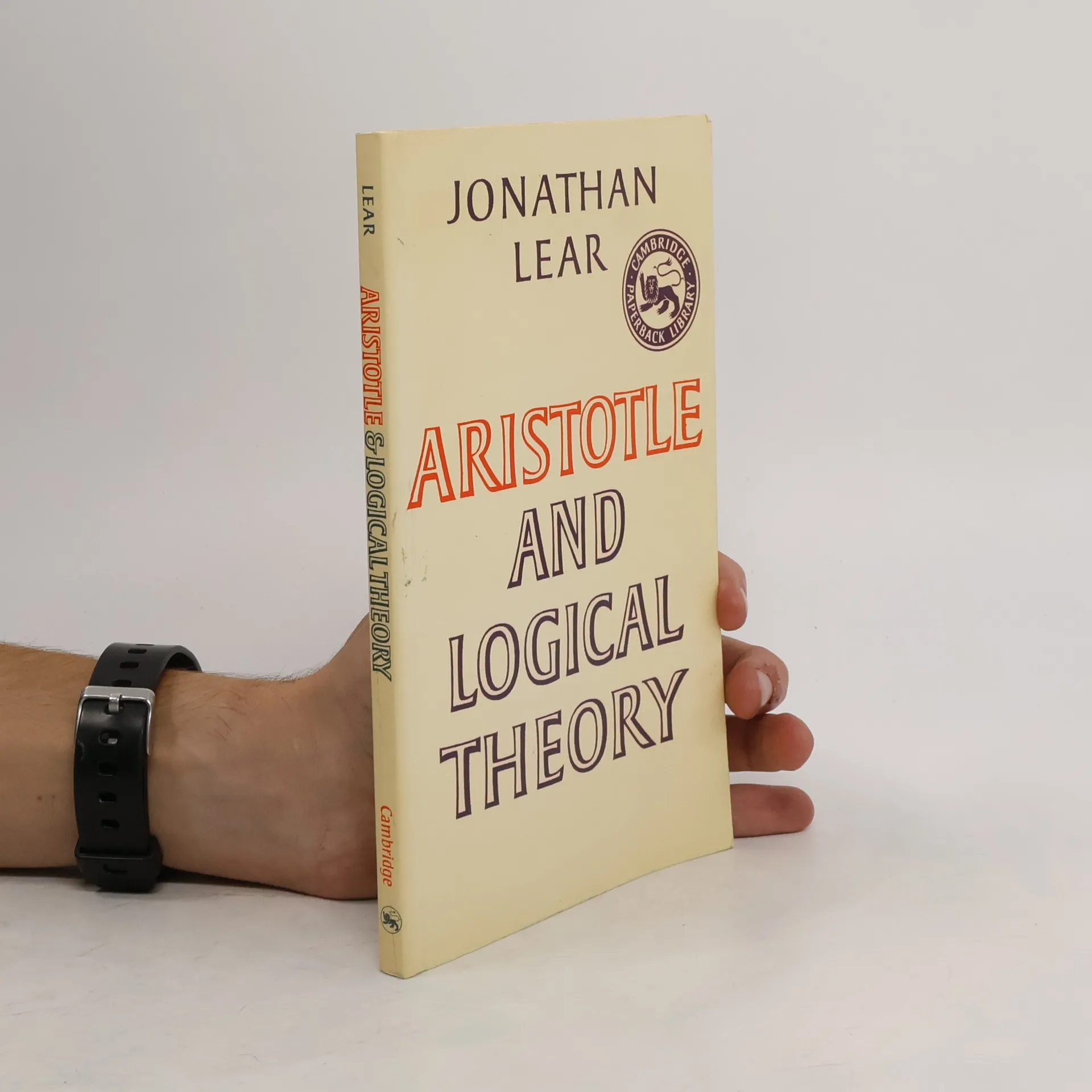
      Aristotle was the first and one of the greatest logicians. He not only devised the first system of formal logic, but also raised many fundamental problems in the philosophy of logic. In this book, Dr Lear shows how Aristotle's discussion of logical consequence, validity and proof can contribute to contemporary debates in the philosophy of logic. No background knowledge of Aristotle is assumed.

      Aristotle and Logical Theory
      3,8
    • "Aristotle and Sigmund Freud gave us disparate but compelling pictures of the human condition. But if, with Jonathan Lear, we scrutinize these thinkers' attempts to explain human behavior in terms of a higher principle - whether happiness or death - the pictures fall apart. Aristotle attempted to ground ethical life in human striving for happiness, yet he didn't understand what happiness is any better than we do. Freud fared no better when he tried to ground human striving, aggression, and destructiveness in the death drive."--Jacket

      Happines, death, and the remainder of life
      2,0
    • Separated by millennia, Aristotle and Sigmund Freud gave us disparate but compelling pictures of the human condition. But if, with Jonathan Lear , we scrutinize these thinkers' attempts to explain human behavior in terms of a higher principle--whether happiness or death--the pictures fall apart. Aristotle attempted to ground ethical life in human striving for happiness, yet he didn't understand what happiness is any better than we do. Happiness became an enigmatic, always unattainable, means of seducing humankind into living an ethical life. Freud fared no better when he tried to ground human striving, aggression, and destructiveness in the death drive, like Aristotle attributing purpose where none exists. Neither overarching principle can guide or govern "the remainder of life," in which our inherently disruptive unconscious moves in breaks and swerves to affect who and how we are. Lear exposes this tendency to self-disruption for what it is: an opening, an opportunity for new possibilities. His insights have profound consequences not only for analysis but for our understanding of civilization and its discontent.

      The Tanner Lectures on Human Values - 3: Happiness, Death, and the Remainder of Life
      4,0
    • Love and Its Place in Nature

      • 243 Seiten
      • 9 Lesestunden

      Offers an examination of Freud's thought as it applies to the development of the individual and the power of love

      Love and Its Place in Nature
      3,3
    • Freud

      • 260 Seiten
      • 10 Lesestunden

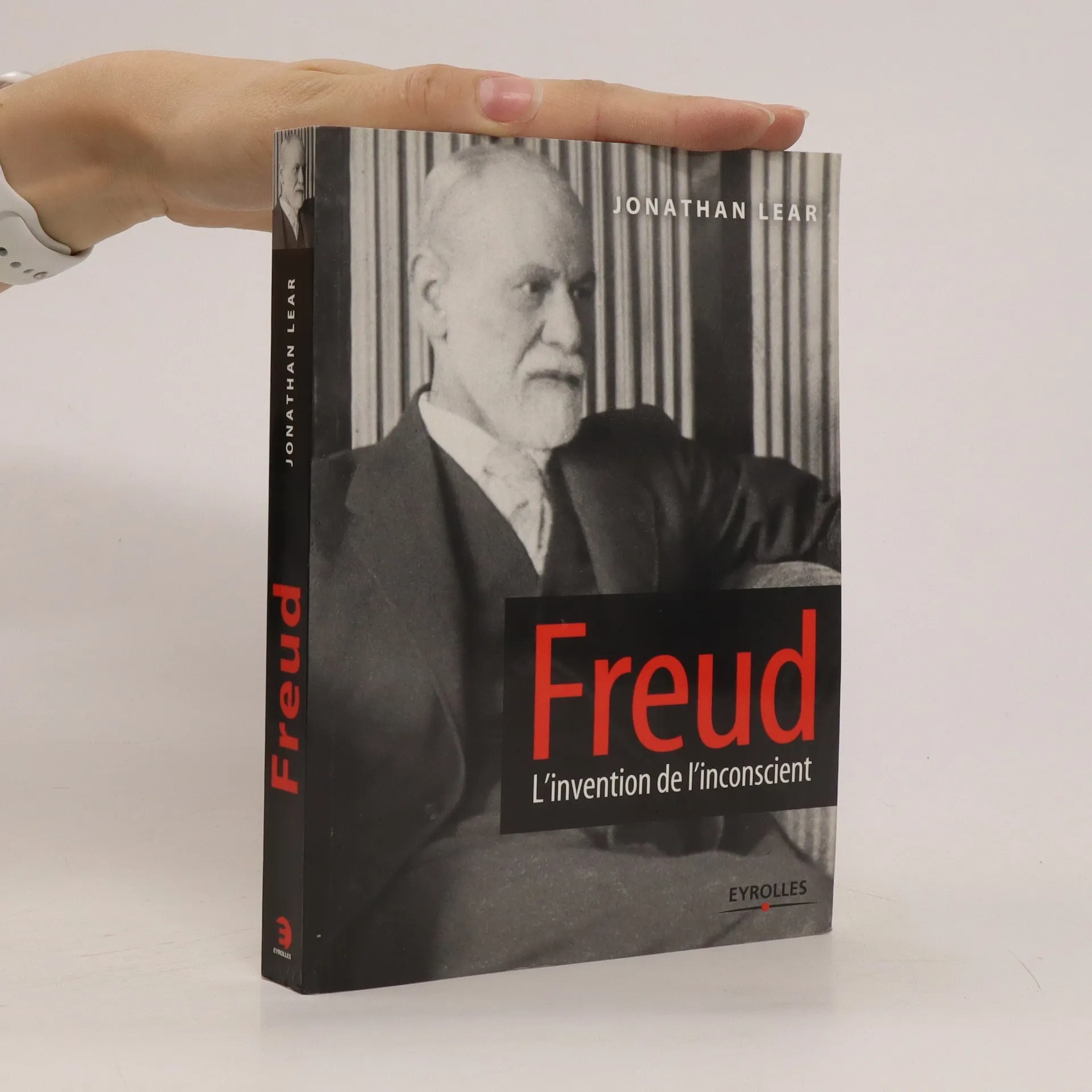
      In this fully revised and updated second edition, the author clearly introduces and assesses all of Freud's thought, focusing on those areas of philosophy on which Freud is acknowledged to have had a lasting impact. Essential reading for anyone in the humanities, social sciences and beyond.

      Freud
      3,8