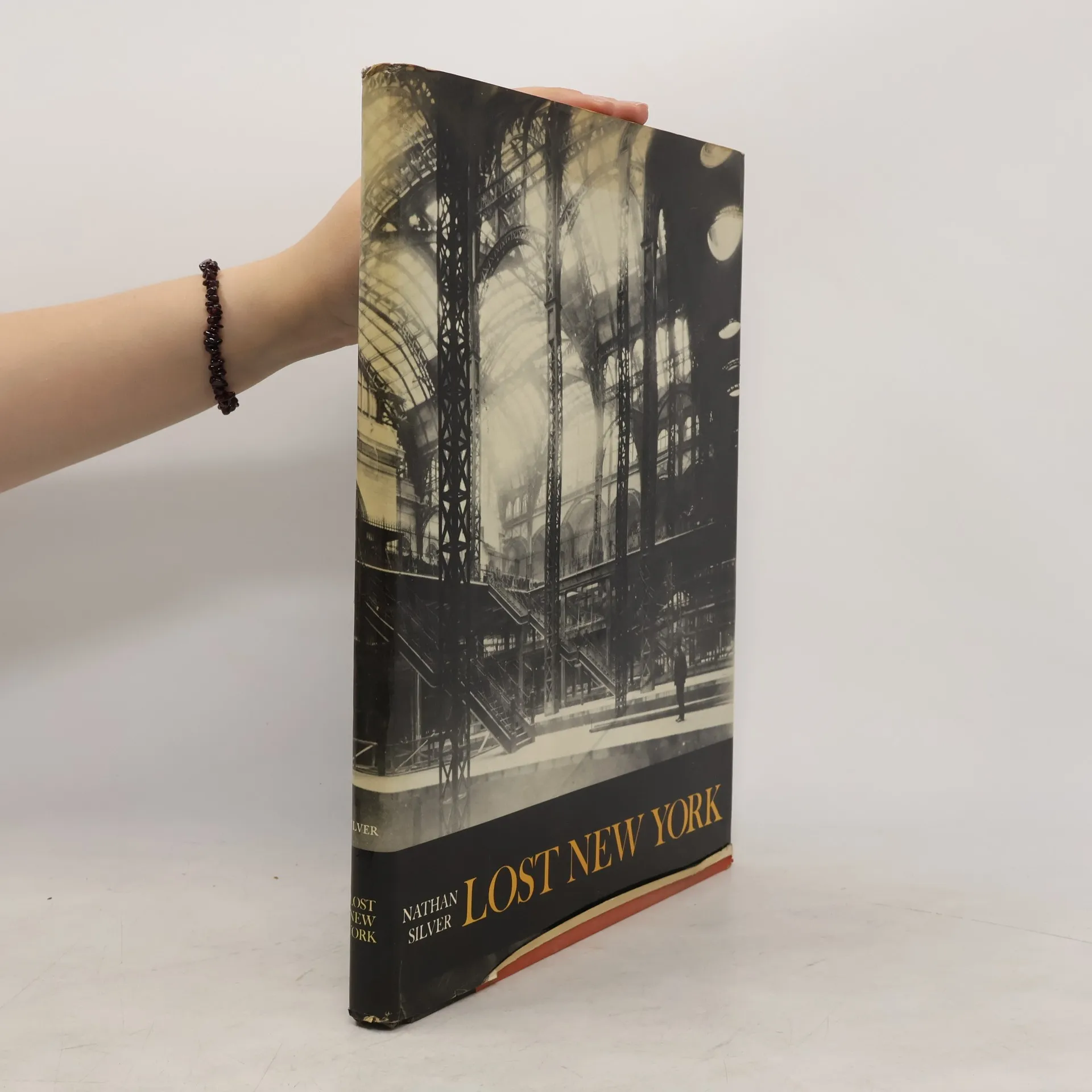
It is hardly surprising that the city that never sleeps has lost some things along the way. Fortunately, Nathan Silver's "magnificent and heartbreaking record" (Louis Auchincloss) captures with rare and stunning photographs that New York of legend and memory. From the lost Penn Station and two World's Fairs to the stone facades of great Fifth Avenue houses and the cast-iron facades of commerce, Lost New York is a startling reminder of what has disappeared forever.
In The Story of Post-Modernism, Charles Jencks, the authority on Post-Modern
architecture and culture, provides the defining account of Post-Modern
architecture from its earliest roots in the early 60s to the present day.
When this book first appeared in 1972, it heralded a new era in architecture and design, moving beyond the rigid doctrines of modernism. Charles Jencks and Nathan Silver presented a manifesto for a generation that embraced improvisation and resourcefulness to tackle real-world challenges. The book quickly became a DIY guide for disillusioned citizens of the 1970s, introducing the term "adhocism" into the design lexicon and establishing it as a cult classic. Now re-released, it includes new reflections by Jencks and Silver on four decades of adhocism, along with fresh illustrations highlighting its ongoing relevance. Adhocism has always existed, exemplified by figures like Robinson Crusoe, who improvised tools from his surroundings. As a design principle, it encourages everyday creativity—transforming a bottle into a candleholder or a tractor seat into a chair. More broadly, adhocism influences various activities, from play to architecture and political movements. Engagingly written and richly illustrated with examples from diverse fields, the book advocates for a focus on practical solutions over strict adherence to rules, emphasizing that problem-solving often arises from trial and error rather than sudden insights.