

Gratis Versand ab 14,99 €. Mehr Infos.
Bookbot

Jan van Eijck

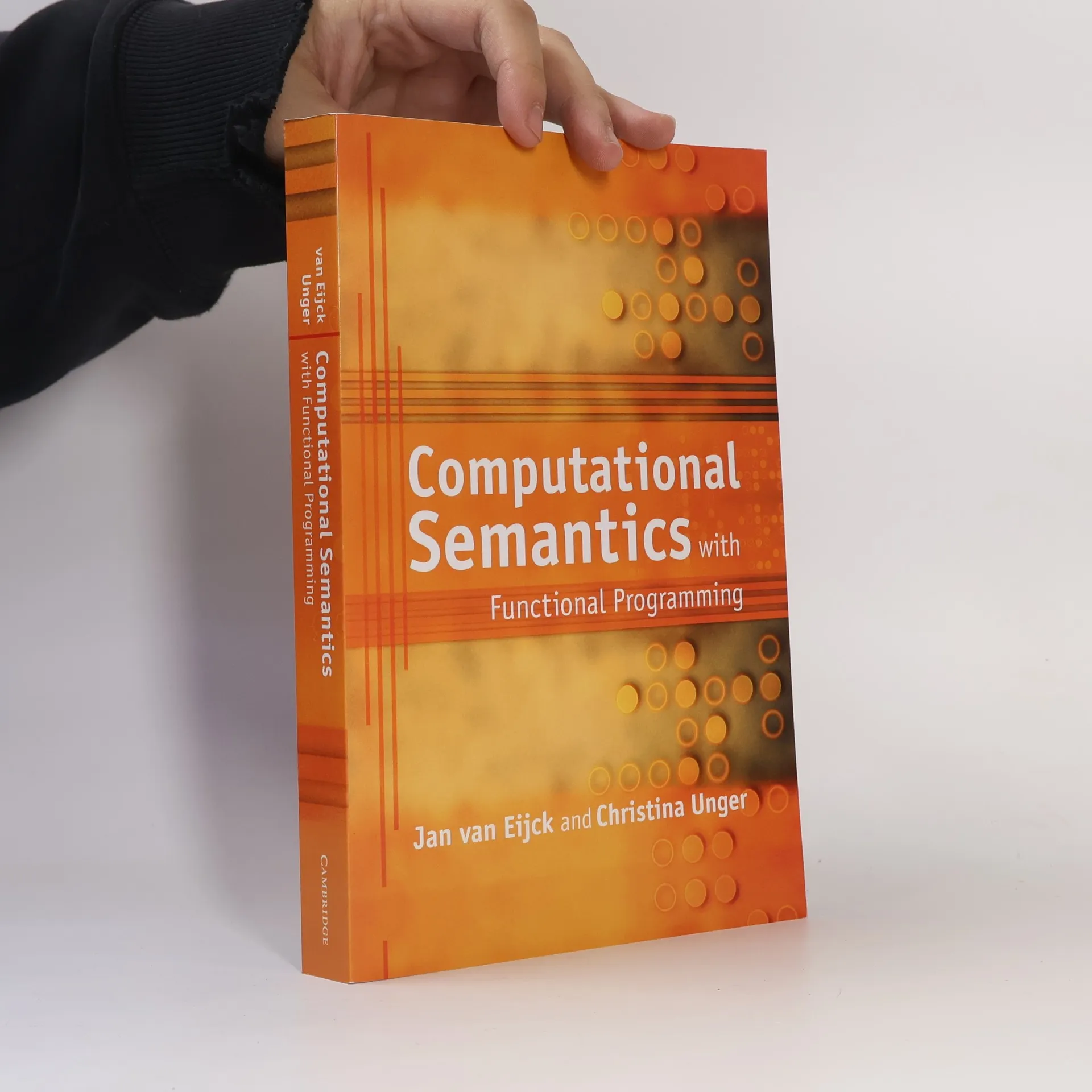
    Computational Semantics with Functional Programming
    The 500 Hidden Secrets of Amsterdam
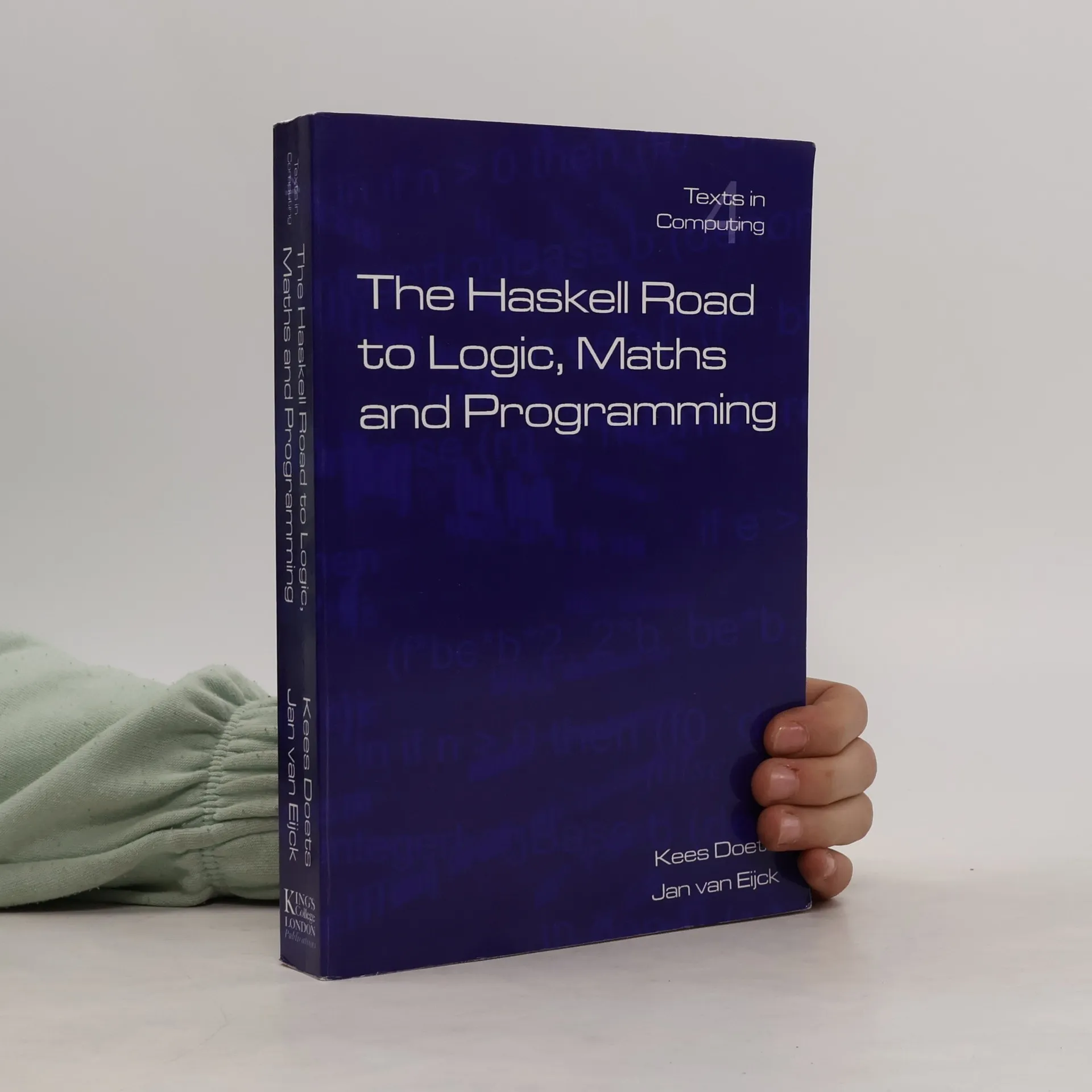
    The Haskell road to logic, maths and programming
    • The purpose of this book is to teach logic and mathematical reasoning in practice, and to connect logical reasoning with computer programming in Haskell. Haskell emerged in the last decade as a standard for lazy functional programming, a programming style where arguments are evaluated only when the value is actually needed. Haskell is a marvellous demonstration tool for logic and maths because its functional character allows implementations to remain very close to the concepts that get implemented, while the laziness permits smooth handling of infinite data structures.This book does not assume the reader to have previous experience with either programming or construction of formal proofs, but acquaintance with mathematical notation, at the level of secondary school mathematics is presumed. Everything one needs to know about mathematical reasoning or programming is explained as we go along. After proper digestion of the material in this book the reader will be able to write interesting programs, reason about their correctness, and document them in a clear fashion. The reader will also have learned how to set up mathematical proofs in a structured way, and how to read and digest mathematical proofs written by others.

      The Haskell road to logic, maths and programming
      3,7
    • A new edition in the bestselling 500 Hidden Secrets collection, written by a local. Includes extensive maps and a comprehensive index.

      The 500 Hidden Secrets of Amsterdam
    • Computational semantics is the art and science of computing meaning in natural language. The meaning of a sentence is derived from the meanings of the individual words in it, and this process can be made so precise that it can be implemented on a computer. Designed for students of linguistics, computer science, logic and philosophy, this comprehensive text shows how to compute meaning using the functional programming language Haskell. It deals with both denotational meaning (where meaning comes from knowing the conditions of truth in situations), and operational meaning (where meaning is an instruction for performing cognitive action). Including a discussion of recent developments in logic, it will be invaluable to linguistics students wanting to apply logic to their studies, logic students wishing to learn how their subject can be applied to linguistics, and functional programmers interested in natural language processing as a new application area.

      Computational Semantics with Functional Programming