



Gratisversand in ganz Deutschland!
Bookbot

Imre Lakatos

    9. November 1922 – 2. Februar 1974

    Ein Philosoph der Mathematik und Wissenschaft, bekannt für seine These von der Fehlbarkeit der Mathematik und seiner 'Methodologie von Beweisen und Widerlegungen' in ihren voraxiomatischen Entwicklungsstadien. Er führte auch das Konzept des 'Forschungsprogramms' in seiner Methodologie wissenschaftlicher Forschungsprogramme ein. Seine Arbeit untersucht, wie sich mathematisches und wissenschaftliches Wissen durch ständiges Hinterfragen und Innovation entwickelt. Seine Einblicke bieten eine faszinierende Perspektive auf die Dynamik des Denkens und Entdeckens.

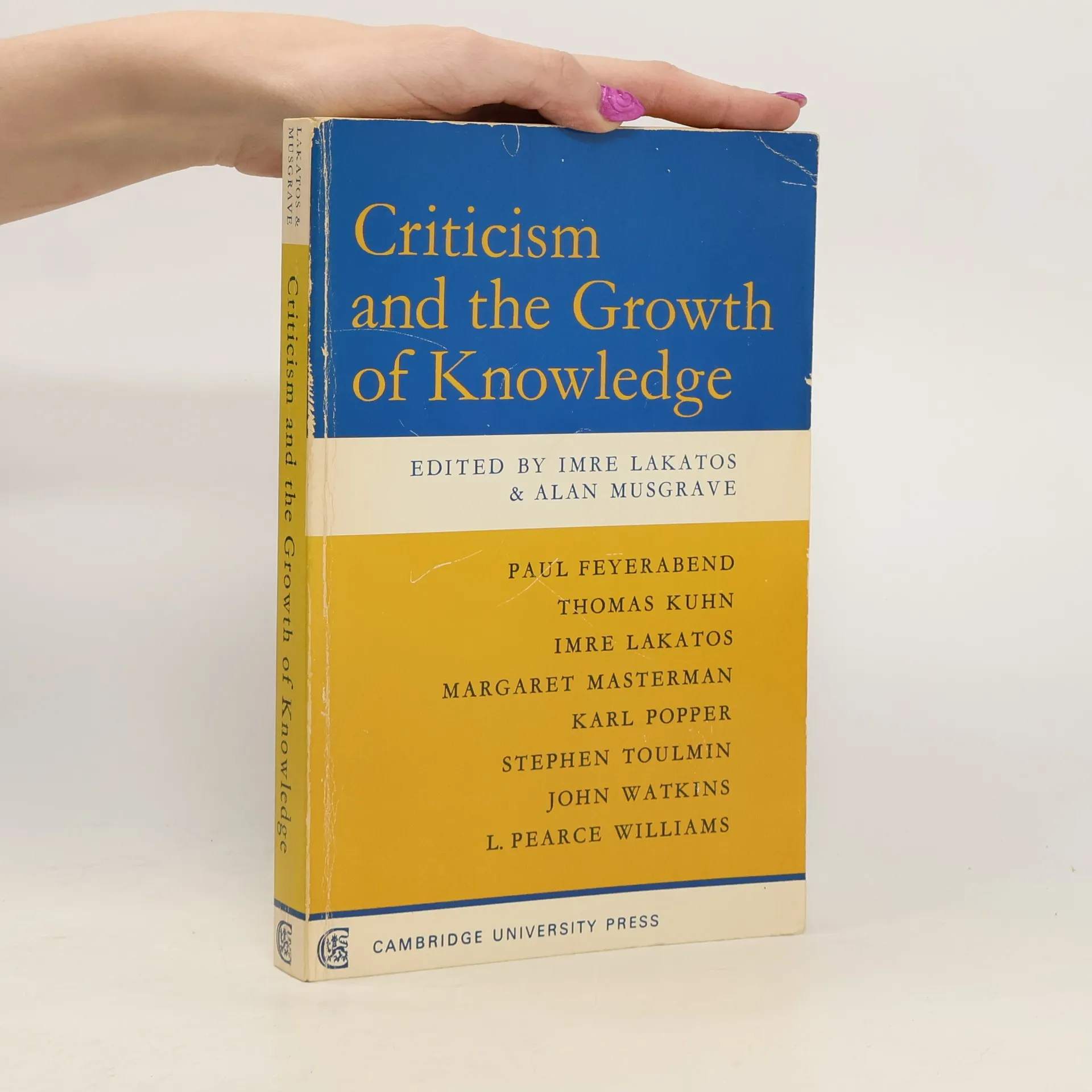
    Criticism and the Growth of Knowledge
    For and Against Method
    The Methodology of Scientific Research Programmes: Volume 1
    Beweise und Widerlegungen
    • Beweise und Widerlegungen

      • 161 Seiten
      • 6 Lesestunden
      4,4(39)Abgeben

      Inhaltsverzeichnis: 1. Ein Problem und eine Vermutung. 2. Ein Beweis. 3. Kritik des Beweises durch lokale, jedoch nicht globale Gegenbeispiele. 4. Kritik der Vermutung durch globale Gegenbeispiele. 5. Analyse des Beweises mit globalen, aber nicht lokalen Gegenbeispielen. Das Problem der Strenge. 6. Rückkehr zur Kritik des Beweises durch lokale Gegenbeispiele. Das Problem des Gehaltes. 7. Neudurchdenken des Problems vom Gehalt. 8. Begriffsbildung. 9. Wie Kritik mathematische Wahrheit in logische Wahrheit verwandeln kann. 2. Der Herausgeber. 1. Übersetzung der Vermutung in die ‚wohlbekannte‘ Sprache der Linearen Algebra. Das Problem der Übersetzung. 2. Ein anderer Beweis der Vermutung. 3. Zweifel an der Endgültigkeit des Beweises. Das Übersetzungsverfahren und die Debatte zwischen essentialistischem und nominalistischem Zugang zu Definitionen. Anhang 1. Eine weitere Fallstudie zu „Beweise und Widerlegungen“. 1. Cauchys Verteidigung des ‚Kontinuitätsprinzips‘. 2. Seidels Beweis und der Begriff der gleichmäßigen Stetigkeit. 3. Abels Methode der Ausnahmensperre. 4. Hindernisse zur Entdeckung der Methode der Beweisanalyse. Anhang 2. Deduktivistischer oder heuristischer Zugang? 1. Der deduktivistische Zugang. 2. Der heuristische Zugang und beweiserzeugte Begriffe: 2.1 Gleichmäßige Konvergenz. 2.2 Beschränkte Schwankung. 2.3 Die Carathéodory-Definition einer messbaren Menge. Bibliographie, Namensverzeichnis, Sachwortverzeichnis.

      Beweise und Widerlegungen
    • This collection exhibits and confirms the originality, range and the essential unity of his work. It demonstrates too the force and spirit he brought to every issue with which he engaged, from his most abstract mathematical work to his passionate 'Letter to the director of the LSE'.

      The Methodology of Scientific Research Programmes: Volume 1
    • For and Against Method

      • 459 Seiten
      • 17 Lesestunden
      4,1(122)Abgeben

      The text opens with an imaginary dialogue between Lakatos and Feyerabend, which Matteo Motterlini has constructed, based on their published works, to synthesize their positions and arguments. Part one presents the transcripts of the last lectures on method that Lakatos delivered. Part two, Feyerabend's response, consists of a previously published essay on anarchism, which began the attack on Lakatos's position that Feyerabend later continued in "Against Method." The third and longest section consists of the correspondence Lakatos and Feyerabend exchanged on method and many other issues and ideas, as well as the events of their daily lives, between 1968 and Lakatos's death in 1974.

      For and Against Method
    • 4,1(116)Abgeben

      Two books have been particularly influential in contemporary philosophy of science: Karl R. Popper's Logic of Scientific Discovery, and Thomas S. Kuhn's Structure of Scientific Revolutions. Both agree upon the importance of revolutions in science, but differ about the role of criticism in science's revolutionary growth. This volume arose out of a symposium on Kuhn's work, with Popper in the chair, at an international colloquium held in London in 1965. The book begins with Kuhn's statement of his position followed by seven essays offering criticism and analysis, and finally by Kuhn's reply. The book will interest senior undergraduates and graduate students of the philosophy and history of science, as well as professional philosophers, philosophically inclined scientists, and some psychologists and sociologists.

      Criticism and the Growth of Knowledge