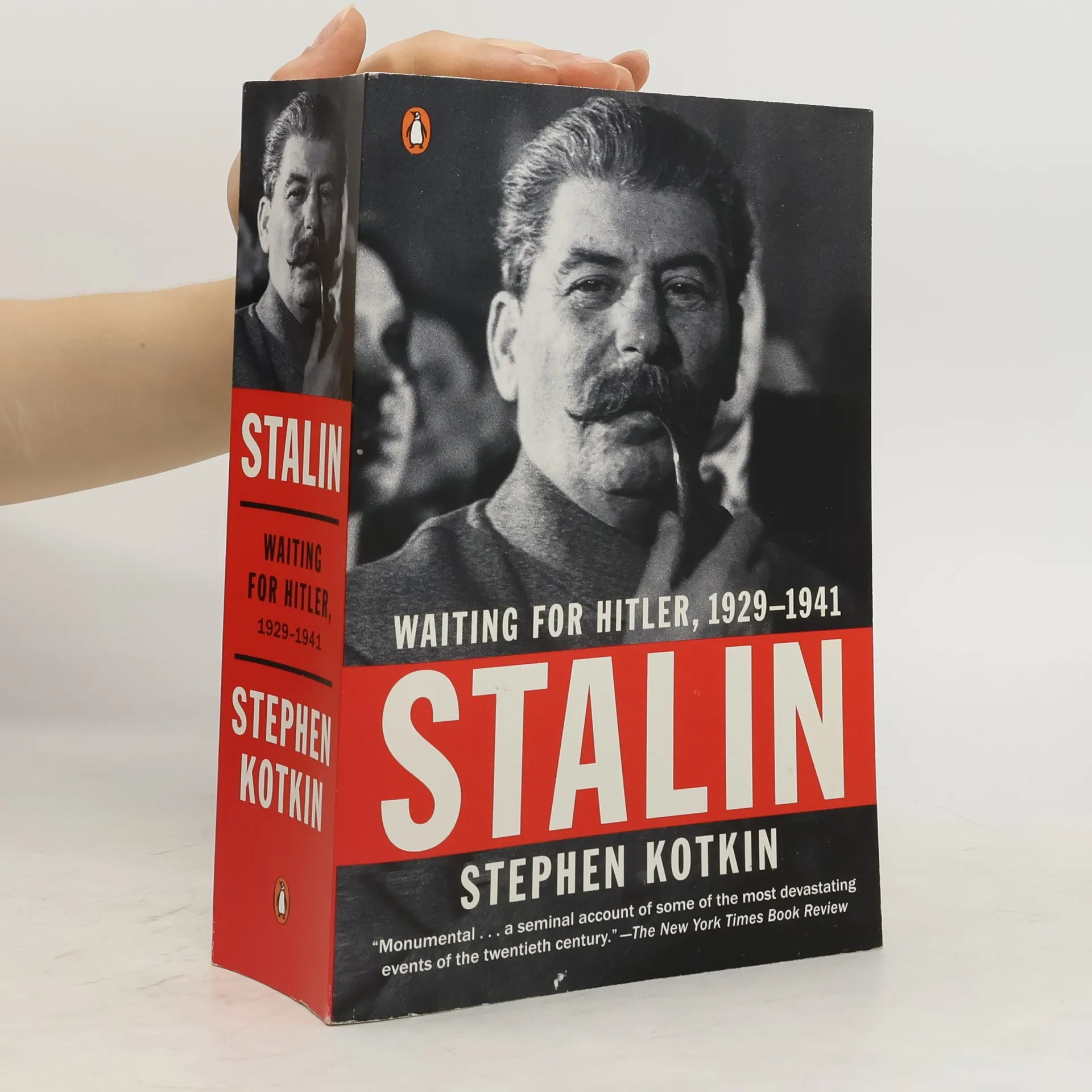
Сталин 2/1. В предчувствии Гитлера 1929-1941
- 1896 Seiten
- 67 Lesestunden


Stephen Kotkin spezialisiert sich auf die Geschichte der Sowjetunion und erforscht zunehmend breiter Eurasien. Seine Expertise liegt in der tiefgreifenden Analyse historischer Prozesse und ihrer Auswirkungen. Als Geschichtsprofessor und Leiter des Programms für Russlandstudien an der Princeton University bringt er akademische Strenge in seine Forschung ein. Seine Arbeit bietet Lesern einen fesselnden Einblick in Schlüsselperioden und Dynamiken der russischen und eurasischen Geschichte.


In 1992, after the collapse of the Soviet Union, the Hoover Institution began a historic twelve-year effort to microfilm and publish the records of the Soviet Communist Party and State--ten million pages of newly opened archives documenting the history of Soviet communism.
Masterly, a riveting tale, written with pace and aplomb. [of volume one] New York Times
In 1929, Joseph Stalin, having secured dictatorial power over the Soviet Empire, initiated the systematic transformation of the world's largest peasant economy into "socialist modernity" through collectivization, regardless of the consequences. This drastic policy profoundly altered both the nation and its leader. Managing a dictatorship with life-and-death authority over millions shaped Stalin into an extraordinary figure. The collectivization of around 120 million peasants required extreme coercion, leading to mass starvation that drew criticism even from loyal Communists. Yet, Stalin remained unwavering. By 1934, as the Soviet Union stabilized and socialism took root in the countryside, he received widespread praise for his anti-capitalist achievements. However, Stalin's unforgiving nature led him to execute nearly a million individuals, including military leaders and cultural icons, as he sought to consolidate power with a new elite. While he succeeded in reviving a formidable industrialized military, the Soviet Union found itself isolated and surrounded by perceived threats. This quest for security culminated in an unexpected pact with Nazi Germany, which would not unfold as planned. The lives of Stalin and Hitler, along with the trajectories of their regimes, drew closer to a catastrophic confrontation, leaving the world in a precarious state.
In his biography of Stalin, Kotkin rejects the inherited wisdom about Stalin's psychological makeup, showing us instead how Stalin's near paranoia was fundamentally political and closely tracks the Bolshevik revolution's structural paranoia, the predicament of a Communist regime in an overwhelmingly capitalist world, surrounded and penetrated by enemies. At the same time, Kotkin posits the impossibility of understanding Stalin's momentous decisions outside of the context of the history of imperial Russia.
Twenty years ago, the Berlin Wall fell. In one of modern history’s most miraculous occurrences, communism imploded–and not with a bang, but with a whimper. Now two of the foremost scholars of East European and Soviet affairs, Stephen Kotkin and Jan T. Gross, drawing upon two decades of reflection, revisit this crash. In a crisp, concise, unsentimental narrative, they employ three case studies–East Germany, Romania, and Poland–to illuminate what led Communist regimes to surrender, or to be swept away in political bank runs. This is less a story of dissidents, so-called civil society, than of the bankruptcy of a ruling class–communism’s establishment, or “uncivil society.” The Communists borrowed from the West like drunken sailors to buy mass consumer goods, then were unable to pay back the hard-currency debts and so borrowed even more. In Eastern Europe, communism came to resemble a Ponzi scheme, one whose implosion carries enduring lessons. From East Germany’s pseudotechnocracy to Romania’s megalomaniacal dystopia, from Communist Poland’s cult of Mary to the Kremlin’s surprise restraint, Kotkin and Gross pull back the curtain on the fraud and decadence that cashiered the would-be alternative to the market and democracy, an outcome that opened up to a deeper global integration that has proved destabilizing.
History's cruel tricks -- Reviving the dream -- The drama of reform -- Waiting for the end of the world -- Survival and cannibalism in the rust belt -- Democracy without liberalism? -- Idealism and treason.
An account of what Stalinism meant to the masses of ordinary people who lived it. It argues that Stalinism offered itself as an opportunity for enlightenment. It depicts a whole range of life: from the blast furnace workers who labored in the iron and steel plant, to the families who struggled with the shortage of housing and services.
Students reading Scott have come away with a real appreciation of the hardships under which these workers built Magnitogorsk and of the nearly incredible enthusiasm with which many of them worked." --Ronald Grigor Suny A genuine grassroots account of Soviet life--a type of book of which there have been far too few." --William Henry Chamberlin, New York Times, 1943 ... a rich portrait of daily life under Stalin." --New York Times Book Review General readers, students, and specialists alike will find much of relevance for understanding today's Soviet Union in this new edition of John Scott's vivid exploration of daily life in the formative days of Stalinism.