

Foucault's exploration of the history of sexuality, initiated in the 1960s through his lectures, reveals significant insights into his evolving ideas. This collection marks the first English publication of these pivotal lectures, providing readers with an opportunity to engage with Foucault's foundational thoughts on sexuality that have shaped contemporary discourse.
Graham Burchell Reihenfolge der Bücher (Chronologisch)


The Government of Self and Others: Lectures at the Collège de France, 1982-1983
- 432 Seiten
- 16 Lesestunden
An exciting and highly original examination of the practices of truth-telling and speaking out freely (parresia) in ancient Greek tragedy and philosophy. Foucault discusses the difficult and changing practices of truth-telling in ancient democracies and tyrannies.
Was ist Philosophie?
- 260 Seiten
- 10 Lesestunden
»Was ist Philosophie?« Gilles Deleuze' und Félix Guattaris Antwort will keine neue Philosophie sein, sondern die Voraussetzungen, die Unbekannten der Frage benennen.
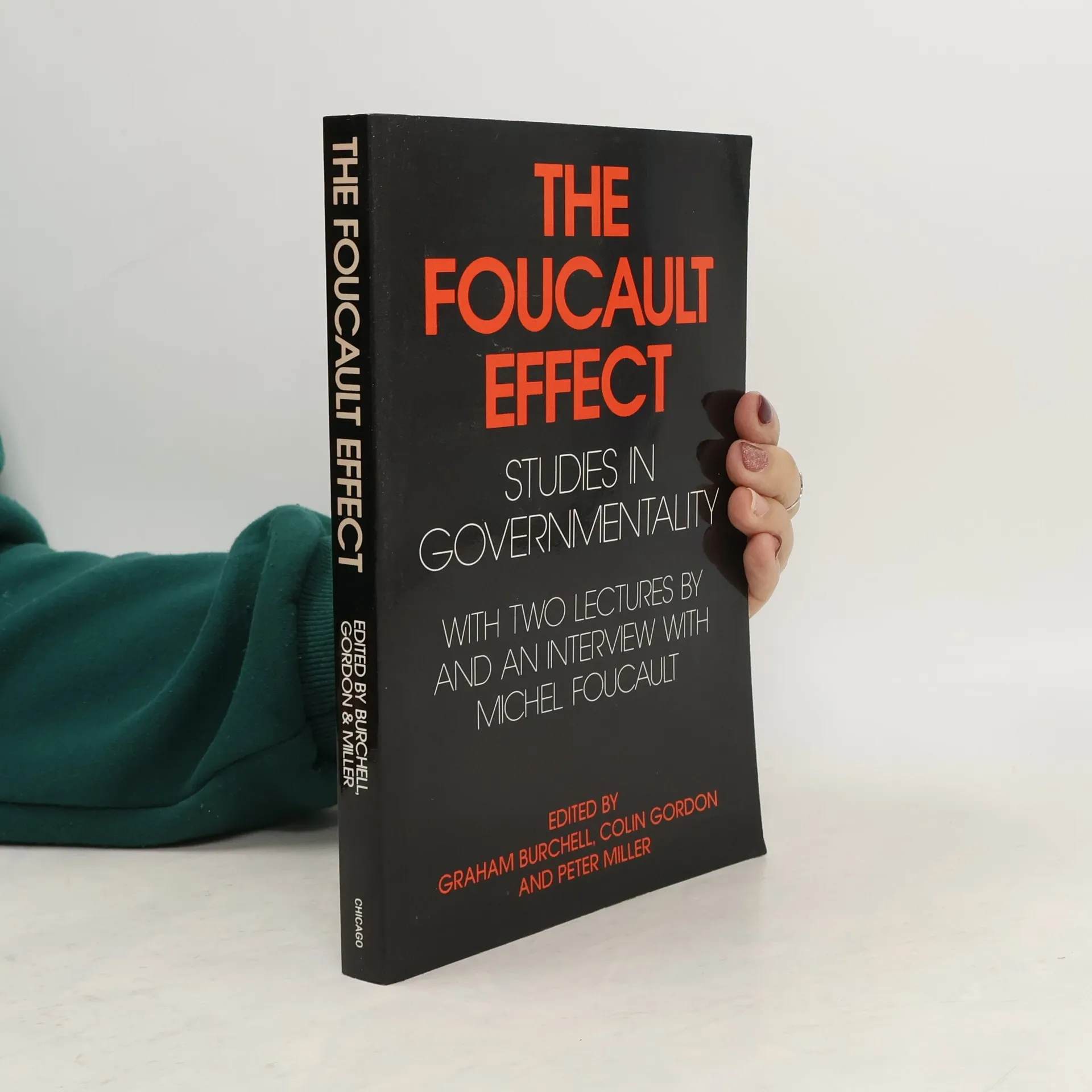
The Foucault Effect
Studies in Governmentality: With Two Lectures by and an Interview with Michel Foucault
- 307 Seiten
- 11 Lesestunden
This volume is a sequel to Power/Knowledge, based on Michel Foucault's lectures at the Collège de France in 1978 and 1979, and his 1977 interview on imprisonment. Foucault explores governmental rationalities, examining government as both a contemporary practice and a historical phenomenon, highlighting how governmentality has been conceptualized and enacted. His insights into political discourse and governmentality are complemented by essays from esteemed scholars influenced by Foucault's work. They delve into various modern forms of government, such as state reasoning, police functions, liberalism, security, social economy, insurance, solidarity, welfare, and risk management. A central theme is that government is not an instinctive or natural phenomenon but rather an invention shaped by historical contexts. The collection also investigates the relationship between governmental practices and criticism, suggesting that critique can drive meaningful change and inspire new practices. This unique anthology of articles and primary materials paves the way for renewed discussions on Foucault's contributions and the implications for liberalism, social policy, and insurance.