

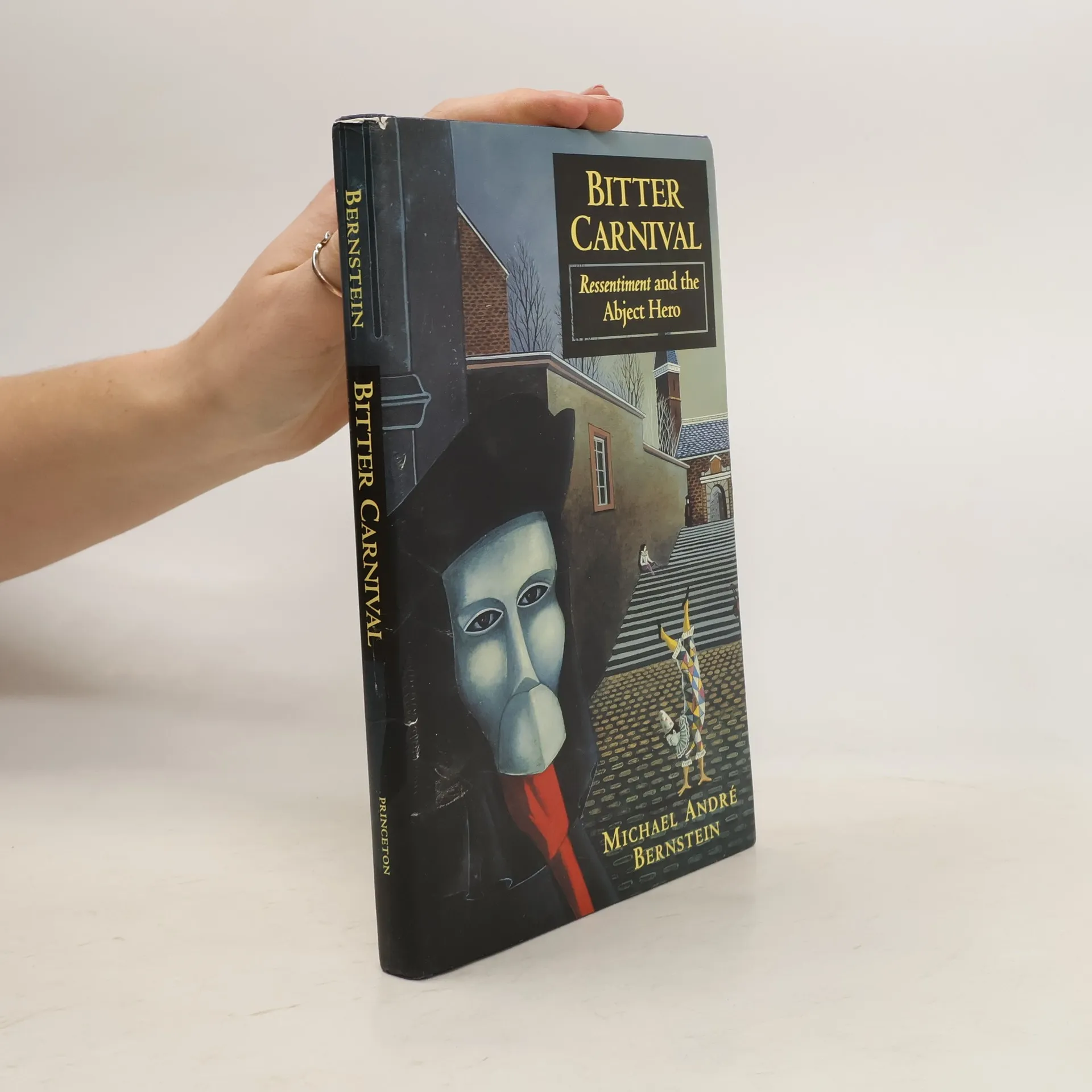
"You people put importance on your lives. Well, my life has never been important to anyone. I haven't got any guilt about anything," bragged mass-murderer Charles Manson. His chilling accusation highlights a societal contradiction: while we are shocked by real murderers, we are captivated when similar sentiments are expressed by fictional rebels or monsters. In Bitter Carnival, Michael Andr Bernstein delves into this contradiction, introducing the concept of the Abject Hero. This figure exists at the intersection of contestation and conformity, embodying a blend of the satanic and the servile. Bernstein argues that we romanticize the Abject Hero because he reflects a convention deeply embedded in our mythology, appealing in both mass culture and high art. His analysis spans classical Latin satire, innovative interpretations of Diderot, Dostoevsky, and Cline, and culminates in Manson's courtroom testimony. Bitter Carnival offers a revisionist perspective on the "Saturnalian dialogue" between various societal roles, challenging the perceived regenerative power of the carnivalesque and critiquing contemporary utopian radicalism. The clarity of Bernstein's arguments and literary style compel readers to confront significant dilemmas in literary studies, ethics, cultural history, and critical theory today.
Michael André Bernstein Bücher

In Galicia, Austria-Hungary, 1913, Count-Governor Wiladowski watches as a wave of assassinations engulfs his province. Following a family member's murder, he grants extensive police powers to Jakob Tausk, a brilliant Jewish spymaster whose ruthless campaign against terror infiltrates all levels of society. Tausk enlists union organizers, aristocrats, and a young playwright seeking literary fame in Vienna. Amid rising violence, a mysterious preacher, one of the "wonder rabbis" from the East, emerges in the provincial capital, attracting a fervent following that reaches the castle. As word of the charismatic leader spreads, Tausk finds himself caught between the count and Moritz Rotenburg, the province's wealthiest man, who has his own vested interest in the rabbi. Rotenburg's son returns from university, eager for revolution and intent on gathering his own disciples. The narrative shifts from clandestine meetings and makeshift synagogues to the opulent bedrooms of country estates and the secret councils of the crumbling Habsburg Empire. This compelling debut novel immerses readers in a richly detailed world on the brink of collapse, filled with the haunting allure of fable and the intense passions of an age in turmoil.
Vienna Survival Guide for Education
- 285 Seiten
- 10 Lesestunden