
Christ all and in all, or severall significant similitudes - by which the Lord Jesus Christ is described in the holy Scriptures: being the substance of many sermons is an unchanged, high-quality reprint of the original edition of 1660. Hansebooks is editor of the literature on different topic areas such as research and science, travel and expeditions, cooking and nutrition, medicine, and other genres. As a publisher we focus on the preservation of historical literature. Many works of historical writers and scientists are available today as antiques only. Hansebooks newly publishes these books and contributes to the preservation of literature which has become rare and historical knowledge for the future.
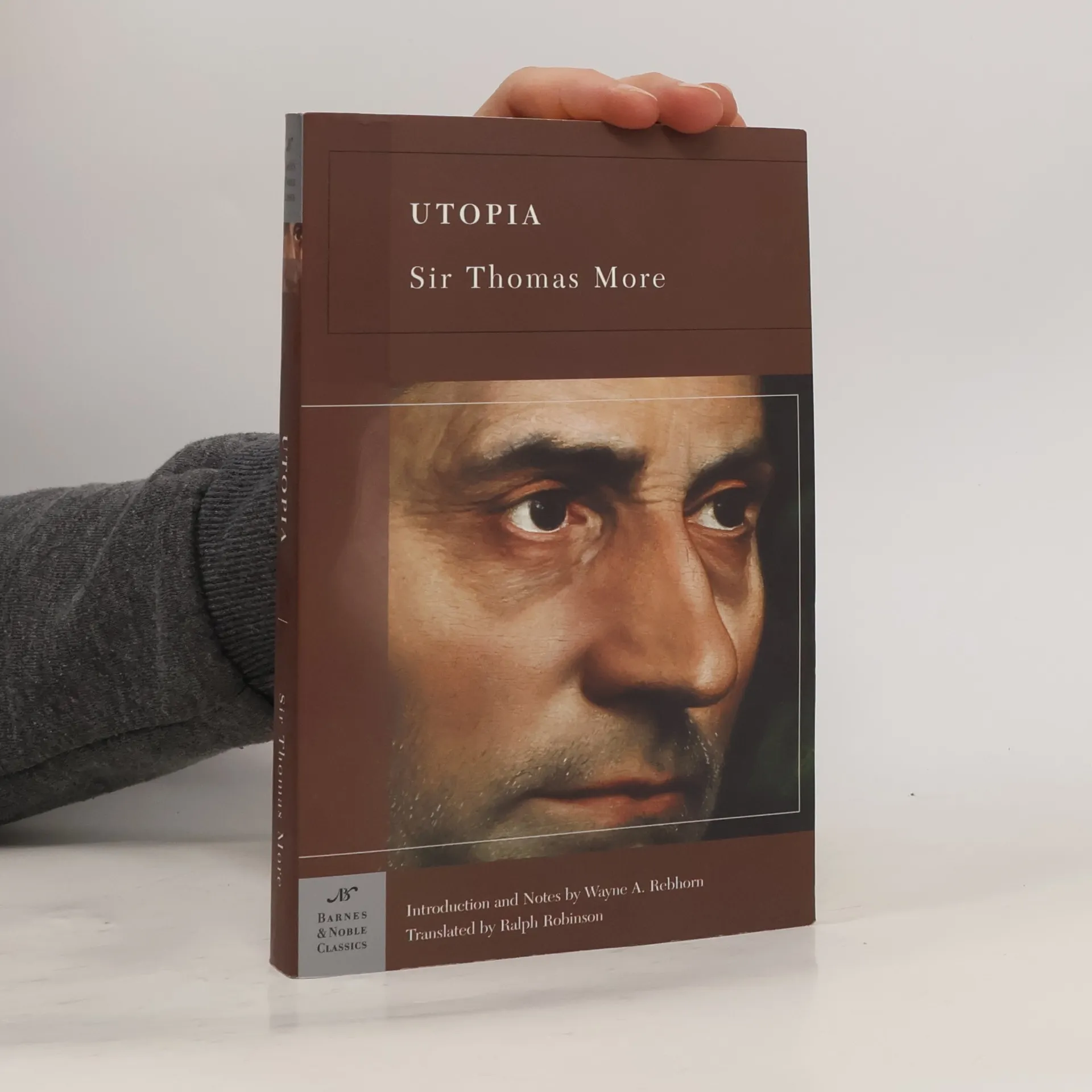
Utopia , by Sir Thomas More , is part of the Barnes & Noble Classics series, which offers quality editions at affordable prices to the student and the general reader, including new scholarship, thoughtful design, and pages of carefully crafted extras. Here are some of the remarkable features of Barnes & Noble Classics : New introductions commissioned from today's top writers and scholars Biographies of the authors Chronologies of contemporary historical, biographical, and cultural events Footnotes and endnotes Selective discussions of imitations, parodies, poems, books, plays, paintings, operas, statuary, and films inspired by the work Comments by other famous authors Study questions to challenge the reader's viewpoints and expectations Bibliographies for further reading Indices & Glossaries, when appropriate All editions are beautifully designed and are printed to superior specifications; some include illustrations of historical interest. Barnes & Noble Classics pulls together a constellation of influences—biographical, historical, and literary—to enrich each reader's understanding of these enduring works. One of the most influential books in the Western philosophical and literary tradition, Sir Thomas More ’s Utopia appeared in 1516. The formidable Henry VIII had recently assumed the throne in England, and conflicting ideas about religion were fueling the Reformation throughout Europe. A scathing satire, Utopia was hugely successful and vaulted More to the forefront of the growing humanist movement. The story of Utopia is told by a mysterious sailor named Raphael Hythloday, who travels to the New World with the Italian explorer Vespucci and remains at a fort built at the farthest point reached. From there, he discovers a strange island kingdom named Utopia, a pagan and communist city-state in which language, social customs, dress, architecture, and education are identical throughout the country’s fifty-four cities. The Utopians have eliminated wealth, the nobility, and currency. Labor and goods are distributed equally and property is held in common. And there are no monasteries, alehouses, or academies to tempt a person to withdraw from society. Given More’s satiric leanings and eventual execution, is Utopia simply an attack on Europe’s wickedness? Or is it a philosophical tract extolling the ideal way to live? Ultimately, Utopia navigates a course between the desire to create perfection and the pragmatic understanding that perfection, given the fallibility of mankind, is impossible. Wayne A. Rebhorn is Celanese Centennial Professor of English at the University of Texas at Austin. He has written extensively on Renaissance literature in English, Italian, French, Spanish, and Latin, on authors from Boccaccio through More and Shakespeare down to Milton.
Mit seinem Buch über die erdachte Insel Utopia – ihr Name wurde erst später als ›Utopie‹ zum übergeordneten Gattungsbegriff für fiktive Staats- und Gesellschaftsentwürfe – hat Thomas Morus (1478–1535) einen echten Klassiker der politischen Philosophie geschaffen. Offen bleibt bis heute: Projizierte der Autor nur seine Phantasien in die damals frisch entdeckte Neue Welt, wollte er ein veritables Staatsmodell entwerfen oder gar zu politischen Reformen in England aufrufen? Es kommt auf den Standpunkt an: sei er nun sozialistisch, heidnisch, machtpolitisch, kapitalistisch, reformerisch oder idealstaatlich.