

Gratisversand in ganz Deutschland!
Bookbot

Robert de Beaugrande

    1. Januar 1946 – 1. Juni 2008

    Robert-Alain de Beaugrande war eine führende Persönlichkeit in der Textlinguistik und Diskursanalyse und prägte maßgeblich die kontinentale Tradition in diesem Fach. Er war maßgeblich an der Entwicklung der Wiener Schule der Textlinguistik beteiligt und spielte eine bedeutende Rolle bei der Konsolidierung der kritischen Diskursanalyse. Seine Arbeit betonte die Vernetzung von Sprache mit ihrem sozialen und kognitiven Kontext. Beaugrandes Erkenntnisse beeinflussen bis heute, wie wir die Struktur und Funktion von Texten untersuchen und verstehen.

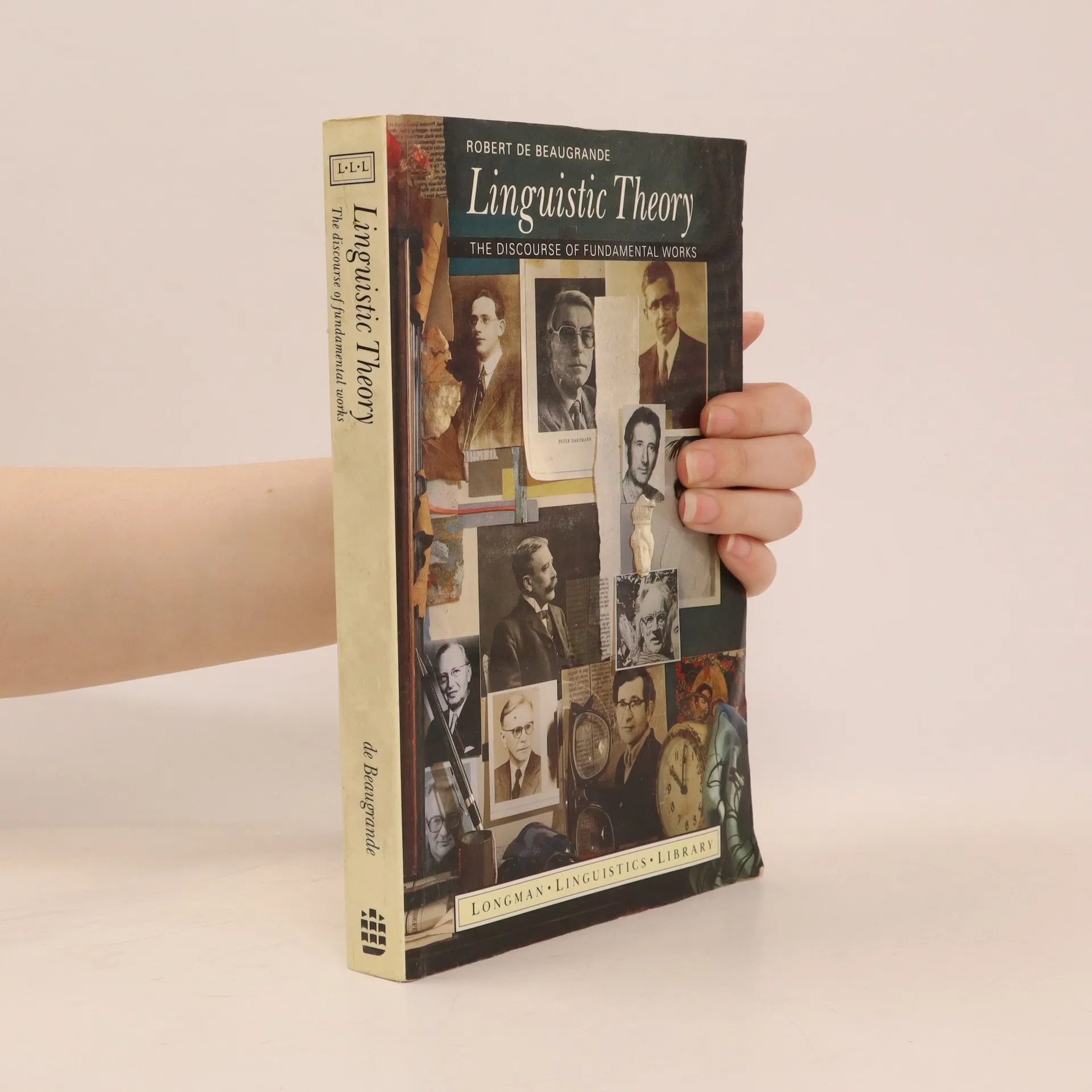
    Linguistic Theory. The Discourse of Fundamental Works
    Einführung in die Textlinguistik
    • Einführung in die Textlinguistik

      • 290 Seiten
      • 11 Lesestunden
      3,0(2)Abgeben

      Die Buchreihe Konzepte der Sprach- und Literaturwissenschaft gibt Aufschluss über Prinzipien, Probleme und Verfahrensweisen philologischer Forschung im weitesten Sinne und dient einer Bestimmung des Standorts der Linguistik und Literaturwissenschaft. Die Reihe übergreift Einzelsprachen und Einzelliteraturen. Sie stellt sich in den Dienst der Reflexion und Grundlegung einer allgemeinen Sprach- und Literaturwissenschaft. Die Bände sind zum Teil informierende Einführungen, zum Teil wissenschaftliche Diskussionsbeiträge.

      Einführung in die Textlinguistik
    • In Linguistic Theory , Robert de Beaugrande analyses linguistic theories not as abstract ideas or theses, but as the process and product of theoretical discourse. He argues that the best documentation of this discourse can be found in the 'fundamental' works of major linguists from Ferdinand de Saussure to Teun van Dijk and Walter Kintsch. He therefore employs the highly unusual strategy of a close reading of these works as discourse performances and strives to uncover their main points and characteristic moves in the linguist's own words.Through this approach, the reader is able to appreciate and understand the variety and controversy among linguistic theories as they have emerged and developed in interaction with each other. Special scrutiny is allocated to the issue of how far the active practice of the linguists followed their own theories and proposals, and why. The author concludes by assessing the prospects for linguistics to be drawn from the retrospect in the previous chapters.

      Linguistic Theory. The Discourse of Fundamental Works