
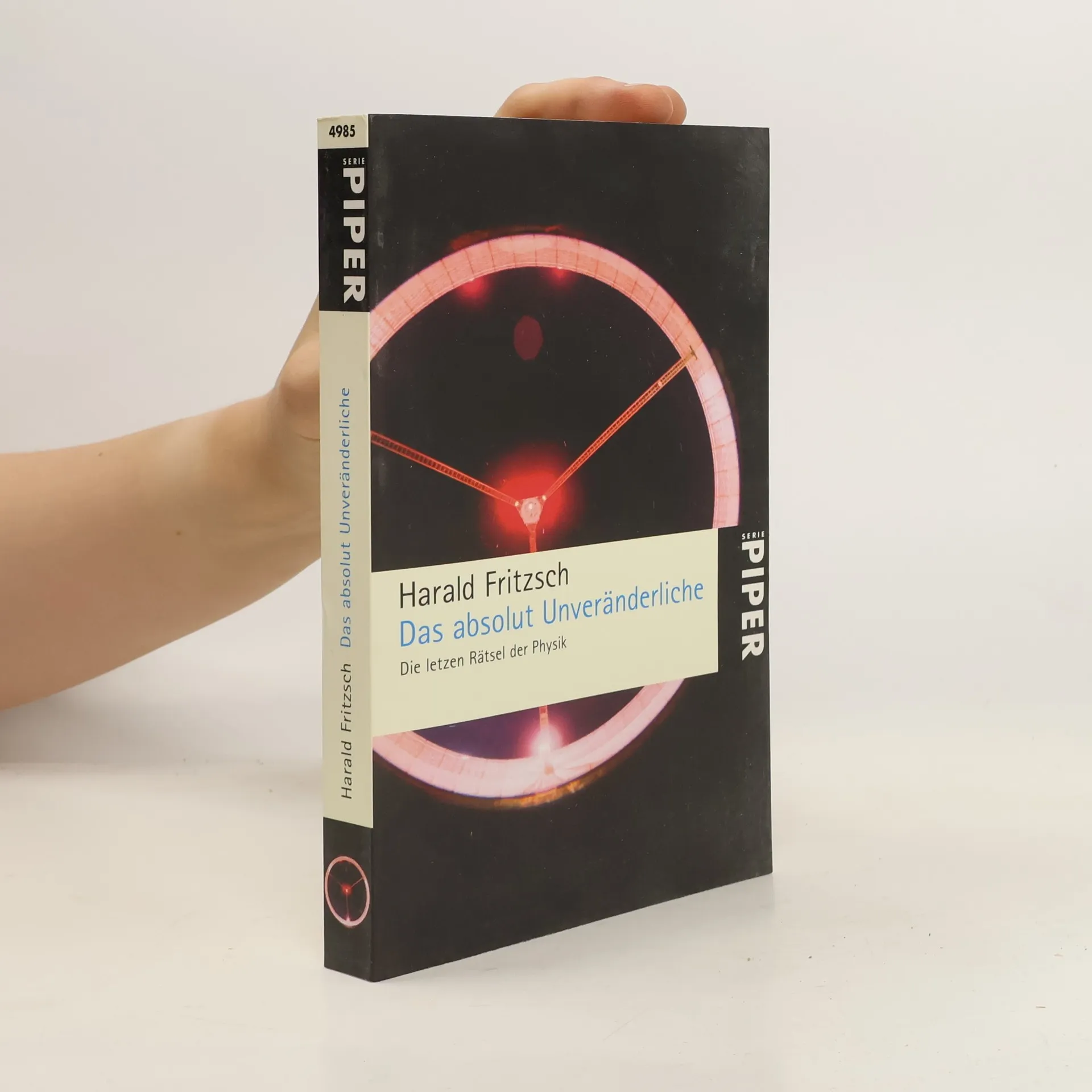
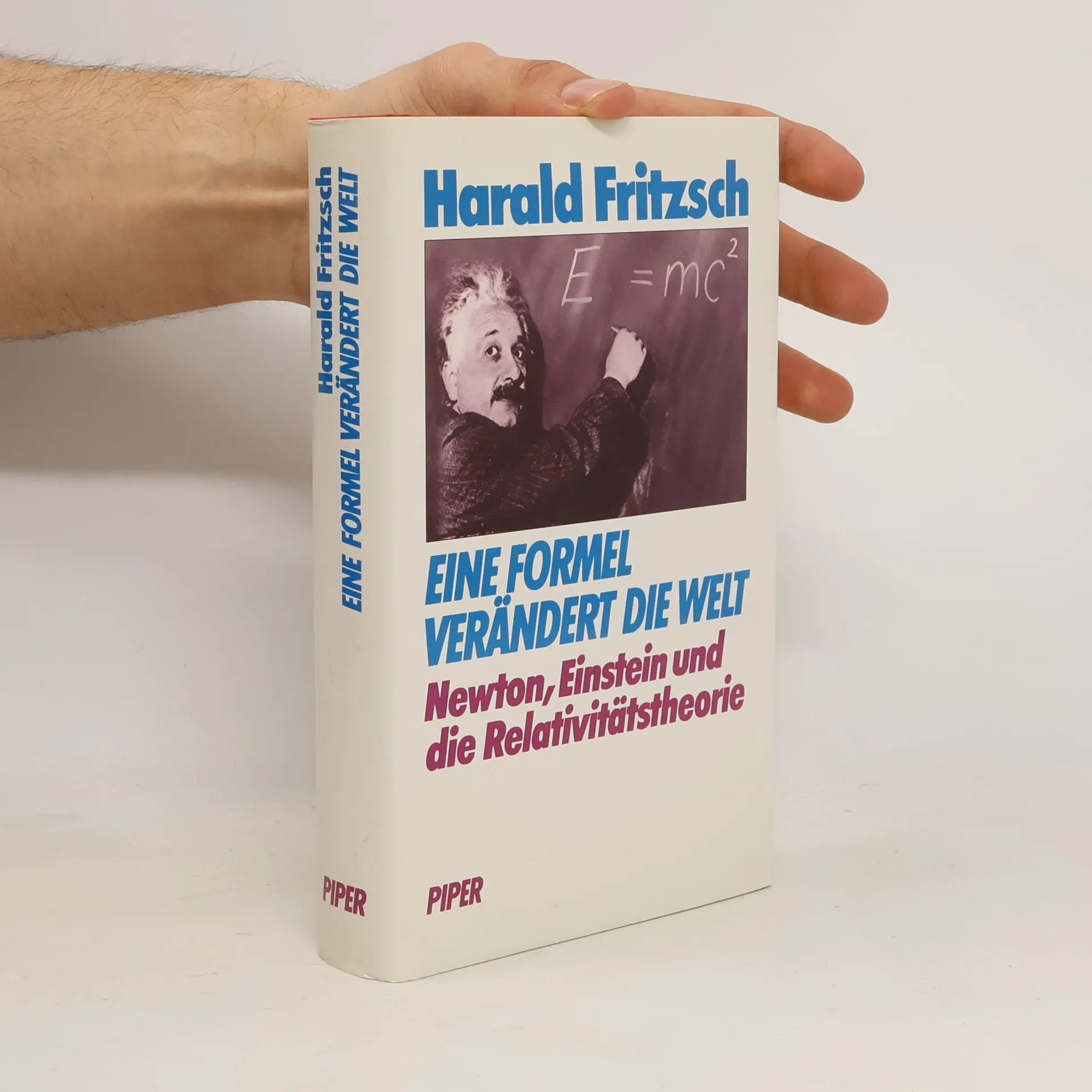

Dieser theoretische Physiker ist bekannt für seine grundlegenden Beiträge zur Quarktheorie und zur Entwicklung der Quantenchromodynamik. Seine Arbeit an der großen Vereinheitlichung des Standardmodells der Teilchenphysik stellt einen bedeutenden Schritt zum Verständnis der fundamentalen Kräfte des Universums dar. Er beschäftigte sich eingehend mit zusammengesetzten Modellen von Leptonen und Quarks und untersuchte deren Massenmatrizen.
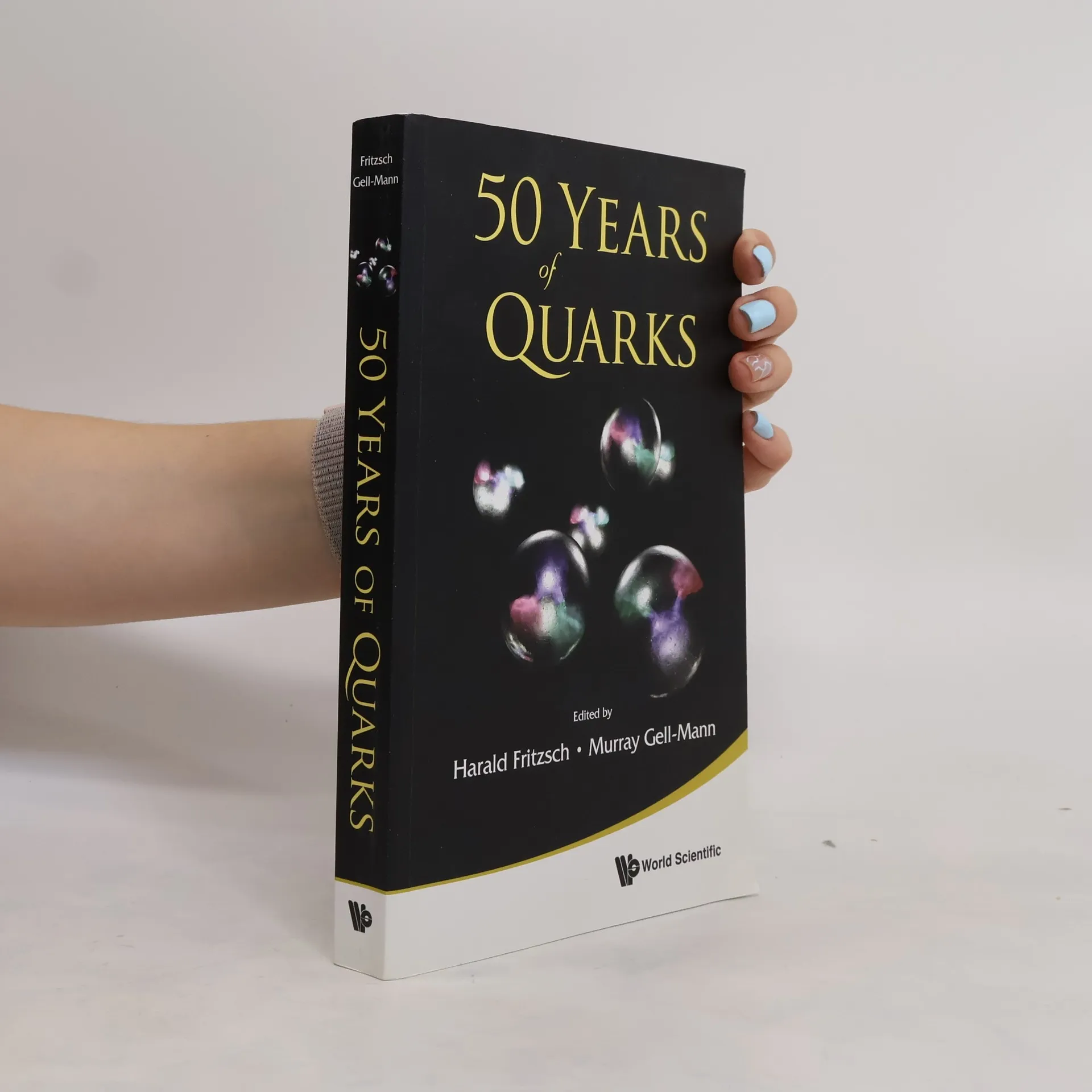
Murray Gell-Mann, a Nobel Prize-winning physicist, is renowned for his groundbreaking contributions to elementary particle physics, particularly the introduction of quarks. His collaborative work with H. Fritzsch on Quantum Chromodynamics has significantly advanced the understanding of fundamental forces and particles. This book delves into Gell-Mann's theories, exploring their impact on modern physics and how they reshaped our comprehension of the universe's building blocks.
Focusing on the foundations of particle physics, this book delves into the Standard Model, which explains the behavior of electrons and quarks through quantum field theories. It begins with classical and relativistic mechanics before exploring classical scalar fields, electrodynamics, and quantum mechanics. The text further elaborates on the quantization processes for scalar, spinor, and vector fields, providing a comprehensive understanding of the underlying principles that govern the dynamics of matter in the universe.
The groundbreaking discovery of gravitational waves in February 2016, resulting from the collision of two black holes 1.3 billion years ago, marked a significant milestone in physics, affirming Einstein's century-old predictions. Detected by the Laser Interferometer Gravitational-Wave Observatory (LIGO), this event raises critical questions about integrating gravitational interactions into the Standard Theory of particle physics, which currently explains electroweak and strong interactions in the universe.
The book delves into the limitations of the Standard Theory of Particle Physics, exploring unresolved questions such as the integration of gravity, the nature of particle masses, and the characteristics of neutrinos. It examines the implications of the newly discovered boson at CERN and considers the possibility of new symmetries, including broken supersymmetry. Additionally, it raises fundamental inquiries about the structure of leptons and quarks, questioning whether they are point-like or composite, and if they might be one-dimensional objects like superstrings at extremely small distances.
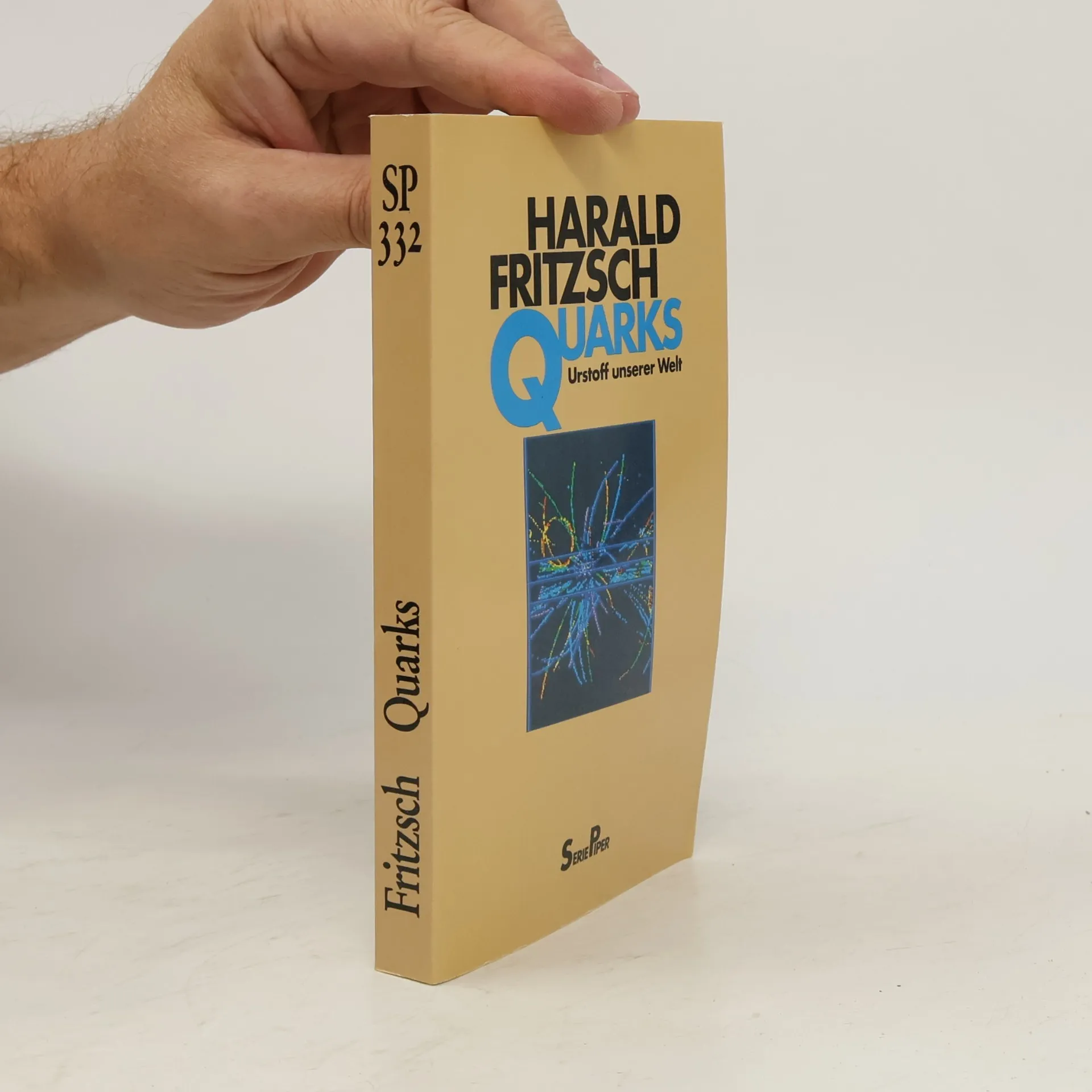
Today it is known that the atomic nuclei are composed of smaller constituents, the quarks. A quark is always bound with two other quarks, forming a baryon or with an antiquark, forming a meson. The quark model was first postulated in 1964 by Murray Gell-Mann — who coined the name “quark” from James Joyce's novel Finnegans Wake — and by George Zweig, who then worked at CERN. In the present theory of strong interactions — Quantum Chromodynamics proposed by H Fritzsch and Gell-Mann in 1972 — the forces that bind the quarks together are due to the exchange of eight gluons.On the 50th anniversary of the quark model, this invaluable volume looks back at the developments and achievements in the elementary particle physics that eventuated from that beautiful model. Written by an international team of distinguished physicists, each of whom have made major developments in the field, the volume provides an essential overview of the present state to the academics and researchers.
Neutrino physics is explored through the implications of neutrino oscillations, highlighting their small mass and mixing with charged leptons. The book compiles insights from prominent researchers, addressing critical questions such as the nature of neutrino masses—whether Dirac or Majorana—and the significance of oscillation experiments. Topics include CP-violation in leptons, texture zero mass matrices, and the role of neutrinos in astrophysics and cosmology, reflecting discussions from a recent conference on the state of this intriguing field.
Um zu verstehen, warum alles, was uns umgibt, existiert – Menschen, Tiere, Pflanzen, Planeten, das Universum – müssen wir unser Auge vom Riesiggroßen auf das Winzigkleine lenken. Vom Universum auf das Atom. Vom Makrokosmos auf den Mikrokosmos. Dort suchen die Physiker nach der Formel, die den Aufbau der Welt erklären kann. Im Mikrokosmos gibt es unvorstellbar kleine Teilchen, so klein, dass man sie niemals sehen wird, sondern ihre Existenz nur berechnen kann. Hier befinden wir uns im Reich der sonderbaren Quarks, hier tüftelt die moderne Physik am sogenannten Standardmodell, an der Weltformel, die mit den kleinsten Teilchen das Größte erklären kann, nämlich 'alles'. Was die moderne Teilchenphysik ist und wo die letzten Fragen offen bleiben – das alles erklärt der Ausnahmephysiker und Bestsellerautor Harald Fritzsch in leichter Sprache und mit feinem Witz. Er lässt Albert Einstein, Isaac Newton, Murray Gell-Mann und sein Alter Ego zu einem fiktiven Gespräch zusammenkommen: Bei Filet Mignon und teurem Rotwein entspinnt sich eine erhellende Diskussion über den Mikrokosmos und am Ende versteht nicht nur Sir Isaac Newton die neuesten Erkenntnisse der modernen Physik, sondern auch der Leser
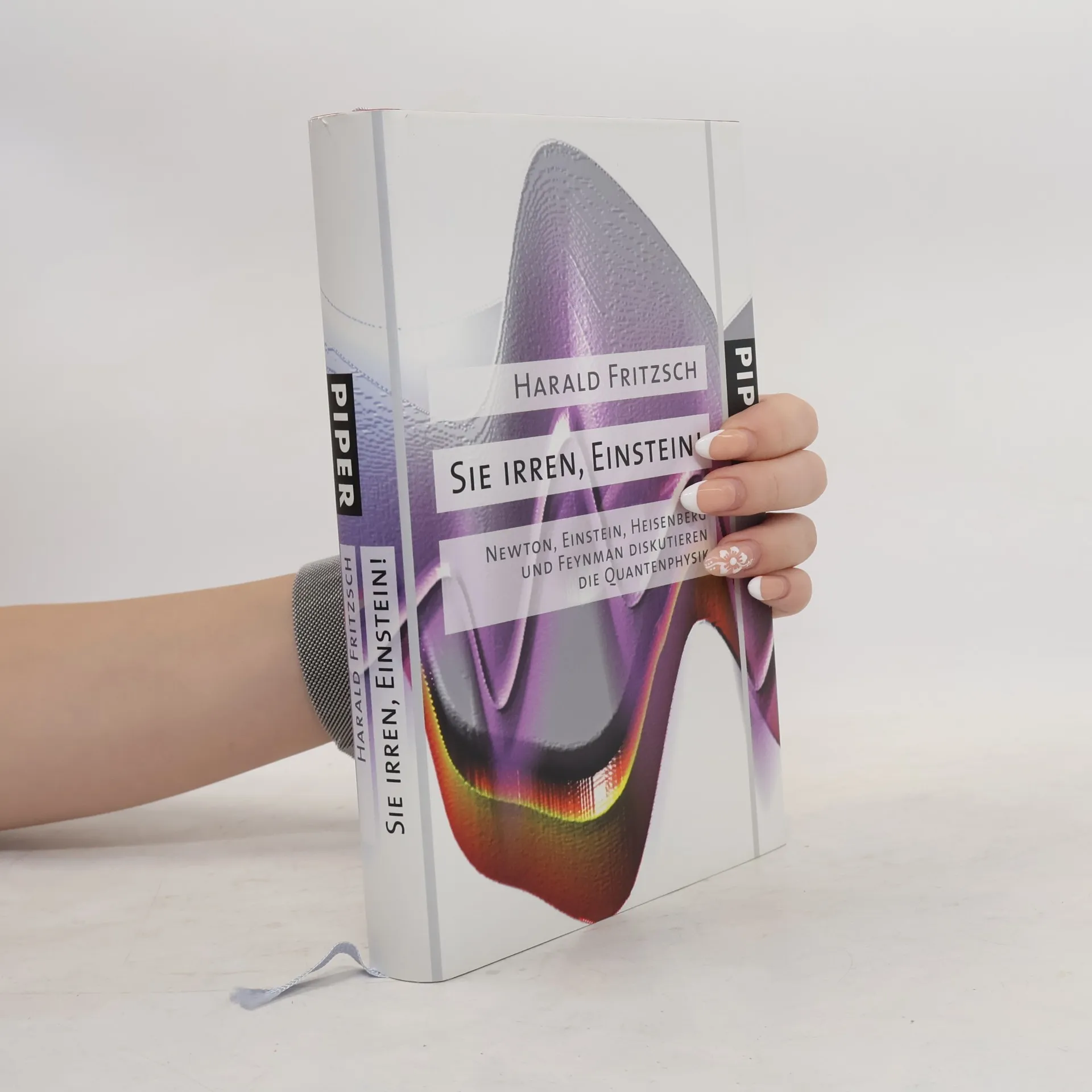
The book presents an imaginative dialogue among five prominent physicists, including Heisenberg, Feynman, and Newton, exploring the complexities of quantum physics. Through the moderation of Adrian Haller, the discussions delve into the origins of quantum theory, its significance in atomic physics, and its impact on everyday life. The format of questions and answers makes complex concepts accessible to non-physicists, offering insights into the contrasting views of these scientific giants on the nature of reality.
Murray Gell-Mann's groundbreaking contributions to physics are meticulously compiled in this volume, showcasing key concepts such as the strangeness quantum number, the renormalization group, and the quark model. His pivotal work on the SU(3) symmetry and quantum chromodynamics (QCD) is highlighted, alongside important collaborations with notable physicists like Feynman. Additionally, the collection includes Gell-Mann's reflections on the evolution of particle physics during the mid-20th century, making it an essential resource for understanding his impact on the field.
Exploring the origins and implications of fundamental physical constants, this book features an imaginative dialogue among Isaac Newton, Albert Einstein, and a contemporary physicist. Through their conversation, readers are introduced to key concepts in atomic, nuclear, and particle physics, as well as astrophysics and cosmology. The narrative not only elucidates the nature of constants like the speed of light and Newton's gravity but also engages with profound questions about their constancy over time and space, making complex topics accessible and entertaining.