


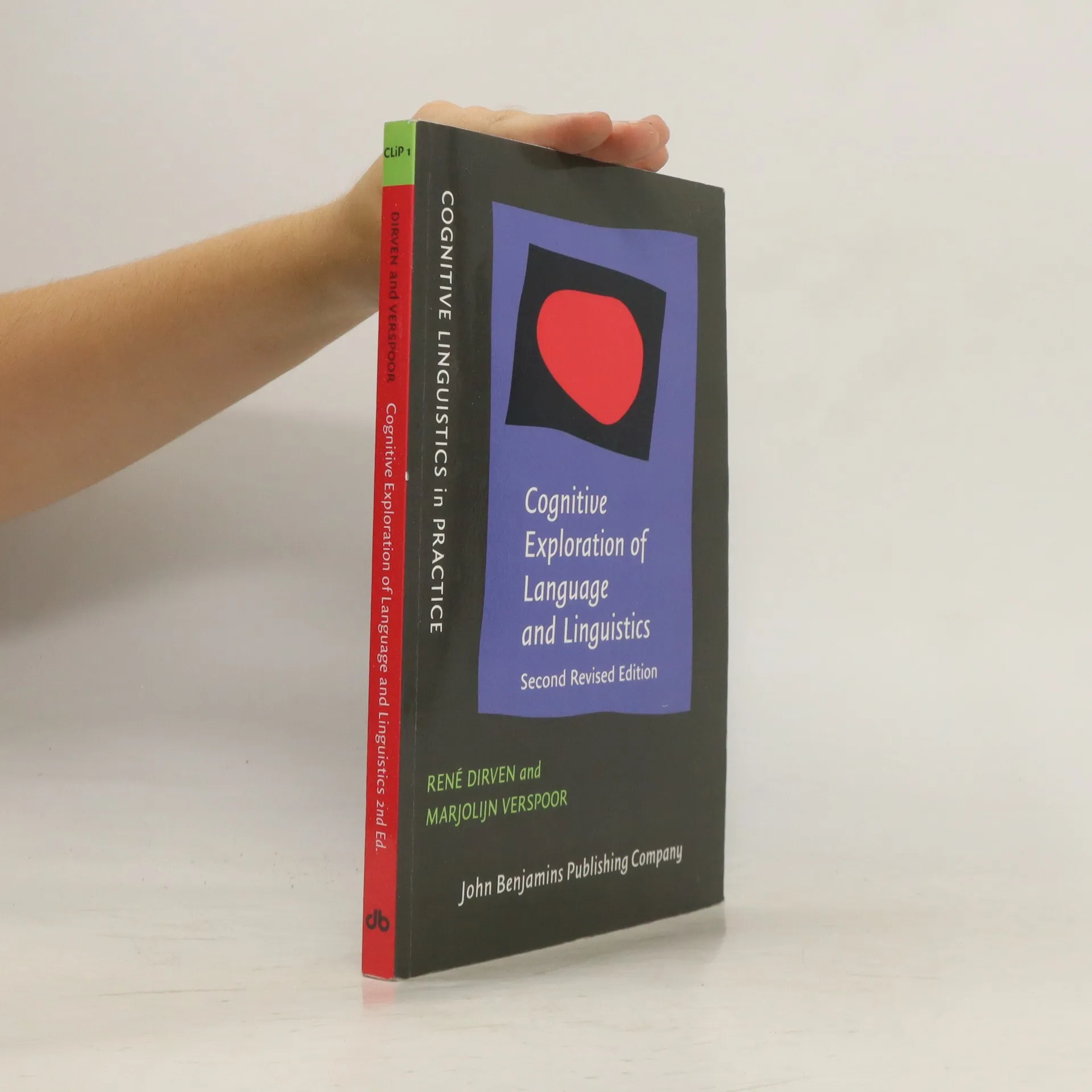
Cognitive English Grammar
- 374 Seiten
- 14 Lesestunden
This textbook is designed for courses in English and general linguistics, introducing cognitive linguistic theory and demonstrating how Cognitive Grammar enhances our understanding of English grammar. Central to its approach are the concepts of motivation and meaningfulness. The book is divided into four parts with 12 chapters, integrating recent cognitive approaches into a coherent model for analyzing key English constructions. Part I outlines the cognitive framework, including conceptual and linguistic categories, their situational combinations, cognitive operations, and the organization of conceptual structures into linguistic forms. Part II focuses on the category of things, exploring their linguistic representation as nouns and noun phrases, and how they are grounded in reality through reference, quantified by set and scalar quantifiers, and modified. Part III examines situations as temporal units, both internally as types and externally in relation to the time of speech, grounded in reality or potentiality. Part IV addresses situations as relational units, structuring them as sentences, with a focus on event schemas and the metaphorical extensions of space. The book provides extensive linguistic data and explanations, ensuring clarity through definitions, examples, a glossary, overviews, chapter summaries, suggestions for further reading, and study questions.