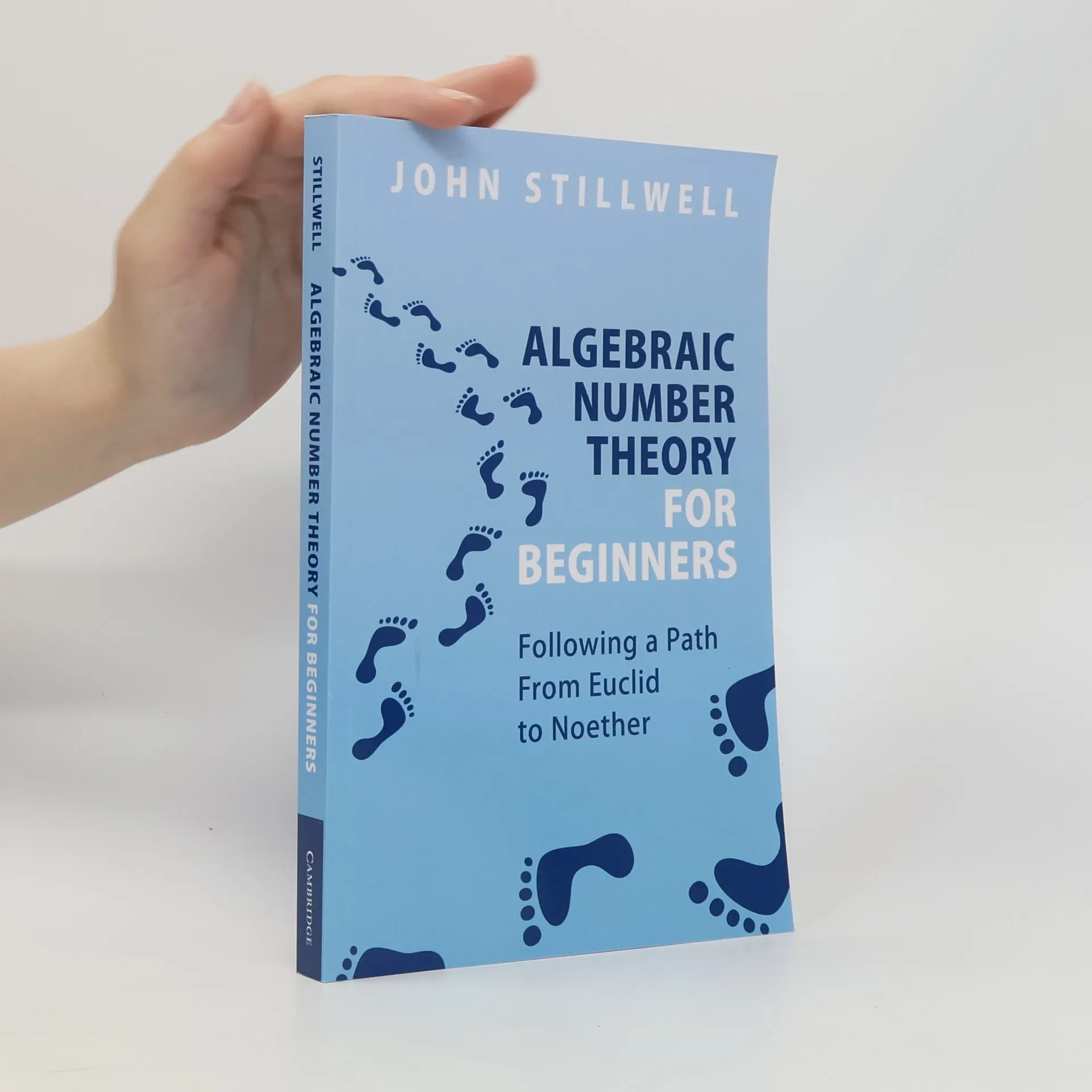
This book, meant for undergraduate mathematics students and teachers, introduces algebraic number theory through problems from ordinary number theory that can be solved with the help of algebraic numbers, using a suitable generalization of unique prime factorization. The material is motivated by weaving historical information throughout.
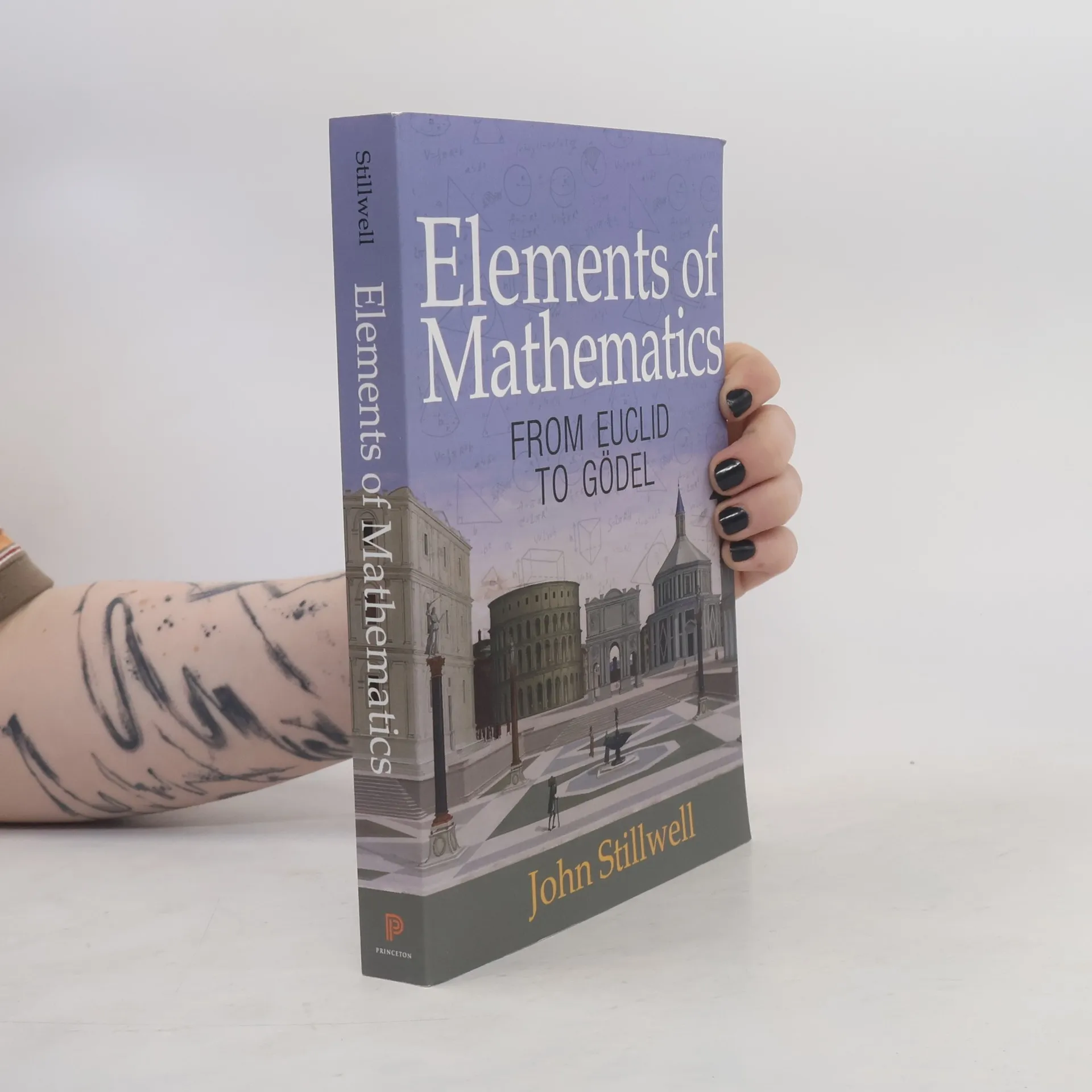
Exploring the evolution of proof, this book highlights its crucial role in shaping mathematical knowledge from ancient to modern times. It traces the journey from Euclid's geometry to the development of algebra and calculus, illustrating how proof methods have transformed. The discussion extends to number theory, non-Euclidean geometry, and logic, revealing the profound implications of proof on arithmetic and the limitations it imposes on theorem validation. Through historical episodes, it provides a fresh perspective on mathematics' foundational principles and its capacity for innovation.
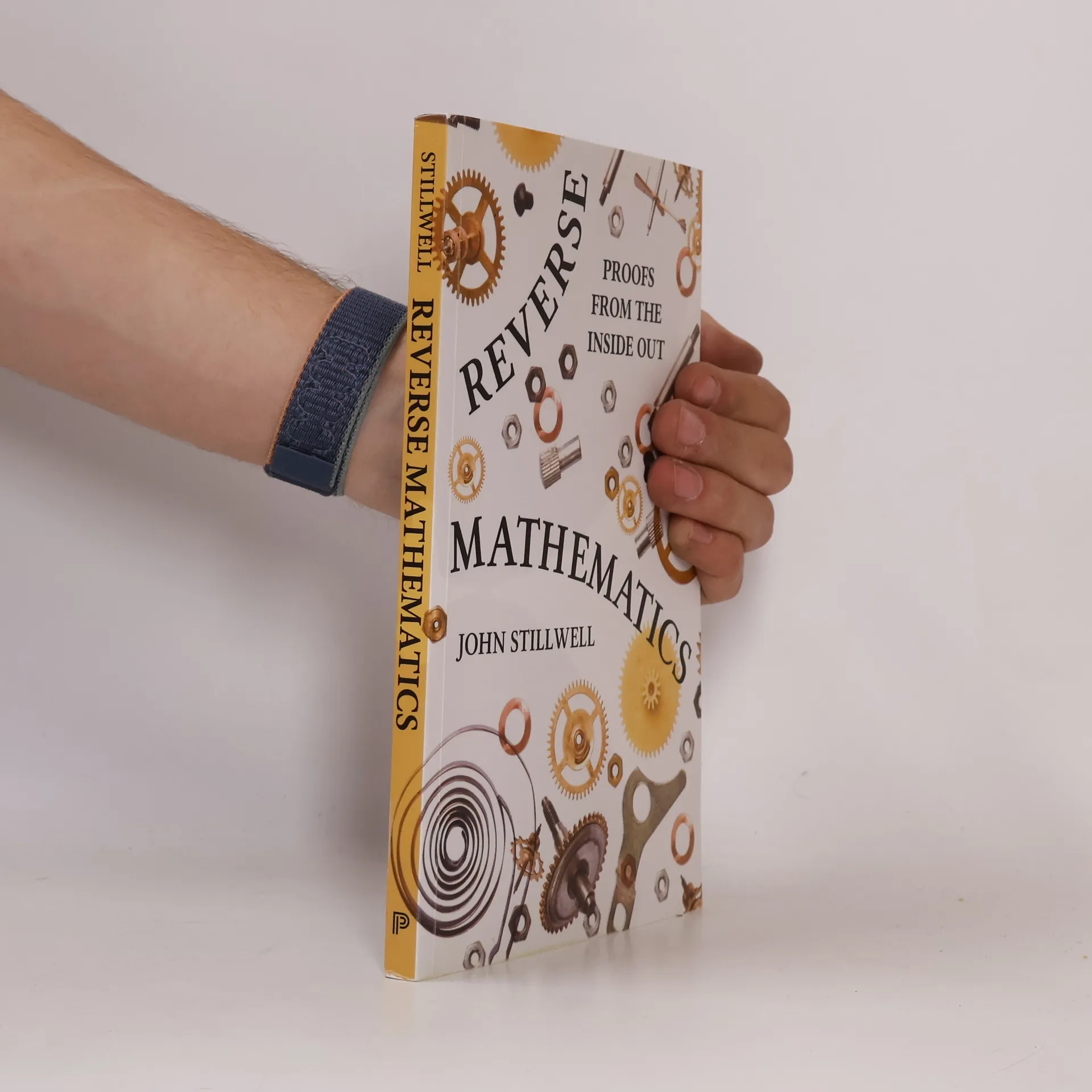
This volume presents reverse mathematics to a general mathematical audience for the first time. Stillwell gives a representative view of this field, emphasizing basic analysis--finding the "right axioms" to prove fundamental theorems--and giving a novel approach to logic. to logic.
Stillwell is . . . One of the better current mathematical authors: he writes clearly and engagingly, and makes more of an effort than most to provide historical detail and a sense of how various mathematical ideas tie in with one another. . . . The features we have learned to expect from Stillwell (including, but not limited to, excellent writing) are present in [Elements of Mathematics] as well.--MAA Reviews
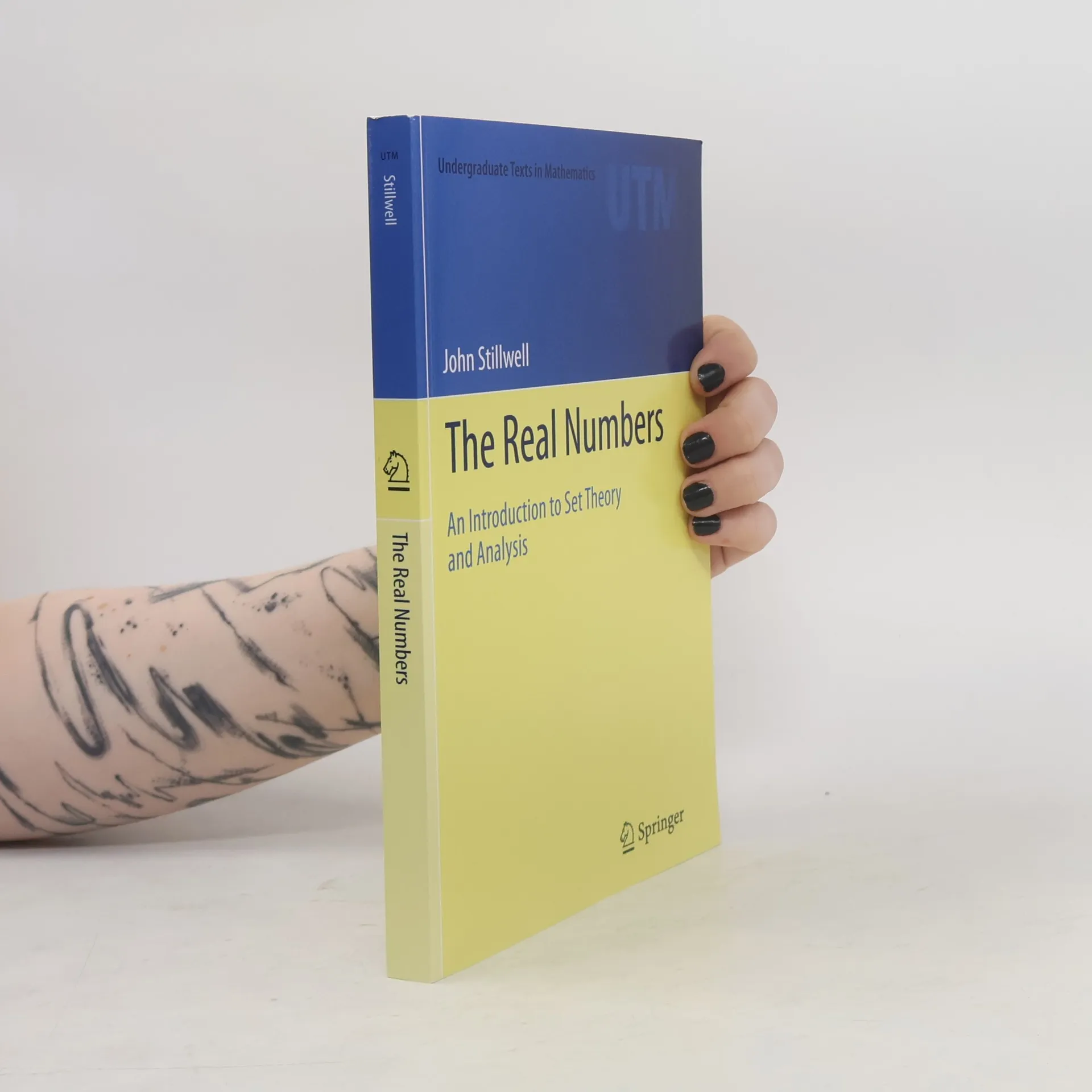
Linking set theory with analysis, this text offers a detailed exploration of the real numbers system. It provides a unique introduction to set theory while thoroughly explaining the fundamental concepts of analysis, filling a gap in standard curricula. The book aims to enhance understanding of both mathematical fields through its comprehensive approach.
Eine mathematische Reise zu den vielseitigen Auswirkungen der Unendlichkeit
248 Seiten
9 Lesestunden
In dem Buch erkundet der preisgekrönte Autor John Stillwell die Konsequenzen, die sich ergeben, wenn man die Unendlichkeit akzeptiert, und diese Konsequenzen sind vielseitig und überraschend. Der Leser benötigt nur wenig über die Schulmathematik hinausgehendes Hintergrundwissen; es reicht die Bereitschaft, sich mit ungewohnten Ideen auseinanderzusetzen. Stillwell führt den Leser sanft in die technischen Details von Mengenlehre und Logik ein, indem jedes Kapitel einem einzigen Gedankengang folgt, der mit einer natürlichen mathematischen Frage beginnt und dann anhand einer Abfolge von historischen Antworten nachvollzogen wird. Auf diese Weise zeigt der Autor, wie jede Antwort ihrerseits zu neuen Fragen führt, aus denen wiederum neue Begriffe und Sätze entstehen. Jedes Kapitel endet mit einem Abschnitt „Historischer Hintergrund“, der das Thema in den größeren Zusammenhang der Mathematik und ihrer Geschichte einordnet.
This book explores unique mathematical topics often overlooked in undergraduate courses, including the history of calculus and polynomial equations. The third edition introduces new chapters on simple groups and combinatorics, alongside enhanced sections and exercises, enriching students' understanding of mathematical ideas in context.
In this new textbook, acclaimed author John Stillwell presents a lucid introduction to Lie theory suitable for junior and senior level undergraduates. In order to achieve this, he focuses on the so-called "classical groups'' that capture the symmetries of real, complex, and quaternion spaces. These symmetry groups may be represented by matrices, which allows them to be studied by elementary methods from calculus and linear algebra. This naive approach to Lie theory is originally due to von Neumann, and it is now possible to streamline it by using standard results of undergraduate mathematics. To compensate for the limitations of the naive approach, end of chapter discussions introduce important results beyond those proved in the book, as part of an informal sketch of Lie theory and its history. John Stillwell is Professor of Mathematics at the University of San Francisco. He is the author of several highly regarded books published by Springer, including The Four Pillars of Geometry (2005), Elements of Number Theory (2003), Mathematics and Its History (Second Edition, 2002), Numbers and Geometry (1998) and Elements of Algebra (1994).
This book explores the history of mathematics from the perspective of the creative tension between common sense and the "impossible" as the author follows the discovery or invention of new concepts that have marked mathematical progress: - Irrational and Imaginary Numbers - The Fourth Dimension - Curved Space - Infinity and others The author puts these creations into a broader context involving related "impossibilities" from art, literature, philosophy, and physics. By imbedding mathematics into a broader cultural context and through his clever and enthusiastic explication of mathematical ideas the author broadens the horizon of students beyond the narrow confines of rote memorization and engages those who are curious about the place of mathematics in our intellectual landscape.
This book offers a collection of historical essays detailing a large variety of mathematical disciplines and issues; it’s accessible to a broad audience. This second edition includes new chapters on Chinese and Indian number theory, on hypercomplex numbers, and on algebraic number theory. Many more exercises have been added as well as commentary that helps place the exercises in context.