


Mehr zum Buch
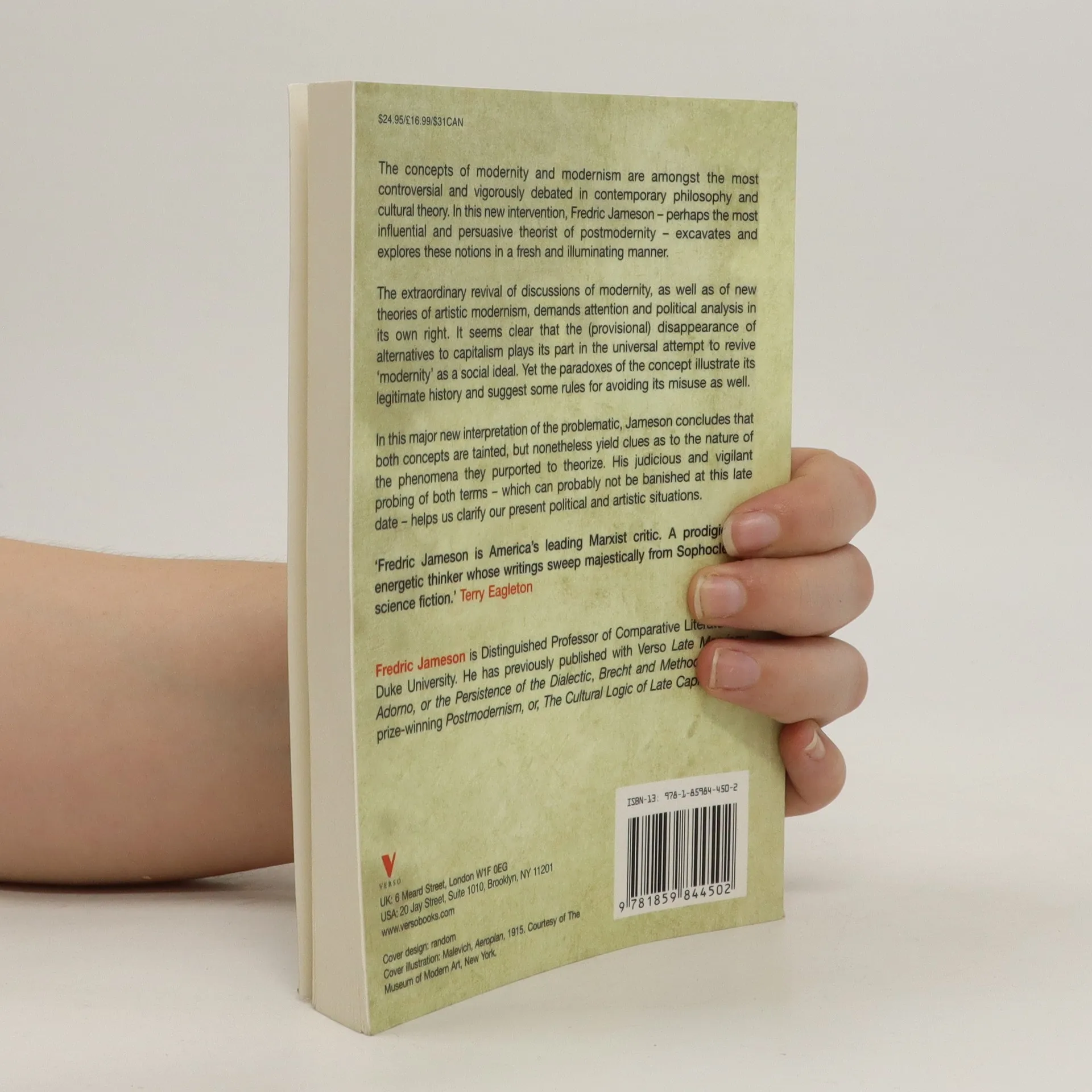
The concepts of modernity and modernism are amongst the most controversial and vigorously debated in contemporary philosophy and cultural theory. In this new intervention, Fredric Jameson—perhaps the most influential and persuasive theorist of postmodernity—excavates and explores these notions in a fresh and illuminating manner.The extraordinary revival of discussions of modernity, as well as of new theories of artistic modernism, demands attention in its own right. It seems clear that the (provisional) disappearance of alternatives to capitalism plays its part in the universal attempt to revive ‘modernity’ as a social ideal. Yet the paradoxes of the concept illustrate its legitimate history and suggest some rules for avoiding its misuse as well.In this major new interpretation of the problematic, Jameson concludes that both concepts are tainted, but nonetheless yield clues as to the nature of the phenomena they purported to theorize. His judicious and vigilant probing of both terms—which can probably not be banished at this late date—helps us clarify our present political and artistic situations.


Buchkauf
A Singular Modernity: Essay on the Ontology of the Present, Fredric Jameson
- Sprache

- Erscheinungsdatum
- 2009
- Einband
- (Paperback)
Hier könnte deine Bewertung stehen.
- Sprache
- Englisch
- Autor*innen
- Fredric Jameson
- Verlag
- Verso
- Erscheinungsdatum
- 2009
- Einband
- Paperback
- ISBN10
- 1859844502
- ISBN13
- 9781859844502
- Reihe
- Schlagwörter
- Sachbücher, Kunst & Kultur, Sozialwissenschaften, Literaturwissenschaft, Kunst, Philosophie, Kultur und Gesellschaft, Literarische Kritik, Wissenschaftliche Theorien, Kritik
- Bewertung
- 3,8 von 5 Sternen
- Beschreibung
- The concepts of modernity and modernism are amongst the most controversial and vigorously debated in contemporary philosophy and cultural theory. In this new intervention, Fredric Jameson—perhaps the most influential and persuasive theorist of postmodernity—excavates and explores these notions in a fresh and illuminating manner.The extraordinary revival of discussions of modernity, as well as of new theories of artistic modernism, demands attention in its own right. It seems clear that the (provisional) disappearance of alternatives to capitalism plays its part in the universal attempt to revive ‘modernity’ as a social ideal. Yet the paradoxes of the concept illustrate its legitimate history and suggest some rules for avoiding its misuse as well.In this major new interpretation of the problematic, Jameson concludes that both concepts are tainted, but nonetheless yield clues as to the nature of the phenomena they purported to theorize. His judicious and vigilant probing of both terms—which can probably not be banished at this late date—helps us clarify our present political and artistic situations.