




Parameter
- 816 Seiten
- 29 Lesestunden
Mehr zum Buch
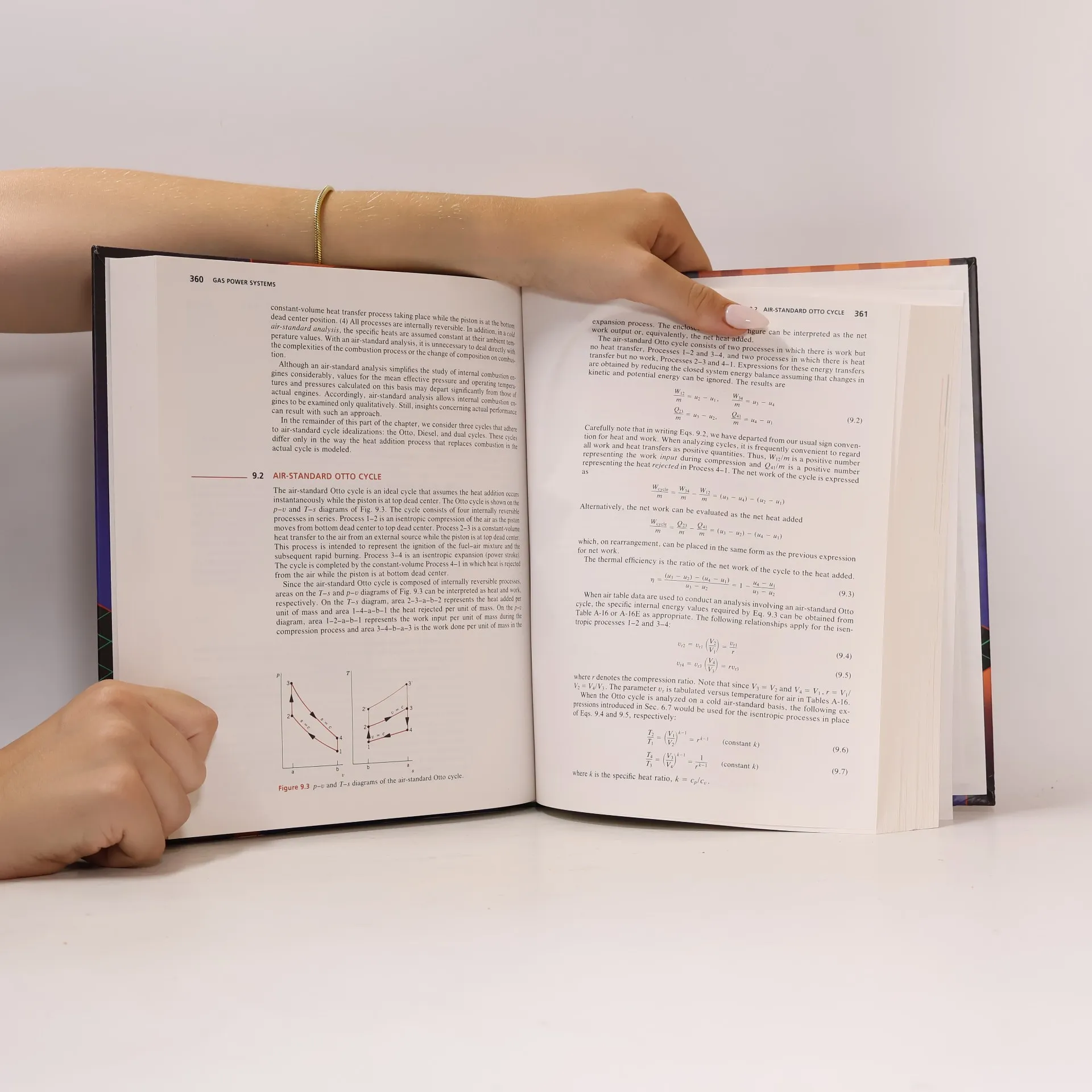
Using a classical viewpoint, this Second Edition offers a comprehensive treatment of engineering thermodynamics in order to provide a sound basis for subsequent courses in heat transfer and fluid mechanics and to prepare students to use thermodynamics in professional practice. New features include more than 1300 end-of-chapter problems ranging from confidence-building exercises to more challenging issues that may involve systems with several components, including numerous problems requiring the use of a computer; over 100 design and open-ended problems which are intended as brief design experiences affording students opportunities to develop their engineering judgment and creativity; the International Temperature Scale and refrigerant material; plus interactive software designed to reinforce important ideas and hone students' problem-solving skills.


Buchkauf
Fundamentals Of Engineering Thermodynamics: Second Edition, Michael J. Moran, Howard N. Shapiro
- Sprache

- Erscheinungsdatum
- 1992
- Einband
- (Hardcover)
Hier könnte deine Bewertung stehen.
- Sprache
- Englisch
- Autor*innen
- Michael J. Moran, Howard N. Shapiro
- Verlag
- Wiley
- Erscheinungsdatum
- 1992
- Einband
- Hardcover
- Seitenzahl
- 816
- ISBN10
- 0471539848
- ISBN13
- 9780471539841
- Reihe
- Schlagwörter
- Sachbücher, Lehrbücher, Technologie & Industrie, Naturwissenschaften, Handbücher und Anleitungen, Wissenschaft, Technologie, Physik-Lehrbücher, Maschinenbau
- Bewertung
- 4 von 5 Sternen
- Beschreibung
- Using a classical viewpoint, this Second Edition offers a comprehensive treatment of engineering thermodynamics in order to provide a sound basis for subsequent courses in heat transfer and fluid mechanics and to prepare students to use thermodynamics in professional practice. New features include more than 1300 end-of-chapter problems ranging from confidence-building exercises to more challenging issues that may involve systems with several components, including numerous problems requiring the use of a computer; over 100 design and open-ended problems which are intended as brief design experiences affording students opportunities to develop their engineering judgment and creativity; the International Temperature Scale and refrigerant material; plus interactive software designed to reinforce important ideas and hone students' problem-solving skills.