


Mehr zum Buch
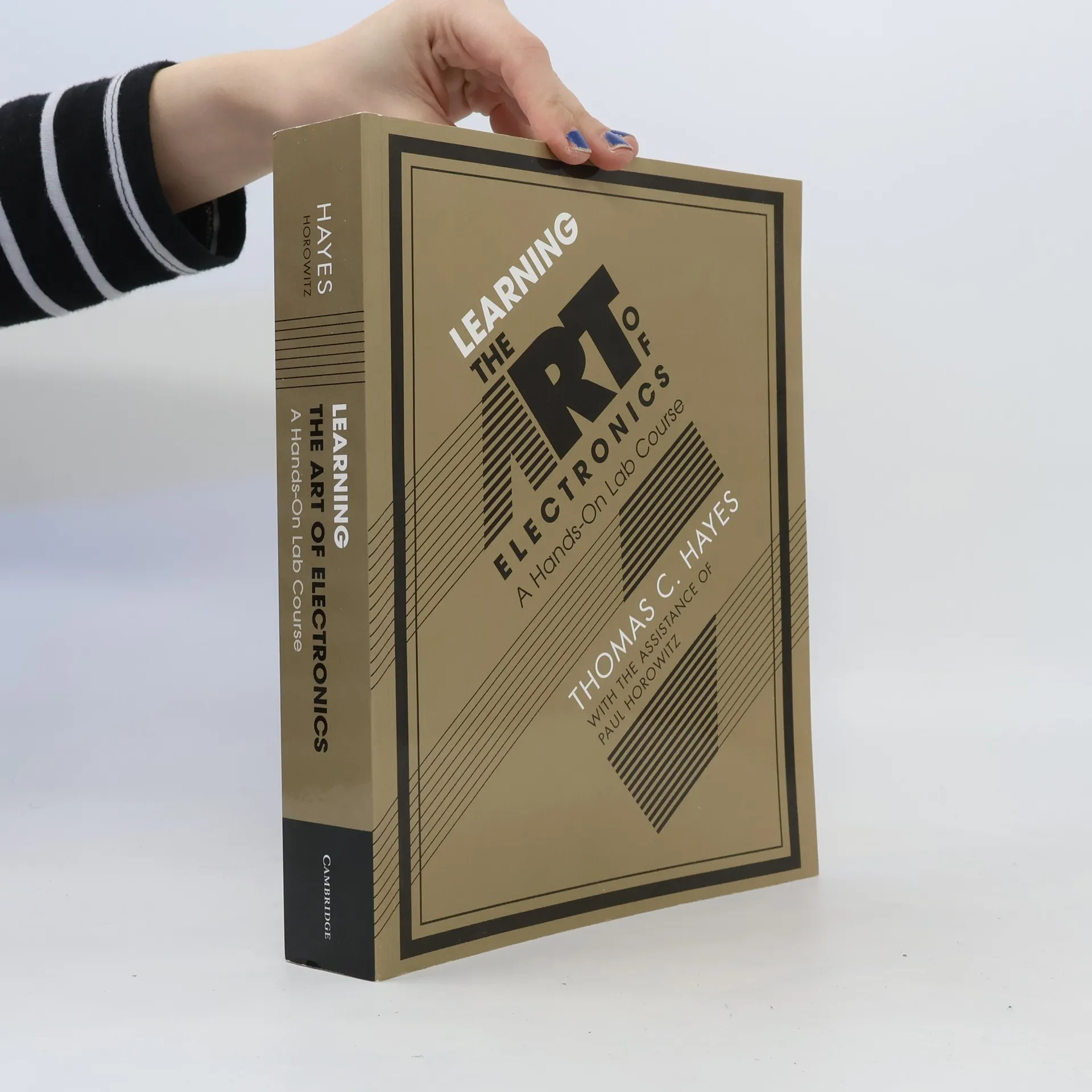
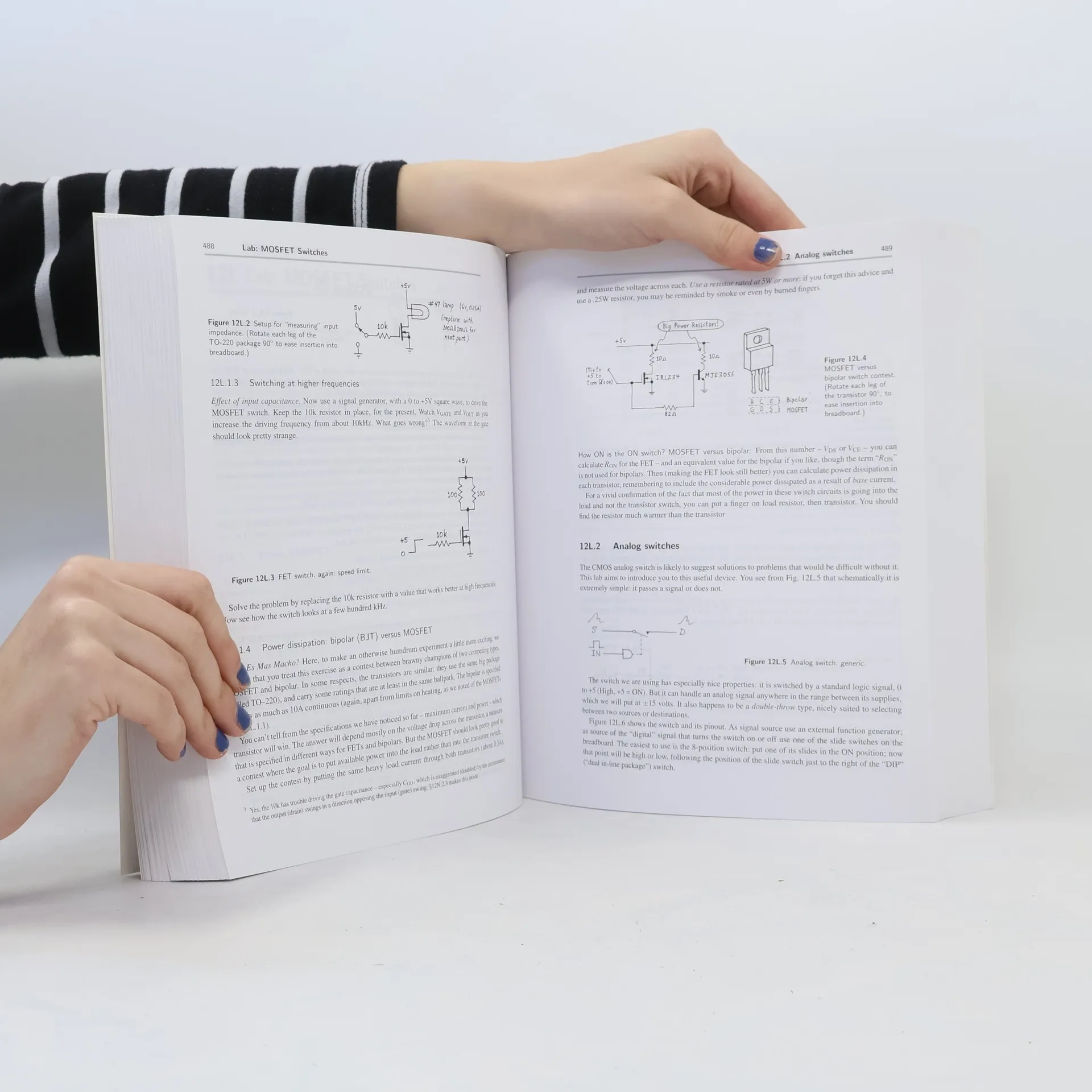
This introduction to circuit design is unusual in several respects. First, it offers not just explanations, but a full course. Each of the twenty-five sessions begins with a discussion of a particular sort of circuit followed by the chance to try it out and see how it actually behaves. Accordingly, students understand the circuit's operation in a way that is deeper and much more satisfying than the manipulation of formulas. Second, it describes circuits that more traditional engineering introductions would postpone: on the third day, we build a radio receiver; on the fifth day, we build an operational amplifier from an array of transistors. The digital half of the course centers on applying microcontrollers, but gives exposure to Verilog, a powerful Hardware Description Language. Third, it proceeds at a rapid pace but requires no prior knowledge of electronics. Students gain intuitive understanding through immersion in good circuit design.
Buchkauf
Learning the Art of Electronics, Paul Horowitz, Thomas C. Hayes
- Sprache

- Erscheinungsdatum
- 2016
- Einband
- (Paperback)
Hier könnte deine Bewertung stehen.
- Titel
- Learning the Art of Electronics
- Sprache
- Englisch
- Autor*innen
- Paul Horowitz, Thomas C. Hayes
- Erscheinungsdatum
- 2016
- Einband
- Paperback
- Seitenzahl
- 1141
- ISBN10
- 0521177235
- ISBN13
- 9780521177238
- Reihe
- Schlagwörter
- Universitätslehrbücher
- Bewertung
- 4,7 von 5 Sternen
- Beschreibung
- This introduction to circuit design is unusual in several respects. First, it offers not just explanations, but a full course. Each of the twenty-five sessions begins with a discussion of a particular sort of circuit followed by the chance to try it out and see how it actually behaves. Accordingly, students understand the circuit's operation in a way that is deeper and much more satisfying than the manipulation of formulas. Second, it describes circuits that more traditional engineering introductions would postpone: on the third day, we build a radio receiver; on the fifth day, we build an operational amplifier from an array of transistors. The digital half of the course centers on applying microcontrollers, but gives exposure to Verilog, a powerful Hardware Description Language. Third, it proceeds at a rapid pace but requires no prior knowledge of electronics. Students gain intuitive understanding through immersion in good circuit design.