

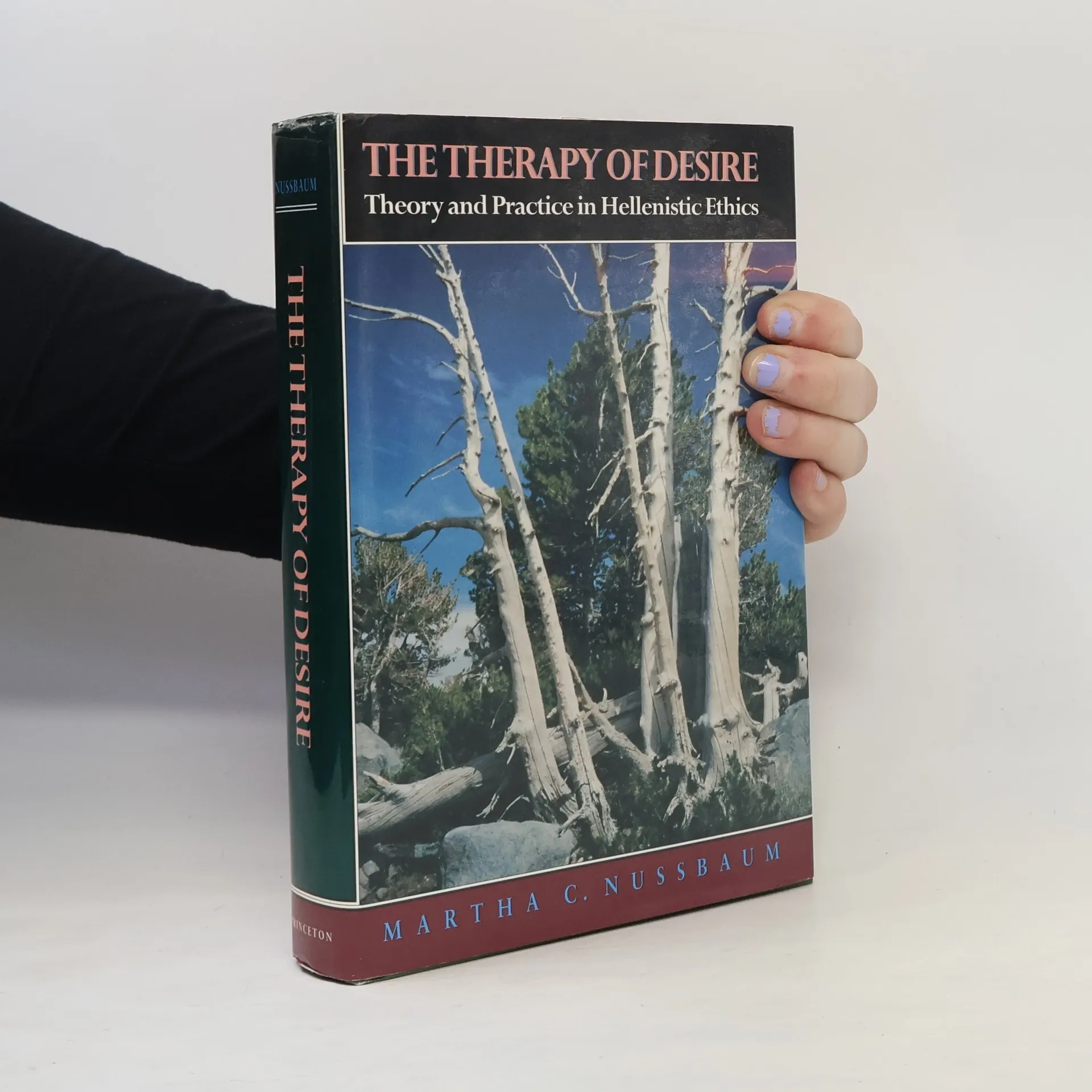
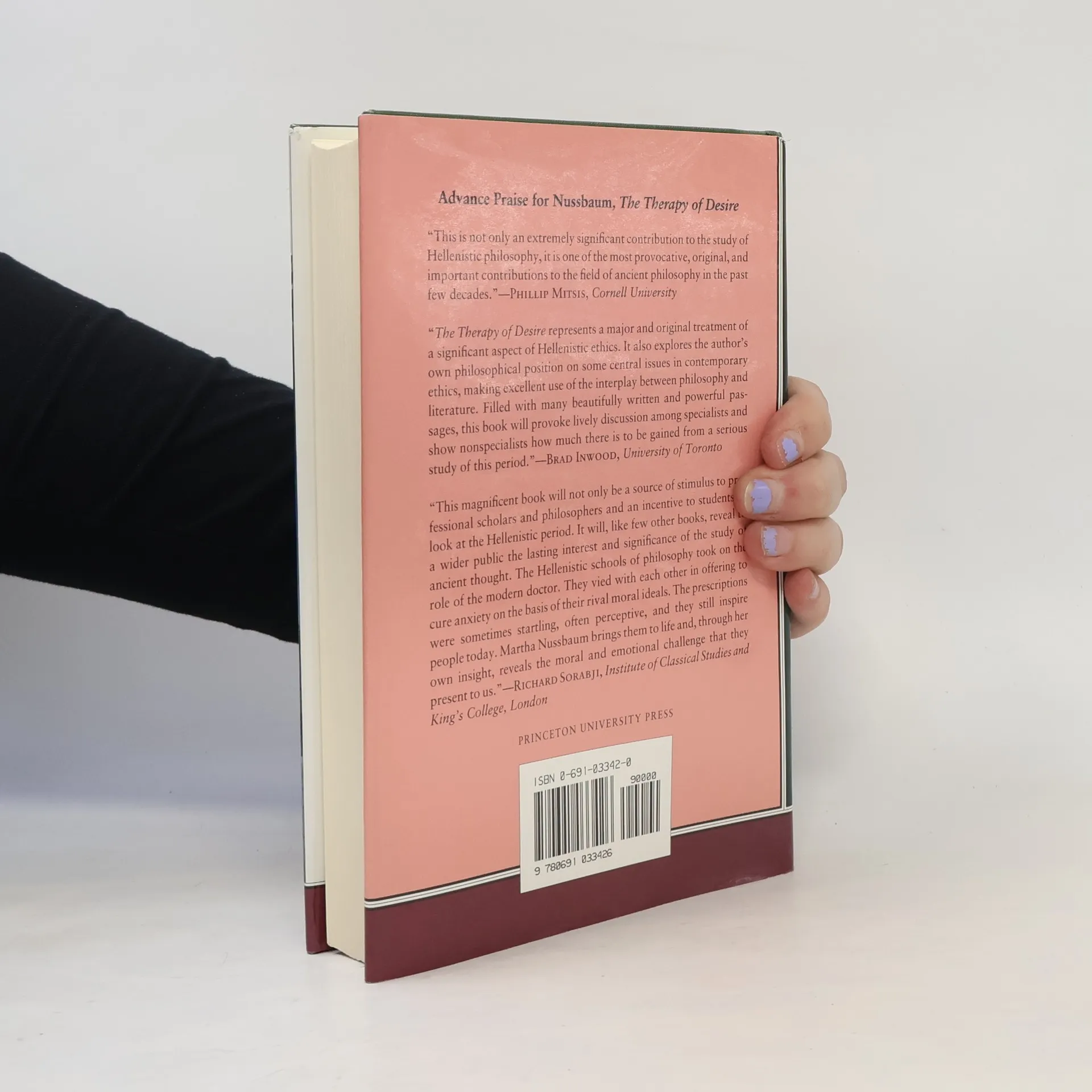
The Therapy of Desire
Theory and Practice in Hellenistic Ethics
Autor*innen
Buchbewertung
Parameter
- 558 Seiten
- 20 Lesestunden
Mehr zum Buch
The Epicureans, Skeptics, and Stoics practiced philosophy not as a detached intellectual discipline, but as a worldly art of grappling with issues of daily and urgent human significance: the fear of death, love and sexuality, anger and aggression. Like medicine, philosophy to them was a rigorous science aimed both at understanding and at producing the flourishing of human life. In this engaging book, Martha Nussbaum examines texts of philosophers committed to a therapeutic paradigm--including Epicurus, Lucretius, Sextus Empiricus, Chrysippus, and Seneca--and recovers a valuable source for our moral and political thought of today.
Publikation

Buchkauf
The Therapy of Desire, Martha Nussbaum
- Sprache

- Erscheinungsdatum
- 1994
- Einband
- (Hardcover)
Hier könnte deine Bewertung stehen.
- Titel
- The Therapy of Desire
- Untertitel
- Theory and Practice in Hellenistic Ethics
- Sprache
- Englisch
- Autor*innen
- Martha Nussbaum
- Erscheinungsdatum
- 1994
- Einband
- Hardcover
- Seitenzahl
- 558
- ISBN10
- 0691033420
- ISBN13
- 9780691033426
- Reihe
- Kategorien
- Schlagwörter
- Historisches Thema, Psychologische Thematik, Philosophisches Thema, Politik, Geschenke für Opa, Sexualität & Intimität, Griechenland
- Bewertung
- 4,3 von 5 Sternen
- Beschreibung
- The Epicureans, Skeptics, and Stoics practiced philosophy not as a detached intellectual discipline, but as a worldly art of grappling with issues of daily and urgent human significance: the fear of death, love and sexuality, anger and aggression. Like medicine, philosophy to them was a rigorous science aimed both at understanding and at producing the flourishing of human life. In this engaging book, Martha Nussbaum examines texts of philosophers committed to a therapeutic paradigm--including Epicurus, Lucretius, Sextus Empiricus, Chrysippus, and Seneca--and recovers a valuable source for our moral and political thought of today.