



Parameter
- 192 Seiten
- 7 Lesestunden
Mehr zum Buch
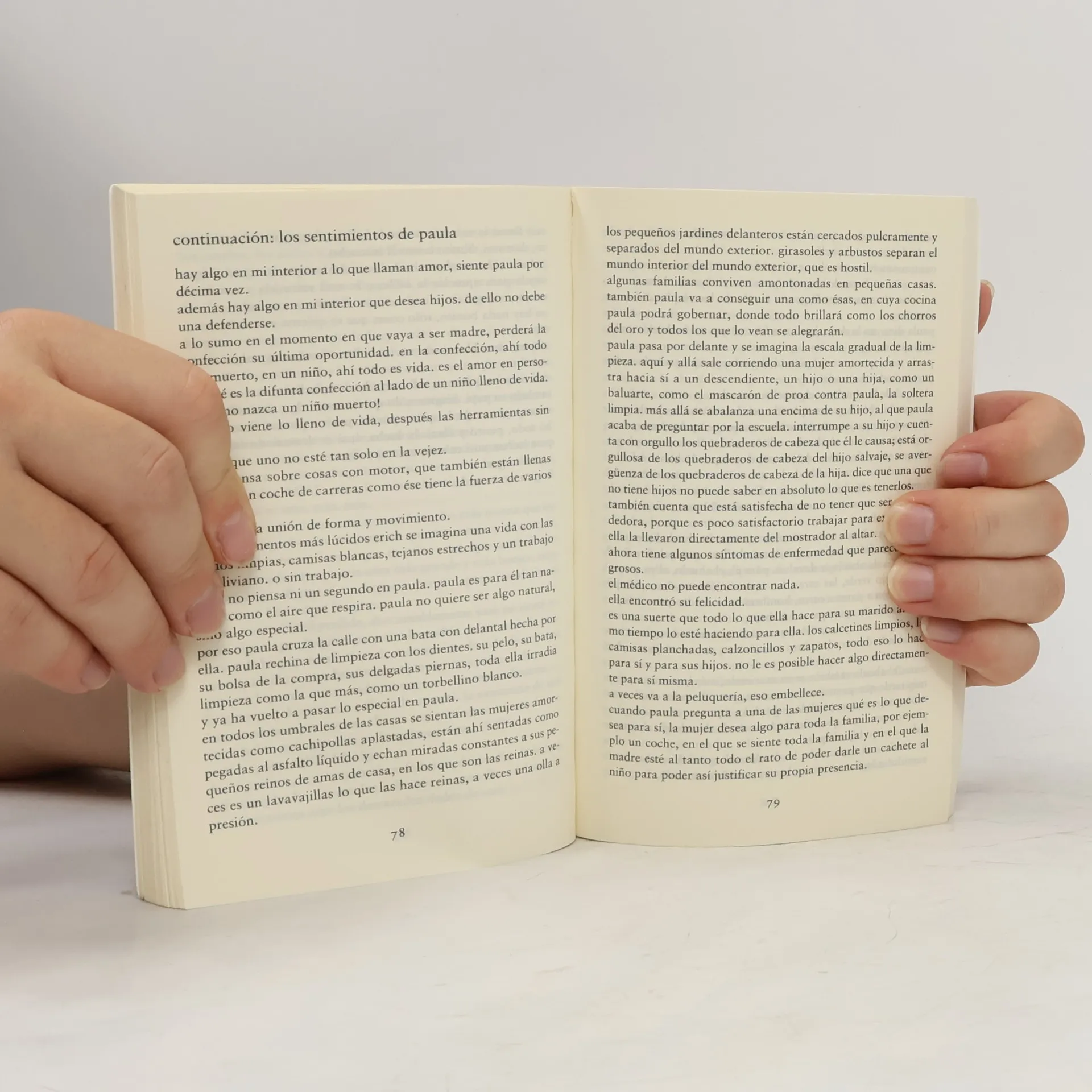
Women as Lovers is an early novel by 2004 Nobel Prize winner Elfriede Jelinek, originally published in 1975. The story follows two women, Paula and Brigitte, as they navigate life and family in a small Austrian town, revealing a reality far from idyllic. Jelinek contrasts Paula, who pursues her dreams, with Brigitte, who endures a relationship with the ambitious but unpleasant Heinz, echoing themes found in Hermann Hesse's Narcissus and Goldmund. Through a clear dissection of their lives, Jelinek explores a grim societal backdrop, presenting a mathematical beauty in her narrative. The mirroring of their experiences often carries a satirical edge, with the narrative voice oscillating between a staid government film and local folk sayings, exposing bleak truths rarely captured in proverbs or documentaries. The author employs humorous exaggeration to enliven mundane tasks like changing diapers and serving tea. While the plot is slight, the novel is notable for its strong, beautiful writing and brutal honesty, making it essential reading, especially for romanticisers. It delivers a powerful impact that lingers long after the final page.




Buchkauf
Quinteto - 178: Las amantes, Elfriede Jelinek
- Sprache

- Erscheinungsdatum
- 2005
- Einband
- (Paperback)
Hier könnte deine Bewertung stehen.
- Titel
- Quinteto - 178: Las amantes
- Sprache
- Spanisch
- Autor*innen
- Elfriede Jelinek
- Verlag
- Quinteto
- Erscheinungsdatum
- 2005
- Einband
- Paperback
- Seitenzahl
- 192
- ISBN10
- 8496333485
- ISBN13
- 9788496333482
- Reihe
- Schlagwörter
- Deutsche Literatur, Feminismus, Psychologische Romane, Österreichische Literatur, Nobelpreis, Eifersucht, Kämpfe, Unglückliche Liebe
- Erstveröffentlichung
- 1975
- Originaltitel
- Die Liebhaberinnen
- Bewertung
- 3,7 von 5 Sternen
- Beschreibung
- Women as Lovers is an early novel by 2004 Nobel Prize winner Elfriede Jelinek, originally published in 1975. The story follows two women, Paula and Brigitte, as they navigate life and family in a small Austrian town, revealing a reality far from idyllic. Jelinek contrasts Paula, who pursues her dreams, with Brigitte, who endures a relationship with the ambitious but unpleasant Heinz, echoing themes found in Hermann Hesse's Narcissus and Goldmund. Through a clear dissection of their lives, Jelinek explores a grim societal backdrop, presenting a mathematical beauty in her narrative. The mirroring of their experiences often carries a satirical edge, with the narrative voice oscillating between a staid government film and local folk sayings, exposing bleak truths rarely captured in proverbs or documentaries. The author employs humorous exaggeration to enliven mundane tasks like changing diapers and serving tea. While the plot is slight, the novel is notable for its strong, beautiful writing and brutal honesty, making it essential reading, especially for romanticisers. It delivers a powerful impact that lingers long after the final page.