

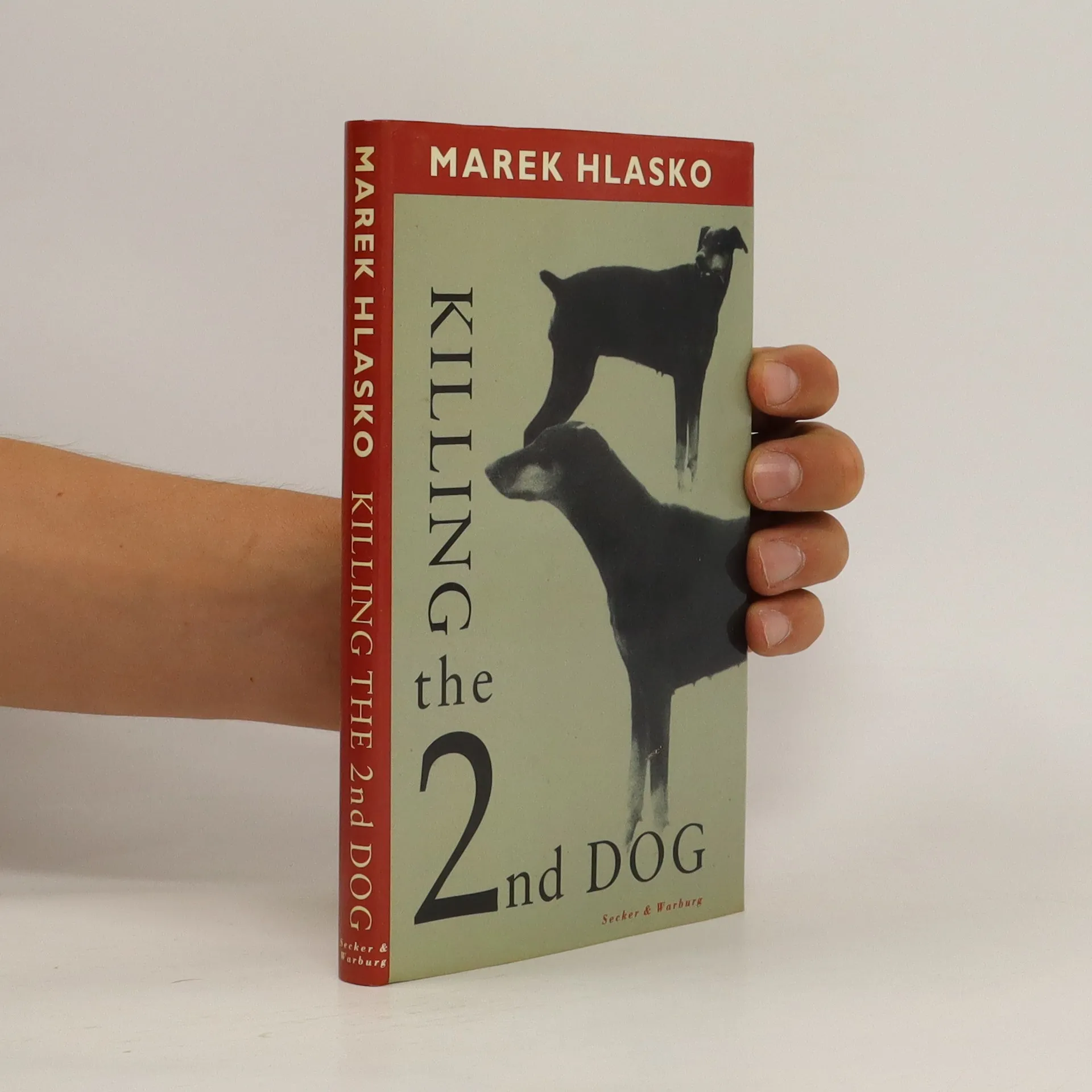
Mehr zum Buch
Hlasko's story grips you like a pit bull, resonating with the intensity noted by "The Washington Post." His writing is taut and psychologically nuanced, reminiscent of the great dime-store novelist Georges Simenon, while his world echoes the rawness of Isaac Babel, as highlighted by "The Wall Street Journal." He serves as a voice for the angry and tortured, as described by "The New York Times," making this a must-read that is both piercing and compelling, according to "Kirkus Reviews." A self-taught writer, Hlasko possesses an uncanny gift for narrative and dialogue, as noted by Roman Polanski. Set in 1960s Israel, Robert and Jacob are desperate Polish con men plotting to scam an American widow. Robert masterminds the scheme, while Jacob plays the role of the suitor, hoping to exploit her vulnerability. As Jacob feigns love, the story unfolds with themes of deception, cruelty, and shame, revealing that nearly all characters are performers in a dark narrative that includes murder and suicide. Hlasko's brutal realism and hardboiled dialogue depict a bleak world where violence prevails, and love is often merely an act. Known as the James Dean of Eastern Europe, Hlasko was exiled from Communist Poland and lived a life of wandering before his tragic death in 1969 from an overdose in Wiesbaden, Germany.
Buchkauf
Killing the second dog, Marek Hłasko
- Sprache

- Erscheinungsdatum
- 1991
- Einband
- (Hardcover)
Hier könnte deine Bewertung stehen.
- Titel
- Killing the second dog
- Sprache
- Englisch
- Autor*innen
- Marek Hłasko
- Erscheinungsdatum
- 1991
- Einband
- Hardcover
- ISBN10
- 0436200414
- ISBN13
- 9780436200410
- Reihe
- Schlagwörter
- Krimi, Polnische Literatur
- Bewertung
- 4 von 5 Sternen
- Beschreibung
- Hlasko's story grips you like a pit bull, resonating with the intensity noted by "The Washington Post." His writing is taut and psychologically nuanced, reminiscent of the great dime-store novelist Georges Simenon, while his world echoes the rawness of Isaac Babel, as highlighted by "The Wall Street Journal." He serves as a voice for the angry and tortured, as described by "The New York Times," making this a must-read that is both piercing and compelling, according to "Kirkus Reviews." A self-taught writer, Hlasko possesses an uncanny gift for narrative and dialogue, as noted by Roman Polanski. Set in 1960s Israel, Robert and Jacob are desperate Polish con men plotting to scam an American widow. Robert masterminds the scheme, while Jacob plays the role of the suitor, hoping to exploit her vulnerability. As Jacob feigns love, the story unfolds with themes of deception, cruelty, and shame, revealing that nearly all characters are performers in a dark narrative that includes murder and suicide. Hlasko's brutal realism and hardboiled dialogue depict a bleak world where violence prevails, and love is often merely an act. Known as the James Dean of Eastern Europe, Hlasko was exiled from Communist Poland and lived a life of wandering before his tragic death in 1969 from an overdose in Wiesbaden, Germany.