

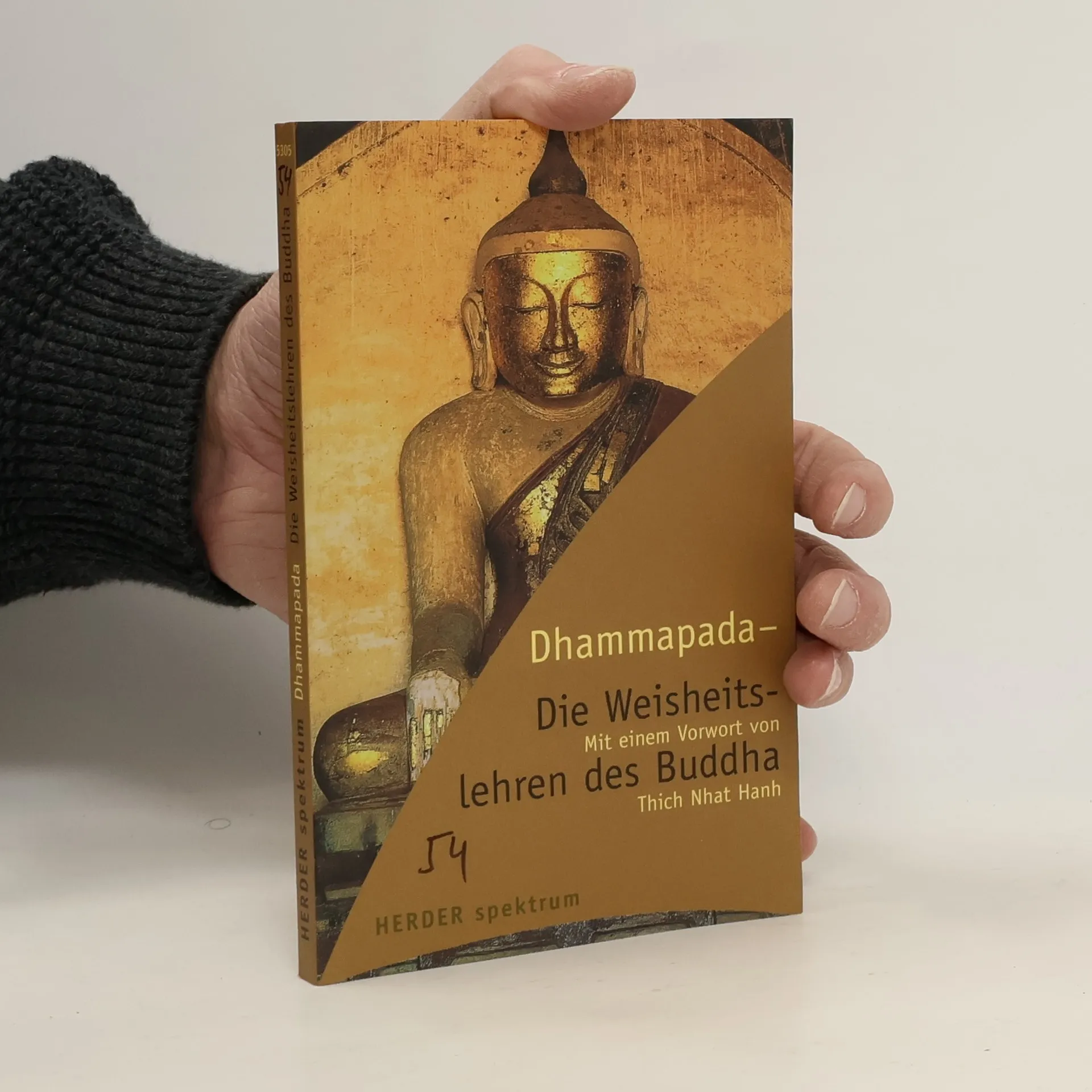
Dhammapada, die Weisheitslehren des Buddha
Buchbewertung
Mehr zum Buch
The Dhammapada (Pali; Prakrit: Dhamapada; Sanskrit Dharmapada) is a versified Buddhist scripture traditionally ascribed to the Buddha himself. It is one of the best-known texts from the Theravada canon. The title, Dhammapada, is a compound term composed of dhamma and pada, each word having a number of denotations and connotations. Generally, dhamma can refer to the Buddha's "doctrine" or an "eternal truth" or "righteousness" or all "phenomena"; and, at its root, pada means "foot" and thus by extension, especially in this context, means either "path" or "verse" (cf. "foot (prosody)") or both. English translations of this text's title have used various combinations of these and related words.



Buchkauf
Dhammapada, die Weisheitslehren des Buddha, anonym, Gautama Buddha, Thích Nhất Hạnh, Bernard Schiekel
- Sprache

- Erscheinungsdatum
- 2002
- Einband
- (Paperback)
Hier könnte deine Bewertung stehen.
- Titel
- Dhammapada, die Weisheitslehren des Buddha
- Sprache
- Deutsch
- Autor*innen
- anonym, Gautama Buddha, Thích Nhất Hạnh, Bernard Schiekel
- Verlag
- Herder
- Erscheinungsdatum
- 2002
- Einband
- Paperback
- Seitenzahl
- 143
- ISBN10
- 3451053055
- ISBN13
- 9783451053054
- Reihe
- Schlagwörter
- Religiöse Themen, Philosophisches Thema, Spiritualität, Östliche Philosophie
- Bewertung
- 4,45 von 5 Sternen
- Beschreibung
- The Dhammapada (Pali; Prakrit: Dhamapada; Sanskrit Dharmapada) is a versified Buddhist scripture traditionally ascribed to the Buddha himself. It is one of the best-known texts from the Theravada canon. The title, Dhammapada, is a compound term composed of dhamma and pada, each word having a number of denotations and connotations. Generally, dhamma can refer to the Buddha's "doctrine" or an "eternal truth" or "righteousness" or all "phenomena"; and, at its root, pada means "foot" and thus by extension, especially in this context, means either "path" or "verse" (cf. "foot (prosody)") or both. English translations of this text's title have used various combinations of these and related words.